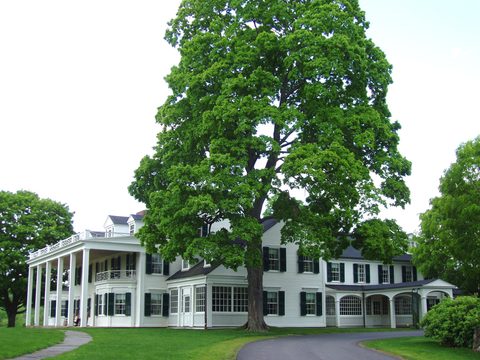
_-_south_facade.JPG)
Bexley, London: Red House, Danson House, Hall Place, Crossness Pumping Station and Lesnes Abbey
Bexley, England
Pictures from Bexley
See all 1 photos →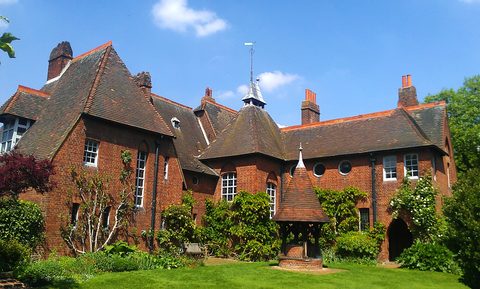
Bexley is an outer London borough on the south bank of the Thames, and it reads as four places rather than one. Erith, Belvedere and Abbey Wood hold the river frontage: a monastic ruin founded in 1178, Sir Joseph Bazalgette's southern outfall pumping station of 1865, and an Edwardian library in Erith working as a craft workshop. Bexleyheath, Welling and Danson wrap interwar suburbia around Philip Webb's Red House of 1859 and Sir Robert Taylor's Palladian villa of 1766 in an 80.68-hectare park. Old Bexley, Hall Place and Crayford keep a Tudor mansion of flint chequerwork on the River Cray and a high street with eighteen list entries inside 400 metres. Sidcup and the Cray valley close the borough to the south, where two registered landscapes run down to the water. The National Heritage List for England records 114 listed-building entries inside the borough: 6 at Grade I, 9 at Grade II* and 99 at Grade II.
-
Bazalgette's southern outfall of 1865, listed Grade I as NHLE 1064241, open on selected dates only with adult admission at £20.37, or £22.50 with Gift Aid.
-
walk
Ruins founded in 1178, listed Grade II as NHLE 1359415 and scheduled as NHLE 1002025, standing free and open in 88 hectares of ancient woodland and park.
-
sight
Erith's Old Library of 1906, listed Grade II as NHLE 1255449, now Timber, Textiles and Ceramics workshops; Thursday and Friday 10am to 4pm, Saturday 10am to 2pm.
-
The longest pier in Greater London, a working wharf with a public deck, beside gardens on roughly the site of Henry VIII's naval dockyard.
-
sight
A working parish church on Victoria Road with a Wikidata inception of 1874, listed Grade II* as NHLE 1188549, its war memorial Grade II, NHLE 1445231.
-
tour
Philip Webb's house for William Morris, listed Grade I as NHLE 1064203; National Trust tours on the hour 11am to 3pm, Thursday to Saturday, May to October.
-
sight
Sir Robert Taylor's villa of 1766, listed Grade I as NHLE 1064225, open on heritage tour Sundays April to August, free 10am to 12pm and £8 for the 12pm tour.
-
walk
A Grade II registered park and garden of 80.68 hectares, NHLE 1000211, with a boating lake; the council states it is open 24 hours, 365 days of the year.
-
sight
The stable block 180 m north-north-west of Danson House, listed Grade II* as NHLE 1359409, now a restaurant and events venue inside the park.
-
The medieval parish church of East Wickham in Greek Orthodox use, listed Grade II* as NHLE 1188567, on Upper Wickham Lane.
-
sight
Begun in 1537 in flint chequerwork, listed Grade I as NHLE 1188277 and scheduled as NHLE 1001985; free gardens, the house by pre-booked guided tour only.
-
An octagonal shingled spire on a low tower, on Manor Road, listed Grade II* as NHLE 1294750, with its lychgate Grade II, NHLE 1064232.
-
A working pub at 65 Bexley High Street, listed Grade II as NHLE 1064244, with seventeen further list entries within 400 m of it.
-
A parish church whose nave arcade runs down the centre line rather than dividing nave from aisle, listed Grade II* as NHLE 1359434.
-
A Grade II registered park and garden of 95.04 hectares, NHLE 1000288, with the Five Arch Bridge over the Cray listed Grade II, NHLE 1188471.
-
walk
A Grade II registered park and garden of 46.12 hectares, NHLE 1000289, with a lake fed by the Shuttle and a Grade II house, NHLE 1359405.
-
tip
Listed Grade II* as NHLE 1064228 and in use as a care home and events venue; the exterior and its Grade II garden walls are visible from Frognal Place.
-
Listed Grade II* as NHLE 1064202, standing about 31 m outside the southern edge of the Foots Cray Place registered landscape, NHLE 1000288.
Erith, Belvedere and Abbey Wood
The Thames frontage runs from Abbey Wood east through Belvedere and Erith to Slade Green, and it carries a twelfth-century abbey ruin, a pumping station on the marshes and an Edwardian library in a town centre on the water.
Lesnes Abbey stands in ruins in Lesnes Abbey Woods, New Road, SE2 0AX, in 88 hectares of ancient woodland and park managed by the London Borough of Bexley. The ruins were listed Grade II on 20 May 1953 as NHLE 1359415 and separately scheduled as a monument on 4 November 1930 as NHLE 1002025, over 1.43 hectares; a scheduled monument carries no grade. Richard de Luci, Chief Justiciar of England, founded the abbey in 1178 as penance for his part in the murder of Thomas Becket, and Cardinal Wolsey closed it in 1525, eleven years before the general Dissolution of the Monasteries. Stone robbed from the ruins was reused in the sixteenth-century chequerwork of Hall Place, 3.1 miles (5.0 km) to the south east. The park is free and open; the operator publishes events and venue hire but no general opening hours, so none are given here.
Out on the marshes at The Old Works, Bazalgette Way, SE2 9AQ, Crossness Pumping Station was listed Grade I on 24 June 1970 as NHLE 1064241. It opened on 4 April 1865 and was opened by Edward, Prince of Wales, with Sir Joseph Bazalgette as chief engineer and Charles Henry Driver as architect. Its four rotative beam engines by James Watt and Co. are named Victoria, Prince Consort, Albert Edward and Alexandra; each beam weighs 47 tons and each flywheel 52 tons, and each engine moved about 6 tons of sewage, roughly 1,500 imperial gallons, per stroke at about 11 revolutions per minute. The station was decommissioned in 1956, the Crossness Engines Trust formed in 1987 and completed the Prince Consort engine by 2003, and the site opened to the public in 2016. The operator opens on selected dates only, publishing Steaming Days, guided tours and special events on a calendar rather than as weekly hours; adult admission is £20.37, or £22.50 with Gift Aid, and admission for children aged 5 to 17 is £7.19, or £8.00 with Gift Aid, with under-fives free. Two workshops in the surrounding works are separately listed Grade II, NHLE 1250557 and NHLE 1064216, both on 1 March 1990.
Erith town centre is the third thing here. The Old Library on Walnut Tree Road, DA8 1RA, was listed Grade II on 7 March 1996 as NHLE 1255449; Wikidata records its inception as 1906 and it was built as a Carnegie library. It now houses The Exchange, a community-led arts and crafts organisation running Timber, Textiles and Ceramics workshops with a coffee bar, a shop and a garden designed by Sarah Price, open Thursday 10am to 4pm, Friday 10am to 4pm and Saturday 10am to 2pm. On the water, the William Cory Promenade, DA8 1FE, carries the deck of Erith Pier, the longest pier in Greater London and a working deep-water wharf structure rather than a Victorian pleasure pier; it holds no list entry. Riverside Gardens beside it occupies roughly the site where Henry VIII established a naval dockyard and hosts the annual Erith Riverside Festival, and Erith had a spell as a riverside resort by 1849, when its pier and hotel served day-trippers arriving by Thames pleasure boat or by rail. Christ Church on Victoria Road, DA8 3AN, was listed Grade II* on 17 December 1980 as NHLE 1188549, with a Wikidata inception of 1874 and the Erith (Christ Church) War Memorial in its churchyard listed Grade II, NHLE 1445231, on 10 April 2017.
Bexleyheath, Welling and Danson
Interwar suburbia wraps around two houses, and both of them are the reason to come.
Red House, on Red House Lane, Bexleyheath, DA6 8JF, was listed Grade I on 25 May 1950 as NHLE 1064203. Wikidata records an inception of 1859 and names both William Morris and Philip Webb as architects; the National Trust states that the house was completed in 1860 and commissioned by Morris, founder of the Arts and Crafts movement. Edward Burne-Jones described it as "the beautifullest place on earth". It retains stained glass and paintings by Burne-Jones, embroidery by Jane and Elizabeth Burden, and furniture by Morris and Webb. The Trust opens the house from May to October for pre-booked guided tours on the hour from 11am to 3pm, Thursday to Saturday, with new tickets released every Thursday up to two weeks in advance, and it publishes a per-date calendar rather than a fixed season. Three further entries cover the setting: the well head to the south east is Grade I in its own right, NHLE 1359397; the outhouse to the north east is Grade II, NHLE 1064204; and the street wall and gateway to the north is Grade II, NHLE 1294702.
Danson Park, entered from Danson Road, Welling, DA16 1RU, was registered at Grade II on 1 October 1987 as NHLE 1000211, and Historic England records the registered area as 80.68 hectares. The council states that Danson Park is open 24 hours, 365 days of the year, and entry is free. It holds a large boating lake, the Bexley Charter Oak near the house, and Danson Park Adventures, an activity centre for ages eight and over that the council names as a visitor attraction in its own right. Danson House stands inside it: a Palladian villa built in 1766 for Sir John Boyd, for his second wife Catherine Chapone, to designs by Sir Robert Taylor, who was also architect of the Bank of England, and listed Grade I on 1 October 1953 as NHLE 1064225. Its restored interior opened to the public in 2005 for the first time in thirty years and was reopened by Queen Elizabeth II that July. The council runs heritage tour Sundays between April and August, with free entry to the principal floor from 10am to 12pm and then a guided tour at 12pm at £8 per person, card payment only and booked by email; the house is also the borough register office and a wedding venue, which closes rooms at times. About 180 m north-north-west of the house, inside the same registered park, the stable block was listed Grade II* on 1 October 1953 as NHLE 1359409 under the list name "Stables to Danson Park", and works as a restaurant and events venue.
On Upper Wickham Lane, DA16 3AP, the Greek Orthodox Church of Christ the Saviour is the medieval parish church of East Wickham, now in Greek Orthodox use. It was listed Grade II* on 1 October 1953 as NHLE 1188567 under the list name "Greek Orthodox Church", and East Wickham Farmhouse, 180 m away, is separately Grade II, NHLE 1359400, listed on 17 December 1980. No source states the church's opening hours, so none are given here.
Old Bexley, Hall Place and Crayford
This is the part of the borough that still reads as a Kentish town on a river rather than a London suburb: the Cray's old village street, a Tudor-and-Stuart mansion in chequered flint, and a medieval parish church a mile downstream at Crayford.
Hall Place stands on Bourne Road, Bexley, DA5 1PQ. Construction began in 1537 for Sir John Champneys, a former Lord Mayor of London, and Sir Robert Austen extended the house in red brick in 1649; the sixteenth-century half is built in a chequerboard pattern of flint and rubble, using stone taken from Lesnes Abbey, 3.1 miles (5.0 km) to the north west. The Queen's Beasts topiary was planted in 1953 for the coronation of Elizabeth II, and the gardens were first opened to the public in 1952 by the Duchess of Kent. In January 1944 the U.S. Army Signal Corps ran an intercept station here code-named Santa Fe, feeding the Ultra decryption effort. The house was listed Grade I on 1 October 1953 as NHLE 1188277 and separately scheduled as a monument on 1 May 1948 as NHLE 1001985, which carries no grade; the gardens were registered at Grade II on 1 October 1987 as NHLE 1000247, covering 14.55 hectares. The garden wall, gatepiers and gates to the north and west carry their own Grade I listing, NHLE 1064250, and the barn, NHLE 1359381, and the granary about 25 m south south east, NHLE 1064233, are Grade II. The gardens open 9am to 9.30pm from April to September and 9am to 5.15pm from October to March, garden entry is free, the visitor centre and café open 9.30am to 4.30pm, and the historic house is open for pre-booked guided tours only.
Bexley High Street is the densest run of designated fabric in the borough. The King's Head Inn at number 65, DA5 1AA, is a working public house listed Grade II on 1 October 1953 as NHLE 1064244, and seventeen further list entries fall within 400 m of it, along the High Street and the streets immediately off it — eighteen counting the inn itself. They include Styleman's Almshouses, Grade II, NHLE 1064243; Cray House, Grade II, NHLE 1064247; High Street House, Grade II, NHLE 1064245; and The Railway Tavern, Grade II, NHLE 1359379. Two K6 telephone kiosks outside number 11 were listed Grade II on 13 July 1987 as NHLE 1064213, with a third kiosk listed separately as NHLE 1064214. The Church of St Mary the Virgin on Manor Road, DA5 3LU, has an octagonal shingled spire set on a low tower and was listed Grade II* on 1 October 1953 as NHLE 1294750; its lychgate to the south west is Grade II, NHLE 1064232, listed on 17 December 1980.
At Crayford, the Church of St Paulinus on Perry Street, DA1 4RH, was listed Grade II* on 20 May 1952 as NHLE 1359434. Its plan is unusual: the nave arcade runs down the centre line rather than dividing nave from aisle. The lychgate to the west is Grade II, NHLE 1064200, and the Crayford War Memorial in the grounds of Crayford Manor is Grade II, NHLE 1410311, listed on 13 November 2012, with a Wikidata inception of 1954. Both churches are working Anglican parish churches and neither publishes visitor hours, so none are given here.
Sidcup and the Cray valley
The green southern edge of the borough is made of two registered landscapes running down to the Cray, Foots Cray Place and Lamorbey Park, and the houses beside them survive as a college, a care home and a churchyard.
Foots Cray Meadows is free public parkland at all hours, entered from Five Arches, North Cray, Sidcup, DA14 5NG. It was registered at Grade II on 27 September 1988 as NHLE 1000288 under the name Foots Cray Place, covering 95.04 hectares, and the Five Arch Bridge carrying the path over the River Cray was listed Grade II on 17 December 1980 as NHLE 1188471. The house that named the landscape, Foots Cray Place, burned down in 1949 and only its outbuildings survive: the stable block, Grade II, NHLE 1359435, listed 25 August 1954; the walls, gate piers and gates to its south, Grade II, NHLE 1064201; the bowling pavilion, Grade II, NHLE 1064215; and the granary at Little Mascal Farm, Grade II, NHLE 1064210. The North Cray War Memorial nearby is Grade II, NHLE 1444904, with a Wikidata inception of 1920.
About 31 m outside the southern edge of that registered landscape stands the Church of All Saints, Foots Cray, on Rectory Lane, DA14 5BU, listed Grade II* on 25 August 1954 as NHLE 1064202. The old village survives around it: 180-188 Rectory Lane, Grade II, NHLE 1188531; 1-4 Tudor Cottages, Grade II, NHLE 1188354; and the Seven Stars public house, Grade II, NHLE 1359410, listed on 5 March 1974.
Lamorbey Park, on Burnt Oak Lane, Sidcup, DA15 9DF, is free public open space, registered at Grade II on 7 December 1988 as NHLE 1000289 and amended on 8 April 2015, covering 46.12 hectares. It contains a lake fed by the Shuttle, a tributary of the Cray. The house, listed as "Lamorbey Park", is Grade II, NHLE 1359405, listed on 25 August 1954, and is occupied by Rose Bruford College rather than run as a visitor attraction; the dairy, NHLE 1359406, and the caretaker's house, NHLE 1064221, are separately Grade II, both listed on 17 December 1980.
Frognal House, on Frognal Place, DA14 6LT, was listed Grade II* on 30 May 1978 as NHLE 1064228. It is in private use as a care home and events venue rather than a walk-in visitor attraction, and the exterior and the listed garden walls are visible from Frognal Place: the walls to the north are Grade II, NHLE 1359411, and the walls, gatepiers and gates to the south Grade II, NHLE 1294778, both listed on 17 December 1980. The house gave its name to the Frognal district of Sidcup and to Frognal Avenue.
Getting there
Bexley has no London Underground station, no DLR and no tram. All eleven rail stations inside the borough are National Rail, and Southeastern calls at every one of them: Erith, Belvedere, Slade Green, Barnehurst, Bexleyheath, Welling, Falconwood, Crayford, Bexley, Albany Park and Sidcup. Thameslink additionally serves Bexleyheath, Barnehurst and Slade Green. Abbey Wood, on the western boundary in Greenwich, is the eastern terminus of the Elizabeth line and also takes Southeastern and Thameslink.
For Erith, Belvedere and Abbey Wood, take Southeastern to Erith: 140 m from the town centre, 192 m from The Exchange and roughly 250 to 300 m from the William Cory Promenade and Riverside Gardens. Christ Church is about 250 m from the same station, on the far side of the town centre. Abbey Wood is 641 m from Lesnes Abbey, and Slade Green 545 m from the Howbury moated site. Crossness Pumping Station has no station within 2 km: Belvedere at 2.12 km and Abbey Wood at 2.32 km are the two realistic approaches, and the operator runs a short railway from its own public entrance towards the Beam Engine House. The nearest London Overground station to any point in Bexley is Barking Riverside on the Suffragette line, 1.94 km from Crossness, but it stands on the far bank of the Thames in Barking and Dagenham with no crossing between the two, so it is not a usable approach.
For Bexleyheath, Welling and Danson, take Southeastern or Thameslink to Bexleyheath: 932 m from Red House, 1.02 km from Bexleyheath town centre and 1.32 km from Danson House. Welling, on Southeastern, is 1.48 km from Danson House and 1.11 km from the Greek Orthodox Church at East Wickham. Barnehurst, on Southeastern and Thameslink, is 1.13 km from Bexleyheath town centre and takes bus routes 89, 229, 602 and 669 and night route N89. Falconwood, on Southeastern, is one stop beyond Welling on the Bexleyheath line.
For Old Bexley, Hall Place and Crayford, take Southeastern to Bexley: 161 m from Bexley High Street and 1.16 km from Hall Place. Crayford, on Southeastern, is 792 m from St Paulinus and 1.36 km from Hall Place, and Barnehurst is 1.90 km from Hall Place.
For Sidcup and the Cray valley, take Southeastern to Sidcup: 559 m from Lamorbey House, 1.36 km from Sidcup Place and 1.81 km from Frognal House. Albany Park, on Southeastern, is 1.05 km from the Five Arch Bridge in Foots Cray Meadows and 1.30 km from Lamorbey Park. Every distance above is a straight-line approximation, not a walking measurement.
Frequently asked questions
- Does Bexley have an Underground station?
- Bexley has no London Underground station, no DLR and no tram. All eleven rail stations inside the borough are National Rail and Southeastern calls at every one: Erith, Belvedere, Slade Green, Barnehurst, Bexleyheath, Welling, Falconwood, Crayford, Bexley, Albany Park and Sidcup. Thameslink additionally serves Bexleyheath, Barnehurst and Slade Green. Abbey Wood, the eastern terminus of the Elizabeth line, stands on the western boundary in Greenwich, 641 m from Lesnes Abbey.
- When is Red House open, and how do I get in?
- The National Trust opens Red House, on Red House Lane, Bexleyheath, DA6 8JF, from May to October for pre-booked guided tours that run on the hour from 11am to 3pm, Thursday to Saturday, with new tickets released every Thursday up to two weeks in advance. The Trust publishes a per-date calendar rather than a fixed season, so check the current dates before travelling. The house was listed Grade I on 25 May 1950 as NHLE 1064203; Wikidata gives an inception of 1859 and names William Morris and Philip Webb, and the Trust states the house was completed in 1860. Bexleyheath station, served by Southeastern and Thameslink, is 932 m away.
- What are Hall Place's opening hours, and what does it cost?
- Hall Place, Bourne Road, Bexley, DA5 1PQ, opens its gardens 9am to 9.30pm from April to September and 9am to 5.15pm from October to March. Garden entry is free. The visitor centre and café open 9.30am to 4.30pm, and the historic house is open for pre-booked guided tours only. The house was listed Grade I on 1 October 1953 as NHLE 1188277 and separately scheduled as a monument on 1 May 1948 as NHLE 1001985; the gardens were registered at Grade II on 1 October 1987 as NHLE 1000247 and cover 14.55 hectares. Bexley station is 1.2 km away and Crayford 1.4 km.
- How do I visit Crossness Pumping Station?
- Crossness Pumping Station, at The Old Works, Bazalgette Way, SE2 9AQ, opens on selected dates only. The operator publishes Steaming Days, guided tours and special events on a calendar rather than as weekly hours, and admission is ticketed: £20.37 for an adult, or £22.50 with Gift Aid, and £7.19 for a child aged 5 to 17, or £8.00 with Gift Aid, with under-fives free. There is no station within 2 km; Belvedere at 2.12 km and Abbey Wood at 2.32 km are the two realistic approaches, and the operator runs a short railway from its own public entrance towards the Beam Engine House. The station was listed Grade I on 24 June 1970 as NHLE 1064241.
- How many listed buildings does Bexley hold?
- The National Heritage List for England records 114 listed-building entries inside the borough boundary as mapped by OpenStreetMap relation 51903: 6 at Grade I, 9 at Grade II* and 99 at Grade II. Four of the Grade I entries are Crossness Pumping Station, NHLE 1064241; Red House, NHLE 1064203; Danson House, NHLE 1064225; and Hall Place, NHLE 1188277. The borough also holds three scheduled monuments — Hall Place, NHLE 1001985; the Howbury moated site, NHLE 1001986; and Lesnes Abbey, NHLE 1002025 — and four registered parks and gardens: Danson Park, Hall Place, Foots Cray Place and Lamorbey Park, all Grade II.
- What is there to see in Sidcup and the Cray valley?
- Foots Cray Meadows is a Grade II registered park and garden of 95.04 hectares, NHLE 1000288, free at all hours, with the Five Arch Bridge over the River Cray listed Grade II, NHLE 1188471. Lamorbey Park is a Grade II registered park and garden of 46.12 hectares, NHLE 1000289, with a lake fed by the Shuttle. The Church of All Saints, Foots Cray, is Grade II*, NHLE 1064202, and Frognal House is Grade II*, NHLE 1064228, in private use as a care home and events venue with its exterior visible from Frognal Place. Sidcup station is 559 m from Lamorbey House and Albany Park 1.05 km from the Five Arch Bridge.
Connected pages
Nearby
-
Bromley, London: Crystal Palace Park and its dinosaurs, Down House, Chislehurst Caves and Keston Windmill
· Bromley, England
The Cray runs from Foots Cray Meadows and the Five Arch Bridge, NHLE 1000288, up into Chislehurst and Orpington; Sidcup and Chislehurst are one wooded ridge.
-
Greenwich, London: Cutty Sark, the Old Royal Naval College and the prime meridian
· Royal Borough of Greenwich, England
Abbey Wood station, the Elizabeth line terminus nearest Lesnes Abbey, is in Greenwich; Crossness and Woolwich are one Bazalgette sewerage landscape.
Shared history
-
Barking and Dagenham, London: Barking Abbey, Eastbury Manor House, Valence House and Dagenham Village
· Barking and Dagenham, England
Lesnes Abbey and Barking Abbey are the two dissolved monastic houses of the outer Thames, facing each other across the river; Crossness faces Barking Riverside.
What travelers think
Log in to react.
No reviews yet.