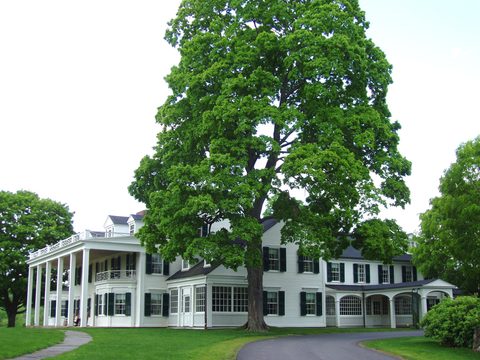
_-_south_facade.JPG)
City Island, the Bronx: Boatyards, Seafood and One Bridge
City Island, New York
Pictures from City Island
See all 1 photos →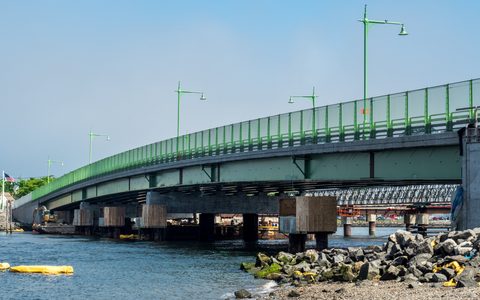
City Island is a small community at the edge of New York City, just beyond Pelham Bay Park in the Bronx and surrounded by the waters of Long Island Sound: an island roughly 1.5 miles long by half a mile wide at the Sound's extreme western end, east of Eastchester Bay. It developed as a shipbuilding community in the mid-20th century, before becoming a daytrippers' destination. Native Americans lived here before European colonization, possibly the Wiechquaeskeck band of the Lenape, leaving shell middens from oyster and clam gathering. Thomas Pell established ownership in 1654 through a treaty signed by five Lenape sachems, and Benjamin Palmer bought the island in 1761 and renamed it New City Island, later dropping the New. It was annexed to the town of Pelham, in Westchester County, in 1819, narrowly voted to join New York City in 1895 in exchange for a new bridge to the mainland, and was consolidated into the Bronx in 1898.
-
190 Fordham Street, in the 1897 Public School 17 building by C. B. J. Snyder. The museum opened in 1976 and reopened in 1995 after renovations.
-
sight
116 City Island Avenue. Built in 1862, Carpenter Gothic, and listed on the National Register of Historic Places on September 13, 2006.
-
A cottage of about 1880 with an asymmetrical cruciform plan, landmarked on July 28, 1981 and National Register-listed on June 3, 1982.
-
food
41 City Island Avenue. The restaurant's own site describes fresh seafood, lobster feasts and waterfront dining, and dates the business to 1966.
-
2 City Island Avenue. Cafeteria-style by its own description, with picnic-table seating indoors and out, overlooking the water.
-
361 City Island Avenue, in a building its own site says went up as a silent movie theater and later held the City Island Post Office.
-
sight
586 City Island Avenue, designated a New York City Landmark on October 29, 2002.
-
65 Schofield Street, designated a New York City Landmark on April 12, 2012.
-
95 Pell Place, designated a New York City Landmark on November 28, 2017.
-
30 Centre Street, designated a New York City Landmark on November 28, 2017, the same day as the Stafford House.
-
sight
A New York City landmark the boroughwide list carries under its address, designated on June 20, 2000.
-
sight
63 Pilot Street, one of several yacht clubs on City Island.
Shipbuilding, the yacht clubs and the bridge
Many of the boats which competed and won in the America's Cup in years past were built in the Nevins Boat Yard on City Island. Henry B. Nevins bought the nearby Hansen Boat Yard in 1907, at age 29, and founded Henry B. Nevins, Incorporated; he later purchased the nearby Byles Yard to increase his acreage. Working with the naval architect George Crouch, the yard built Baby Bootlegger, winner of the APBA Gold Cup in 1924 and 1925, and during the Second World War it built minesweepers alongside custom cruising and racing craft.
Consolidated Shipbuilding Corporation, also known as Consolidated Yachts, was formed in June 1896 and built tugboats and 51 of the 343 PC-461-class submarine chasers during the Second World War, employing as many as 3,000 skilled tradespeople. At the conclusion of that war it moved from Morris Heights to the former Robert Jacobs shipyard on City Island, and it ceased shipbuilding in 1958, becoming a marine-service company.
In 1901 the New York Times observed that in place of the fishing smacks and oyster boats that once anchored in East Chester Bay is the fleet of the Harlem Yacht Club. The club had been incorporated in 1883, and Wikipedia's article on it calls it the third oldest continuously functioning yacht club in the City of New York, after the New York Yacht Club of 1844 and the Williamsburgh Yacht Club of 1871. It purchased City Island property in 1894, with its station on Hunter Avenue, and built a Victorian clubhouse there beginning in 1898 and opening in June 1899; a fire on May 29, 1915 destroyed it, and the current three-story clubhouse was built that same year. Seventy yachts participated in an 1892 regatta. The club hosted the first Star-class regatta in 1911, and the Star became an Olympic sailing class in 1932; its Memorial Day Regatta was considered the start of the yacht racing season in western Long Island Sound.
The Harlem Yacht Club, the City Island Yacht Club and the Morris Yacht and Beach Club are among the clubs on the island, along with Barron's Boatyard and the North Minneford Yacht Club and South Minneford Yacht Club on the east side. The sail and power boating industry has been declining in recent years, as boatyards are sold and converted into condominiums.
Starting in 1760, a small rope ferry ran between the mainland and City Island. Samuel Rodman operated a ferry connecting Minneford Island, as City Island was earlier known, to Anne's Hoeck, where the bridge is now. When the island narrowly voted to join New York City in 1895, it did so in exchange for a new bridge to the mainland.
The City Island Bridge was completed and opened on July 4, 1901, built of steel and stone and 950 feet long, at a projected cost of $200,000, about $7,740,000 in 2025 dollars. It was a swing bridge, with five fixed spans and one central swing section that allowed ships to pass, and it was the sole entry and exit for vehicles on City Island. The swing section was deactivated and turned into a fixed span in 1963.
The bridge is managed by the New York City Department of Transportation. By 2002 it was in bad shape, and city leaders held a meeting about the deteriorating structure, showing images of corrosion on the supports. The first replacement design was a cable-stayed bridge with a 150-foot tower, estimated at $50 million in 2005 and $120 million by 2009; community opposition to the tower's height led the city in May 2014 to choose a slightly cheaper and much shorter causeway-style bridge instead. A temporary steel bridge erected in 2015 partially collapsed that September, delaying the opening of the temporary bridge. The original 1901 bridge closed on December 18, 2015, and the new causeway bridge opened on October 29, 2017; the final contractor bid was $102.7 million and the contractor was Tutor Perini. 2016 data recorded 14,473 vehicles crossing daily.
The bridge's eastern end is on City Island and its western end is on Rodman's Neck, the peninsula whose wooded portion lies within Pelham Bay Park. Two small land berms between Rodman's Neck and City Island consist of the island's only connecting road to the mainland. Rodman's Neck was formerly called Ann Hook's Neck, and it was included in the same 1654 purchase by Thomas Pell that covered City Island.
Two rail lines once served the island. The Pelham Park & City Island Railway connected City Island to Pelham Bay Park from 1887 to 1919. An Interborough Rapid Transit Company monorail ran from 1910 until it ceased operation on April 3, 1914; its first journey, in July 1910, ended with the monorail toppling on its side.
City Island Avenue and the waterfront
Johnny's Reef Restaurant stands at 2 City Island Avenue, Sammy's Fish Box at 41, Grace Episcopal Church at 116, The Original Crab Shanty at 361 and the Samuel Pell House at 586, and the Bx29's western terminal is at the avenue and Rochelle Street. The City Island Nautical Museum is at 190 Fordham Street, and the island's other individual landmarks stand off the avenue, on Belden Street, Schofield Street, Pell Place, Centre Street and Tier Street.
Three restaurants on the avenue describe themselves on their own sites. Johnny's Reef, at number 2, gives its service as cafeteria-style, divided into a Fried Section served with fries and coleslaw, a Steam Section served with Italian bread, a Clam Section and a Soda Section, with a bar and picnic-table seating indoors and out, overlooking the water. Sammy's Fish Box, at 41, describes fresh seafood, lobster feasts and waterfront dining, including surf and turf, lobster dishes and fried seafood specialties, and dates itself to 1966. The Original Crab Shanty, at 361, says its current operators took over the property in 1977, in a building that had been a silent movie theater and then the City Island Post Office.
Off the southern tip, Stepping Stones Light marks the main shipping channel into New York. Hart Island lies to the east across City Island Harbor and is uninhabited, and High Island lies to the northeast. Belden Point is named for the developer William Belden, who opened an amusement park and resort in the area in 1887, and the island was a favored recreation location for business tycoons including Vincent Astor, J. P. Morgan and William Randolph Hearst.
City Island covers 0.395 square miles of land and is part of Bronx Community District 10; its ZIP code is 10464, and the 2020 census counted 4,417 residents. The Island Current, a local newspaper, first printed in October 1971.
Getting there
No subway line runs onto City Island. The nearest station is Pelham Bay Park, at the Bruckner Expressway and Westchester Avenue, the northern terminus of the IRT Pelham Line; the 6 serves it at all times, and the <6> runs express during weekday peak hours in the peak direction.
The Bx29 is the route that joins the island to that station. Its western terminal is City Island Avenue and Rochelle Street, on the island, and its eastern terminal is Bruckner Boulevard at Pelham Bay Park station, where it connects to the 6; the route runs 24 hours a day. Two rush-hour extended round-trips of the BxM8 express route run to Manhattan.
Pelham Bay Park station is served by the Bx5, Bx12, Bx12 SBS, Bx24 and Bx29 among NYCT bus routes, by the Bx23, Q50 and BxM8 among MTA Bus routes, and by Bee-Line Route 45, a Westchester County route. Its elevators were installed in December 1989, making it one of the earliest to comply with the Americans with Disabilities Act of 1990. A pedestrian bridge from the station entrance crosses the Bruckner Expressway and leads to Pelham Bay Park. The island itself is reached by road: the City Island Bridge, landing on Rodman's Neck at its western end, is its only connection to the mainland.
City Island residents advocated for a ferry stop on the island.
Frequently asked questions
- How do I get to City Island?
- No subway line runs onto the island. The nearest station is Pelham Bay Park, at the Bruckner Expressway and Westchester Avenue, the northern terminus of the IRT Pelham Line, served by the 6 at all times and by the <6> express during weekday peak hours in the peak direction. From there the Bx29 runs onto the island: its western terminal is City Island Avenue and Rochelle Street and its eastern terminal is Bruckner Boulevard at Pelham Bay Park station, and the route runs 24 hours a day. Two rush-hour extended round-trips of the BxM8 express route run to Manhattan. By road, the City Island Bridge is the only connection to the mainland.
- Why is it called City Island?
- Benjamin Palmer of New York purchased the island in 1761 and renamed it New City Island, later dropping the New. The island was earlier known as Minneford Island, and Samuel Rodman ran a ferry from it across to Anne's Hoeck, at the site where the bridge now stands. Thomas Pell, an English physician, had established ownership of the area in 1654 through a treaty signed by five Lenape sachems.
- Is the City Island Bridge the only way onto the island by car?
- Yes. The crossing between Rodman's Neck and City Island is the island's only connecting road to the mainland, and the 1901 bridge it replaced was the sole entry and exit for vehicles on City Island. That bridge opened on July 4, 1901 and closed on December 18, 2015; the causeway bridge that replaced it opened on October 29, 2017. 2016 data recorded 14,473 vehicles crossing daily.
- What was built in the City Island boatyards?
- Many of the boats which competed and won in the America's Cup in years past were built in the Nevins Boat Yard on City Island. Henry B. Nevins founded his company there in 1907 after buying the Hansen Boat Yard, and the yard built Baby Bootlegger with the naval architect George Crouch, winner of the APBA Gold Cup in 1924 and 1925, along with minesweepers during the Second World War. Consolidated Shipbuilding Corporation moved to the former Robert Jacobs shipyard on City Island after that war and ceased shipbuilding in 1958. The City Island Nautical Museum's own site describes an exhibit on America's Cup winners, many of which were built on City Island.
- Which City Island buildings are landmarked?
- The House at 175 Belden Street was designated a New York City Landmark on July 28, 1981 and listed on the National Register of Historic Places on June 3, 1982. Five more hold individual New York City landmark designations: 21 Tier Street, on June 20, 2000; the Samuel Pell House at 586 City Island Avenue, on October 29, 2002; the William H. Schofield House at 65 Schofield Street, on April 12, 2012; and the Captain John H. Stafford House at 95 Pell Place with the Samuel H. and Mary T. Booth House at 30 Centre Street, both on November 28, 2017. Grace Episcopal Church at 116 City Island Avenue and the former Public School 17 building at 190 Fordham Street, which houses the City Island Nautical Museum, are both on the National Register.
Connected pages
Shared history
-
Pelham Bay Park, the Bronx: 2,772 Acres and Thirteen Miles of Shore
· Pelham Bay Park, New York
Rodman's Neck was included in the same 1654 Pell purchase as City Island, and Samuel Rodman's ferry ran from it to Minneford Island.
Same region
-
Throgs Neck, the Bronx: Fort Schuyler at the Peninsula's Tip
· Throgs Neck, New York
Another Bronx neighborhood covered in this series.
-
Woodlawn, the Bronx: Katonah Avenue and a 400-Acre Cemetery
· Woodlawn, New York
Another Bronx neighborhood at the borough's edge, covered elsewhere in this series.
See also
-
Pelham Bay Park, the Bronx: 2,772 Acres and Thirteen Miles of Shore
· Pelham Bay Park, New York
City Island lies south of Pelham Bay Park, and the City Island Bridge lands on the mainland at Rodman's Neck, inside the park.
What travelers think
Log in to react.
No reviews yet.