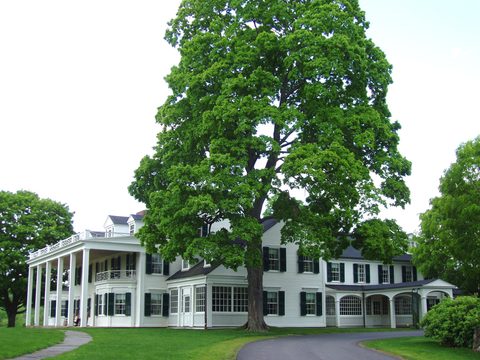
_-_south_facade.JPG)
Japantown, San Francisco: the Peace Pagoda, the Japan Center malls and Cottage Row
Japantown, California
Pictures from Japantown
See all 1 photos →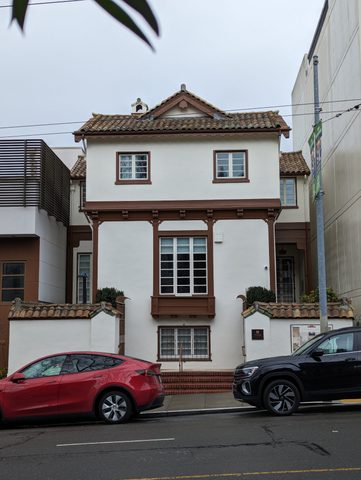
Japantown runs along Post Street and Sutter Street, with Geary Boulevard on the south. Its centre is the Japan Center, a complex of malls that opened in March 1968 as the Japanese Cultural and Trade Center, and the Peace Plaza beside it, where the five-tiered Peace Pagoda stands; the plaza is under renovation and pedestrian detours are posted through it. The block of Buchanan Street between Post and Sutter was renamed Osaka Way in 2007 and carries two bronze fountains by Ruth Asawa. Along Sutter Street and Bush Street stand the institutions: the Japanese YWCA of 1932 by Julia Morgan, the Japanese Cultural and Community Center of Northern California, Kinmon Gakuen, Konko Church and the Bush Street Temple. Beyond them Cottage Row is a bricked walk through a district of Victorian houses built between 1874 and 1882.
-
A five-tiered concrete stupa at 1610 Geary Boulevard, designed by Yoshiro Taniguchi and presented to San Francisco by the people of Osaka.
-
A civic plaza of 0.80 acres under renovation, with Saturday work through September and October and pedestrian detours posted through its centre.
-
sight
The mall complex that opened in March 1968 as the Japanese Cultural and Trade Center, to an architecture by Minoru Yamasaki.
-
walk
The pedestrianised block of Buchanan Street between Post and Sutter, renamed on 8 September 2007 and holding both Asawa fountains.
-
Ruth Asawa's bronze fountain of 1999, 78 by 96 by 96 inches, accession number 1999.22.1, commissioned by the Redevelopment Agency.
-
Julia Morgan's building of 1932 at 1830 Sutter Street: San Francisco Landmark No. 291, designated in 2021, National Register reference number 100004868.
-
walk
A bricked walk from Sutter Street to Bush Street, through houses built between 1874 and 1882.
-
Italianate and early Stick frame houses of 1874 to 1882, listed on the National Register of Historic Places in 1982, reference number 82000983.
-
An Italianate Victorian of 1,679 square feet, moved from 1624 Post Street, on the National Register of Historic Places with reference number 73000443.
-
sight
The Soto Zen temple at 1691 Laguna Street, four years in building, with dedication ceremonies held in April 1984.
-
The gallery and archive of the National Japanese American Historical Society at 1684 Post Street; no source states its opening hours.
-
food
A ramen, udon and soba house at 1737 Buchanan Street, on the Osaka Way block.
-
food
A restaurant at 1625 Post Street, carried in the Japantown merchants' directory.
-
The Geary Boulevard parking garage under the complex, which Recreation and Park's construction update gives as the way to both mall entrances.
-
food
On the second floor at 1640 Post Street, with gas grills at the table, the grill plates swapped between rounds and a call bell at each table.
-
food
At 1825 Post Street in the Japan Center West mall, where the operator's own site describes grill-it-yourself tables with gas grills at the table.
The Japan Center, the Peace Plaza and Osaka Way
The Japan Center opened in March 1968 and was originally called the Japanese Cultural and Trade Center. The architecture is by Minoru Yamasaki; Van Bourg/Nakamura drafted the plans and Takenaka & Associates of Osaka did the interiors. Japan Center West at 1581 Webster Street was the Kintetsu Mall and Japan Center East at 1737 Post Street was the Miyako Mall; 3D Investments had bought both by 2020. The enclosed Bridge of Shops carries shopfronts over Webster Street between them, and its structural steel came from U.S. Steel, American Bridge Division in South San Francisco. The Kinokuniya Building stands at 1825 Post Street and the cinema, AMC Kabuki 8, at 1881 Post Street.
The Peace Plaza is a civic plaza of 0.80 acres at 1610 Geary Boulevard, held by San Francisco Recreation and Park, and the Peace Pagoda stands in it: a five-tiered concrete stupa designed by Yoshiro Taniguchi and presented to San Francisco by the people of Osaka. Taniguchi designed the plaza as well; Kenji Murokami's update of 2000 removed a large covered walkway on the north side, and Mayor Willie Brown rededicated it in 2003. Recreation and Park's construction update of September 2026 puts Saturday work through September and October, waterproofing around the pagoda, fenced seating nooks near Post Street, and posted pedestrian detours through the centre of the plaza to the East and West Mall entrances.
One block of Buchanan Street, between Post and Sutter, was renamed Osaka Way on 8 September 2007. It is a Public Works street rather than a park, and it holds two bronze fountains by Ruth Asawa, both titled Origami Fountain and both of 1999, commissioned by the San Francisco Redevelopment Agency: accession number 1999.22.1 at 1731 Buchanan Street, 78 by 96 by 96 inches, and accession number 1999.22.2 at 1707 Buchanan Street, 78 by 44 by 44 inches. Hinodeya Ramen Bar is on the same block at 1737 Buchanan Street.
Sutter Street, Bush Street and Cottage Row
San Francisco Planning's survey of the area found a Japantown Community and Cultural Historic District eligible for the California Register and the National Register, with a period of significance of 1906 to 1960. The Western Addition site was an established Victorian-era neighbourhood; the 1900 Census showed a concentration of people born in German-speaking parts of Europe and no Japanese households. Immediately after the 1906 earthquake San Francisco's Japanese relocated here in significant numbers, a process recorded and encouraged by editorials in Shin-Sekai, which predicted that rents would fall as ruined parts of the city were rebuilt. By 1940 the population numbered over 5,000, with more than 200 Japanese-owned businesses. Most buildings are Victorian-era frame structures that pre-date the Japantown period.
The Building at 1813-1813B Sutter Street was listed on the National Register of Historic Places on 8 March 1973, reference number 73000443; its nomination gives 1,679 square feet, a water connection of 1876 in the San Francisco Water Department's records, an original owner named Gantzer at 417 Kearny Street, uses including a bonsai store and a Japanese church, and a move from 1624 Post Street. The Building at 1735-1737 Webster Street was listed on the same day, reference number 73000444; it is Stick Eastlake, it stood at 773 Turk Street, and the San Francisco Redevelopment Agency bought it in 1967.
The institutions run along Sutter and Bush. The Japanese YWCA at 1830 Sutter Street is San Francisco Landmark No. 291, designated in 2021, and was listed on the National Register of Historic Places on 10 January 2020, reference number 100004868; Julia Morgan designed it pro bono and it opened in 1932. The Japanese Cultural and Community Center of Northern California is next door at 1840 Sutter Street. Kinmon Gakuen at 2031 Bush Street is San Francisco Landmark No. 288, designated in 2019; Ohabai Shalome, the Bush Street Temple, at 1881 Bush Street is San Francisco Landmark No. 81, designated in 1976; and Konko Church is at 1909 Bush Street. Stanyan House at 2006 Bush Street is San Francisco Landmark No. 66, designated in 1975. The Bush Street-Cottage Row Historic District was listed on the National Register of Historic Places on 27 December 1982, reference number 82000983, and Cottage Row runs through it as a bricked walk from Sutter Street to Bush Street.
Marcus Books and Jimbo's Bop City at 1712-1716 Fillmore Street is San Francisco Landmark No. 266, designated in 2014, and the Golden Gate Commandery of the Knights Templar, now the Macedonia Missionary Baptist Church, at 2135 Sutter Street is San Francisco Landmark No. 202, designated in 1993. The Sokoji Soto Zen Mission is at 1691 Laguna Street, in a temple whose dedication ceremonies were held in April 1984. Two festivals fill the streets on a schedule rather than a date: the Northern California Cherry Blossom Festival over two weekends every April, and the Nihonmachi Street Fair over one weekend in August. San Francisco entered into a sister city relationship with Osaka in 1957, which Osaka ended in 2018. The Japanese Bilingual Bicultural Program runs at Rosa Parks Elementary School, 1501 O'Farrell Street, which is in the Western Addition.
Getting there
Steer by the addresses instead.
The addresses that matter: the Japantown Peace Plaza and the Peace Pagoda, 1610 Geary Boulevard. Japan Center West, 1581 Webster Street, and Japan Center East, 1737 Post Street, joined by the Bridge of Shops over Webster Street. AMC Kabuki 8, 1881 Post Street. The NJAHS Peace Gallery and Archives, 1684 Post Street. Osaka Way, the block of Buchanan Street between Post and Sutter, running from 1705 to 1762. Hamilton Recreation Center, 1900 Geary Boulevard. The Western Addition Branch Library, 1550 Scott Street. The Japanese YWCA, 1830 Sutter Street, and the Japanese Cultural and Community Center of Northern California, 1840 Sutter Street.
Arriving while the Peace Plaza is being rebuilt takes two pieces of advice from San Francisco Recreation and Park's own construction update of September 2026. Drivers are sent to the Geary Boulevard parking garage under the complex, from which both the East Mall and the West Mall entrances are reached. Walkers coming from Post Street are sent through posted detours across the centre of the plaza to those same entrances, and an accessible pedestrian detour runs along the north side of Geary between Laguna and Buchanan Streets.
Frequently asked questions
- Can I walk through the Peace Plaza at the moment?
- The plaza is under renovation. San Francisco Recreation and Park's construction update of September 2026 gives Saturday work continuing intermittently through September and October, waterproofing around the pagoda, the upper plaza being built up to meet the pagoda's base, and two fenced seating nooks near Post Street. Posted pedestrian detours run through the centre of the plaza to both the East Mall and the West Mall entrances, and an accessible pedestrian detour is open along the north side of Geary between Laguna and Buchanan Streets. Drivers are directed to the Geary Boulevard parking garage.
- What is the Peace Pagoda?
- A five-tiered concrete stupa standing in the Japantown Peace Plaza at 1610 Geary Boulevard. It was designed by the Japanese architect Yoshiro Taniguchi and presented to San Francisco by the people of Osaka, Japan. Taniguchi designed the plaza around it as well; Kenji Murokami's update of 2000 removed a large covered walkway on the plaza's north side, and Mayor Willie Brown rededicated the plaza in 2003.
- What is in the Japan Center?
- The complex opened in March 1968 under the name Japanese Cultural and Trade Center, to an architecture by Minoru Yamasaki, with plans drafted by Van Bourg/Nakamura and interiors by Takenaka & Associates of Osaka. Japan Center West at 1581 Webster Street was formerly the Kintetsu Mall and Japan Center East at 1737 Post Street was formerly the Miyako Mall; 3D Investments had bought both by 2020. The enclosed Bridge of Shops crosses Webster Street between them. The Kinokuniya Building is at 1825 Post Street and the AMC Kabuki 8 cinema at 1881 Post Street. Tokaido Arts, On The Bridge and Yakitori Edomasa are at 1581 Webster Street; Animon Life and Katachi at 1737 Post Street.
- Which buildings here are designated landmarks or National Register listings?
- On the Article 10 register: the Japanese YWCA at 1830 Sutter Street, San Francisco Landmark No. 291, designated in 2021; Kinmon Gakuen at 2031 Bush Street, San Francisco Landmark No. 288, designated in 2019; Ohabai Shalome, the Bush Street Temple, at 1881 Bush Street, San Francisco Landmark No. 81, designated in 1976; Stanyan House at 2006 Bush Street, San Francisco Landmark No. 66, designated in 1975; Marcus Books and Jimbo's Bop City at 1712-1716 Fillmore Street, San Francisco Landmark No. 266, designated in 2014; and the Golden Gate Commandery of the Knights Templar at 2135 Sutter Street, San Francisco Landmark No. 202, designated in 1993. On the federal register: the Japanese YWCA, reference number 100004868, certified 10 January 2020; the Building at 1813-1813B Sutter Street and the Building at 1735-1737 Webster Street, both certified 8 March 1973, reference numbers 73000443 and 73000444; and the Bush Street-Cottage Row Historic District, reference number 82000983, certified 27 December 1982.
- Where are the Ruth Asawa fountains?
- Both stand in the pedestrian walkway of Buchanan Street between Post and Sutter, the block renamed Osaka Way on 8 September 2007. Both are bronze on bricks, both date from 1999 and both are titled Origami Fountain. The San Francisco Arts Commission's Civic Art Collection records one under accession number 1999.22.1 at 1731 Buchanan Street, 78 by 96 by 96 inches, in the space between 1731 and 1740 Buchanan closer to Sutter Street, and the other under accession number 1999.22.2 at 1707 Buchanan Street, 78 by 44 by 44 inches, closer to Post Street. The San Francisco Redevelopment Agency commissioned them.
- What was the Japanese YWCA at 1830 Sutter Street?
- The organisation began in 1912, formed by Issei women excluded from the segregated YWCA, and because the Alien Land Law barred Asian property ownership the San Francisco YWCA purchased and held the property in trust. Julia Morgan designed the building pro bono and it opened in 1932. It closed in 1942 under Executive Order 9066; the American Friends Service Committee leased it from 1943, the Congress of Racial Equality was headquartered there from 1943, and the Mattachine Society held a convention there in 1954. Nihonmachi Little Friends has rented it since 1985 and bought it in 2002, after a dispute over its sale that began in 1996. An annex was added in 2017. The building is San Francisco Landmark No. 291, designated in 2021, and carries National Register reference number 100004868.
Connected pages
Nearby
-
Pacific Heights, San Francisco: the Haas-Lilienthal House, two twelve-acre parks and a ridge of numbered houses
· Pacific Heights, California
The neighbour carrying Fillmore Street's shops between Bush Street and Broadway.
-
Hayes Valley, San Francisco: the Van Ness opera and symphony halls, Hayes Street and Alamo Square
· Hayes Valley, California
The neighbour along Hayes Street, holding Patricia's Green and the Van Ness opera and symphony halls.
Same region
-
Union Square, San Francisco: the plaza, Maiden Lane and the north side of Market Street
· Union Square San Francisco, California
The retail blocks around the plaza at 333 Post Street, with Maiden Lane and the V. C. Morris Building.
-
Golden Gate Park, San Francisco: the Music Concourse, the gardens, Stow Lake and the windmills
· Golden Gate Park, California
The park holding the Japanese Tea Garden, the de Young Museum and the California Academy of Sciences.
-
Korean BBQ in San Francisco: the Richmond, Japantown, the Inner Sunset and Union Square
· San Francisco Korean BBQ, California
YakiniQ and Beque Korean Grill are both Post Street addresses inside the Japan Center complex.
What travelers think
Log in to react.
No reviews yet.