Norwalk, Connecticut: Oyster Town and a Second Empire Mansion
Norwalk, Connecticut
Part of The Merritt Parkway
Pictures from Norwalk
See all 3 photos →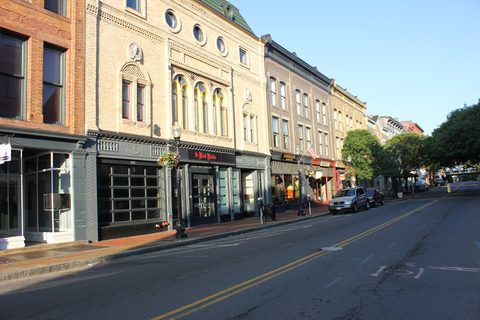
Settlers from Massachusetts bought the land that became Norwalk in 1640 and 1641; homesteaders arrived from Hartford in 1649, and the town incorporated in 1651. Its name likely comes from the Native American "Naramauke." During the Revolution, British forces under General Tryon nearly destroyed the town. Norwalk rebuilt around the water: by 1880, oyster farming dominated local industry, and the city had the world's largest fleet of steam-powered oyster boats, a legacy still marked by the Norwalk Oyster Festival. It reincorporated as a city in 1893 and consolidated into its modern form in 1913. That era also built Norwalk's grandest landmark: financier LeGrand Lockwood, treasurer of the New York Stock Exchange, began his 62-room mansion in 1864, reportedly costing nearly two million dollars by 1868, when his family moved in. Offshore, the Sheffield Island Lighthouse, the current 1868 tower succeeding an 1828 original, has watched over the harbor ever since.
-
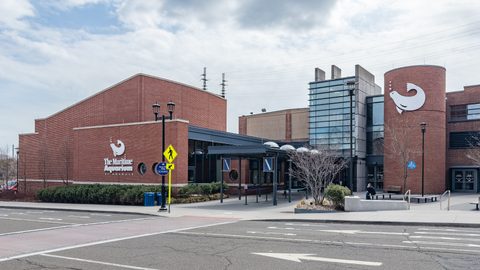
6,800-plus animals, a 110,000-gallon shark habitat, and Pinniped Cove. Open daily, 10-5.
-
A 62-room 1868 Second Empire mansion, a National Historic Landmark since 1971. Guided tours Wed-Sun.
-
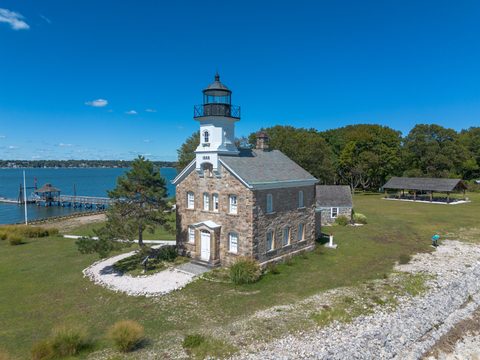
3-hour Seaport Association cruises to the 1868 lighthouse, owned by the Association since 1986.
-
A hands-on children's museum in Mathews Park. Closed Wednesdays.
-
sight
Four historic sites, including an 1835 town house and a circa-1740 law office, dawn to dusk.
-
An all-day bakery-cafe from cookbook author John Barricelli, since 2005.
-
food
A 2025 OpenTable Diner's Choice honoree on SoNo's Washington Street.
-
food
Connecticut-born pho and ramen, on the SoNo restaurant row.
-
Family-owned since decades past, with a seasonal saltwater pool and Adam's Rib on site.
-
stay
A boutique riverfront hotel with newly redesigned rooms and Siena Ristorante on site.
Oyster Town, from Naramauke to consolidation
Settlers from Massachusetts purchased the land that became Norwalk in two transactions, in 1640 and 1641; the first homesteaders arrived from Hartford in 1649, and the town incorporated in 1651. Its name derives from the Algonquin word "noyank," meaning "point of land," or more probably from the Native American name "Naramauke." During the Revolutionary War, British forces under General Tryon nearly destroyed the entire town. Norwalk rebuilt around its harbor: by 1880, oyster farming dominated local industry and Norwalk had the largest fleet of steam-powered oyster boats in the world, a legacy carried today by the city's nickname "Oyster Town" and the annual Norwalk Oyster Festival. The town reincorporated as a city in 1893 and consolidated in 1913 into the city known today. That prosperous era also built Norwalk's grandest landmark: financier LeGrand Lockwood, Treasurer of the New York Stock Exchange in 1862, began building his 62-room mansion in 1864; The New York Times reported in 1867 that it cost nearly two million dollars, and the family moved in by 1868. Offshore, Sheffield Island's first lighthouse was completed in 1828; the current 1868 Victorian limestone lighthouse was added to the National Register of Historic Places in 1989 and has been owned by the Norwalk Seaport Association since 1986.
Getting there
Drivers reach Norwalk via I-95 or the Merritt Parkway (Route 15), both of which pass through the city with multiple exits, plus US Route 7 and US Route 1. Rail travelers use Metro-North's New Haven Line at Rowayton, South Norwalk, and East Norwalk stations, with the Danbury Branch — including the Merritt 7 station — joining the main line at South Norwalk. Amtrak trains pass through Norwalk but do not stop.
A mansion, a lighthouse, and a children's museum
The Lockwood-Mathews Mansion Museum, a 62-room Second Empire mansion designated a National Historic Landmark in 1971, offers guided house tours Wednesday-Sunday at 12, 1, and 2 p.m. (the 3 p.m. slot is an exhibits-only tour), March 12 through December 31, with reduced days in winter. The Norwalk Seaport Association runs 3-hour cruises out to the Sheffield Island Lighthouse from its Water Street dock. The Maritime Aquarium, near the South Norwalk train station, is home to more than 6,800 animals, including a 110,000-gallon shark habitat and the Pinniped Cove seal habitat. Families also gravitate to Stepping Stones Museum for Children in Mathews Park, while the Norwalk Historical Society preserves four historic sites at Mill Hill Historic Park, including an 1835 town house and a circa-1740 law office.
Frequently asked questions
- How do I get to Norwalk?
- Drivers use I-95, the Merritt Parkway (Route 15), US Route 7, or US Route 1. Metro-North's New Haven Line stops at Rowayton, South Norwalk, and East Norwalk, with the Danbury Branch (including Merritt 7 station) joining the main line at South Norwalk; Amtrak passes through without stopping.
- What is the Lockwood-Mathews Mansion Museum?
- A 62-room Second Empire mansion built 1864-1868 for financier LeGrand Lockwood, reportedly costing nearly two million dollars; it was designated a National Historic Landmark in 1971. Guided house tours run Wednesday-Sunday, March 12-December 31.
- Why is Norwalk nicknamed "Oyster Town"?
- By 1880, oyster farming dominated the local economy and Norwalk had the largest fleet of steam-powered oyster boats in the world — a legacy still celebrated at the annual Norwalk Oyster Festival.
- How do I get to the Sheffield Island Lighthouse?
- The Norwalk Seaport Association runs 3-hour cruises to the lighthouse from its Water Street dock. The current 1868 Victorian limestone lighthouse succeeded an 1828 original and has been owned by the Seaport Association since 1986.
- Where can I stay in Norwalk?
- The Norwalk Inn & Conference Center, a family-owned inn on East Avenue with a seasonal saltwater pool, and The Watershed, a boutique riverfront hotel on Main Avenue, are both verified in-town options.
Foliage
Still green this week · most advanced Oct 28–Nov 3
This town never reaches full colour on the state's map — DEEP's eight weeks run out before it turns.
On the Scenic Fairfield foliage driving route.
Derived from the Connecticut DEEP fall foliage map. DEEP's map is a climatological estimate last published in 2023; it describes a normal year, not this one. Stage names are ours. See the statewide forecast.
Connected pages
Nearby
-
Wilton, Connecticut: An Impressionist's Farm on Two Rail Stops
· Wilton, Connecticut
The two towns share a border
-
Darien, Connecticut: Two Stations and a Park Service Founder
· Darien, Connecticut
Darien borders Norwalk, sitting between Stamford and Norwalk on Long Island Sound.
-
New Canaan, Connecticut: A Glass House and the Harvard Five
· New Canaan, Connecticut
New Canaan's parish was carved from northwestern Norwalk and northeastern Stamford land in 1731.
- Stamford, Connecticut: Typewriters, Shavers, and a Rail Junction · Stamford, Connecticut
- Ridgefield, Connecticut: Connecticut's Only Inland Battle · Ridgefield, Connecticut
- Westport, Connecticut: From Onion Fields to an Arts Colony · Westport, Connecticut
Shared history
-
Ridgefield, Connecticut: Connecticut's Only Inland Battle
· Ridgefield, Connecticut
Ridgefield was founded in 1708 by colonists from Norwalk and Milford.
-
Westport, Connecticut: From Onion Fields to an Arts Colony
· Westport, Connecticut
Westport's 1835 incorporation also drew land from Norwalk, alongside Fairfield and Weston, to form the new town.
-
Wilton, Connecticut: An Impressionist's Farm on Two Rail Stops
· Wilton, Connecticut
Wilton was part of Norwalk until it was granted separate town status in 1802.
Same region
-
Weston, Connecticut: Where a Meteorite Founded a Science
· Weston, Connecticut
Both on the Scenic Fairfield foliage route
-
Wilton, Connecticut: An Impressionist's Farm on Two Rail Stops
· Wilton, Connecticut
Both on the Scenic Fairfield foliage route
-
Westport, Connecticut: From Onion Fields to an Arts Colony
· Westport, Connecticut
Both on the Scenic Fairfield foliage route
-
Fairfield, Connecticut: Burned in 1779, Rebuilt on the Green
· Fairfield, Connecticut
Both on the Scenic Fairfield foliage route
See also
-
Midtown, Manhattan: Terminal City and the Tallest Tower
· Midtown, New York
Metro-North's New Haven Line serves Norwalk at South Norwalk, East Norwalk, and Rowayton, with direct trains to Grand Central Terminal.
What travelers think
Log in to react.
No reviews yet.