Ridgefield, Connecticut: Connecticut's Only Inland Battle
Ridgefield, Connecticut
Pictures from Ridgefield
See all 3 photos →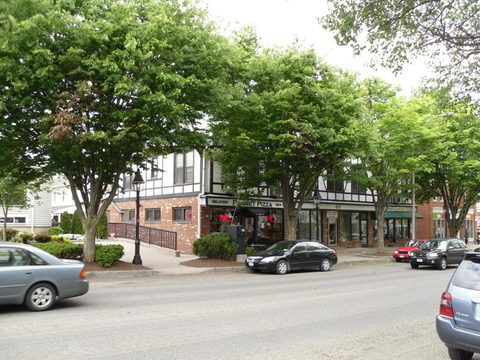
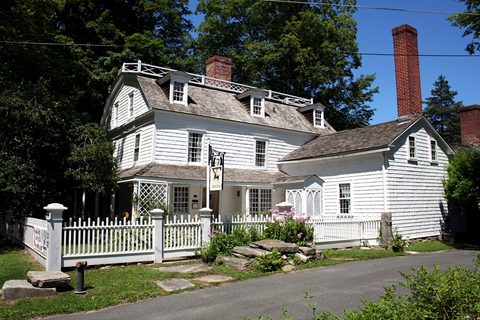
Colonists from Norwalk and Milford founded Ridgefield in 1708, and the town incorporated a year later in Connecticut's southwestern corner on the New York border. It stayed a farming community until wealthy New Yorkers discovered it and began building summer cottages. The Revolution arrived on April 27, 1777: roughly 1,800 British troops under General William Tryon, returning from burning Continental supplies in Danbury, fought Connecticut's only inland battle of the war here. Continental General David Wooster was mortally wounded and died days later in Danbury, while Generals Benedict Arnold and Gold Selleck Silliman organized a barricade of wood and wagons at the north end of town. A British cannonball fired that day still sits lodged in a beam at the Keeler Tavern, a Patriot gathering place. A century later, American Impressionist J. Alden Weir made his home and studio here starting in 1882 — grounds now preserved as Connecticut's first National Historical Park.
-
Colonial-through-1900s history on a four-acre Main Street campus, with a Revolutionary War cannonball still in the beams.
-
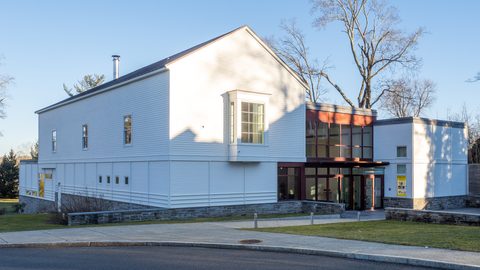
A non-collecting contemporary art museum with a two-acre Sculpture Garden. Free on Third Saturdays.
-
American Impressionist J. Alden Weir's home and studio, Connecticut's first National Historical Park.
-
sight
Rock, jazz, comedy, Broadway, and family shows steps from Main Street, with free parking.
-
sight
A first-run nonprofit movie theater employing people with disabilities, plus a gourmet popcorn shop.
-
food
Hop-forward IPAs, lagers, and cask ales, with a taproom, biergarten, and live music.
-
food
A downtown French bistro serving continuously Monday-Saturday, 11-9:30.
-
food
A gastropub with seafood, Southwestern plates, and weekend brunch, open seven days.
-
stay
A 17-room inn near the village center, with complimentary breakfast on the porch.
The Battle of Ridgefield
Ridgefield was founded in 1708 by colonists from Norwalk and Milford and incorporated a year later, and it remained mainly a farming community until wealthy New Yorkers discovered it and built summer cottages within its borders. That changed for one day on April 27, 1777, when roughly 1,800 British troops under General William Tryon, returning from destroying Continental supplies in Danbury, fought the Battle of Ridgefield — Connecticut's only inland battle of the Revolutionary War. Continental General David Wooster was mortally wounded in the fighting and died days later in Danbury, while Brigadier Generals Benedict Arnold and Gold Selleck Silliman organized a makeshift barricade of wood and wagons at the north end of town for the main engagement. A British cannonball fired that day ended up lodged in a beam of the Keeler Tavern, a Patriot gathering place, and can still be seen there today. A century later, Ridgefield's history took a different turn: American Impressionist J. Alden Weir made his home and studio here starting in 1882, on grounds that straddle the Ridgefield-Wilton line and are preserved today as Weir Farm National Historical Park, Connecticut's first National Historical Park.
Getting there
Ridgefield is a driving town on the US Route 7 / Route 35 corridor: from the north, take I-84 Exit 3 to Route 7 South through Danbury; from the coast, take the Merritt Parkway or I-95 to Route 7 North out of Norwalk; and from New York, take I-287/I-684 to Route 35 East. Metro-North's Danbury Branch of the New Haven Line stops at Branchville station in Ridgefield's Branchville section. Katonah, NY, on the Metro-North Harlem Line, is a common alternative reached by taxi; the nearest Amtrak stops are Stamford, CT (about 22 miles) and New York's Penn Station.
Museums, theaters, and a National Historical Park
The Keeler Tavern Museum & History Center interprets colonial-through-early-20th-century Ridgefield on a four-acre Main Street campus, open March through December, Thursday-Sunday. The Aldrich Contemporary Art Museum, also on Main Street, is a non-collecting contemporary art museum with a two-acre Sculpture Garden. Weir Farm National Historical Park offers grounds and trails open daily, year-round, with seasonal house tours. The Ridgefield Playhouse presents rock, jazz, comedy, Broadway, classical, and family series, while the Prospector Theater is a first-run nonprofit movie theater whose mission is meaningful employment for people with disabilities.
Frequently asked questions
- How do I get to Ridgefield?
- By car: I-84 Exit 3 to Route 7 South from the north, the Merritt Parkway or I-95 to Route 7 North from the coast, or I-287/I-684 to Route 35 East from New York. By rail, Metro-North's Danbury Branch stops at Branchville station in town; Katonah, NY (Harlem Line) is a common taxi-in alternative, and the nearest Amtrak stops are Stamford and New York's Penn Station.
- What was the Battle of Ridgefield?
- Connecticut's only inland battle of the Revolutionary War, fought April 27, 1777, as roughly 1,800 British troops under General William Tryon returned from burning supplies in Danbury. Continental General David Wooster was mortally wounded and died days later.
- What is Weir Farm National Historical Park?
- The home and studio of American Impressionist J. Alden Weir, who lived there from 1882; it straddles the Ridgefield-Wilton line and is Connecticut's first National Historical Park. Grounds and trails are open daily, year-round.
- Can I still see the Revolutionary War cannonball?
- Yes — a British cannonball fired during the 1777 battle remains lodged in a beam at the Keeler Tavern Museum & History Center on Main Street.
- Where can I eat and stay in Ridgefield?
- Nod Hill Brewery, Luc's Café, and The Hideaway are verified in-town options for food and drink; the West Lane Inn, a 17-room bed & breakfast near the village center, is the town's verified lodging.
Foliage
Turning this week · estimated peak Oct 28–Nov 3
On the Scenic Fairfield foliage driving route.
Derived from the Connecticut DEEP fall foliage map. DEEP's map is a climatological estimate last published in 2023; it describes a normal year, not this one. Stage names are ours. See the statewide forecast.
Connected pages
Nearby
- Norwalk, Connecticut: Oyster Town and a Second Empire Mansion · Norwalk, Connecticut
- Danbury, Connecticut: Hat City History, Rail Heritage, and Where to Eat · Danbury, Connecticut
-
Redding, Connecticut: Connecticut's Valley Forge and Mark Twain's Library
· Redding, Connecticut
The two towns share a border
-
Wilton, Connecticut: An Impressionist's Farm on Two Rail Stops
· Wilton, Connecticut
Weir Farm National Historical Park sits directly on the Wilton/Ridgefield line.
Shared history
-
Norwalk, Connecticut: Oyster Town and a Second Empire Mansion
· Norwalk, Connecticut
Ridgefield was founded in 1708 by colonists from Norwalk and Milford.
-
Danbury, Connecticut: Hat City History, Rail Heritage, and Where to Eat
· Danbury, Connecticut
The 1777 British raiders returning from burning Danbury fought the Battle of Ridgefield; Gen. David Wooster, wounded there, died days later in Danbury.
-
Westport, Connecticut: From Onion Fields to an Arts Colony
· Westport, Connecticut
The same April 1777 force that fought the Battle of Ridgefield had landed at Westport's Compo Beach, ambushed by Minutemen on its way back.
Same region
-
Danbury, Connecticut: Hat City History, Rail Heritage, and Where to Eat
· Danbury, Connecticut
Both on the Scenic Fairfield foliage route
-
Brookfield, Connecticut: A Craft Center in an Old Depot
· Brookfield, Connecticut
Both on the Scenic Fairfield foliage route
- New Milford, Connecticut: Roger Sherman's Town Green · New Milford, Connecticut
-
Weston, Connecticut: Where a Meteorite Founded a Science
· Weston, Connecticut
Both on the Scenic Fairfield foliage route
-
Wilton, Connecticut: An Impressionist's Farm on Two Rail Stops
· Wilton, Connecticut
Both on the Scenic Fairfield foliage route
What travelers think
Log in to react.
No reviews yet.