Wilton, Connecticut: An Impressionist's Farm on Two Rail Stops
Wilton, Connecticut
Pictures from Wilton
See all 2 photos →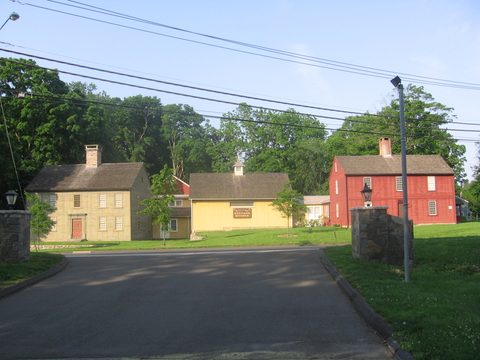
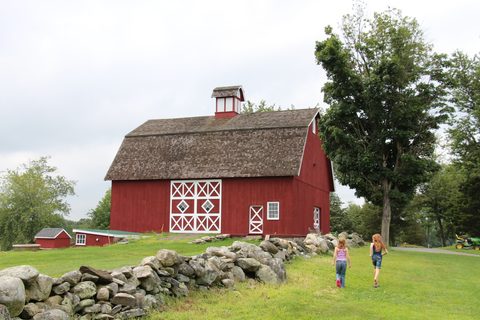
The first written records of the Wilton area date to 1640, when Roger Ludlow purchased land from the Indigenous people between the Norwalk and Saugatuck rivers; the area became a separate parish in 1726 and, over Norwalk's objections, an independent town in 1802. In 1777, British troops retreating from the raid on Danbury burned several Wilton homes, though the town survived largely intact; more than 300 Wilton men served in the Revolution, among them Cato Treadwell, an African American who served three years in the Connecticut Line. Early industries included shoemaking, shirt manufacturing and carriage building, and the Gilbert and Bennett Manufacturing Company began making wire sieves in 1834. In 1882, painter Julian Alden Weir acquired a 153-acre Branchville farm by trading a still-life painting valued at $560; he painted there for nearly four decades and hosted Childe Hassam, John Twachtman and other artists who came to define American Impressionism.
-
Founded 1938, with a Colonial Garden.
-
sight
An educational working farm with animals.
-
sight
Trails and programs since 1972.
-
sight
Community theater since 1937.
-
food
A classic diner since 1921.
-
food
Contemporary pub fare, known for its burger.
-
food
Fish and chips and the Graceland Burger.
-
A neighborhood market and deli counter.
An artist's farm and a rural holdout
The industrial era largely bypassed Wilton's small farming community, and 20th-century zoning preserved its rural character, leaving a mix of 18th- and 19th-century homes and small subdivisions. Cannondale, the bicycle company founded in 1971, took its name from Wilton's own Cannondale train station. Wilton's notable residents have included Weir, jazz musician Dave Brubeck, illustrator Lillian Hoban, cartoonist Dik Browne, and actors Christopher Walken and Paul Dano. Weir Farm National Historical Park, straddling the Wilton/Ridgefield line, preserves the home and studio where Weir worked.
Getting there
Wilton sits on the U.S. Route 7 corridor in the Norwalk River Valley, with Route 33 (Ridgefield Road) as the other main road. Wilton is served by two of its own Metro-North stations, Wilton and Cannondale, both on the Danbury Branch, which meets the New Haven Line at South Norwalk; many weekday trains run through to Stamford and New York City without a change there, though the branch is not electrified (catenary was removed in 1961), so these are diesel-hauled trains. Merritt 7 station, the branch's next stop toward South Norwalk, is in Norwalk, not Wilton.
Frequently asked questions
- How do I get to Wilton?
- By car on US Route 7 or Route 33, or by train — Wilton has two of its own Metro-North Danbury Branch stations, Wilton and Cannondale, both connecting to the New Haven Line at South Norwalk.
- Do I need to change trains to reach Wilton from Grand Central?
- Not always — many weekday Danbury Branch trains run through to Stamford and New York City without a transfer at South Norwalk, though the branch itself is diesel-hauled (not electrified).
- What is Weir Farm National Historical Park?
- The former home and studio of Impressionist painter J. Alden Weir, straddling the Wilton/Ridgefield line — the only National Historical Park dedicated to an American artist's home, studio and grounds. Buildings open seasonally, May-October; grounds open daily, sunrise to sunset, year-round.
- Is there a hotel in Wilton?
- No hotel, inn or B&B inside Wilton could be verified. The nearest option is the West Lane Inn in neighboring Ridgefield, about 17 rooms.
Foliage
Turning this week · estimated peak Oct 28–Nov 3
On the Scenic Fairfield foliage driving route.
Derived from the Connecticut DEEP fall foliage map. DEEP's map is a climatological estimate last published in 2023; it describes a normal year, not this one. Stage names are ours. See the statewide forecast.
Connected pages
Nearby
-
Ridgefield, Connecticut: Connecticut's Only Inland Battle
· Ridgefield, Connecticut
Weir Farm National Historical Park sits directly on the Wilton/Ridgefield line.
-
Redding, Connecticut: Connecticut's Valley Forge and Mark Twain's Library
· Redding, Connecticut
The village of Georgetown straddles Wilton and Redding.
-
Weston, Connecticut: Where a Meteorite Founded a Science
· Weston, Connecticut
Route 57 runs north from Weston's town center to US Route 7 in Wilton's Georgetown section.
-
Norwalk, Connecticut: Oyster Town and a Second Empire Mansion
· Norwalk, Connecticut
The two towns share a border
-
New Canaan, Connecticut: A Glass House and the Harvard Five
· New Canaan, Connecticut
The two towns share a border
-
Westport, Connecticut: From Onion Fields to an Arts Colony
· Westport, Connecticut
The two towns share a border
Shared history
-
Norwalk, Connecticut: Oyster Town and a Second Empire Mansion
· Norwalk, Connecticut
Wilton was part of Norwalk until it was granted separate town status in 1802.
Same region
-
Ridgefield, Connecticut: Connecticut's Only Inland Battle
· Ridgefield, Connecticut
Both on the Scenic Fairfield foliage route
-
Weston, Connecticut: Where a Meteorite Founded a Science
· Weston, Connecticut
Both on the Scenic Fairfield foliage route
-
Westport, Connecticut: From Onion Fields to an Arts Colony
· Westport, Connecticut
Both on the Scenic Fairfield foliage route
-
Norwalk, Connecticut: Oyster Town and a Second Empire Mansion
· Norwalk, Connecticut
Both on the Scenic Fairfield foliage route
What travelers think
Log in to react.
No reviews yet.