
Ocean Beach, San Francisco: the strand, Sutro Heights, the Sutro Baths ruins and Lands End
Ocean Beach, California
Pictures from Ocean Beach
See all 1 photos →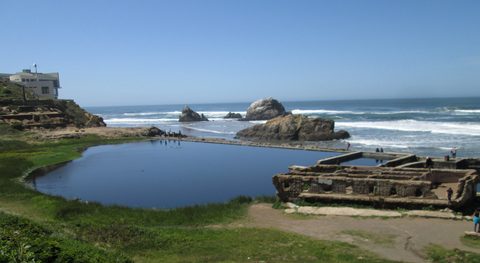
Ocean Beach is the Pacific strand of San Francisco, and the National Park Service administers it as part of the Golden Gate National Recreation Area. The Golden Gate National Parks Conservancy gives the beach as open 24 hours a day, seven days a week. Fires are permitted from 1 March to 31 October, in the provided fire rings between Stairwells 15 and 20. From Stairwell 21 to Sloat Boulevard the Ocean Beach Snowy Plover Protection Area, defined at 36 CFR 7.97(d), covers the beach and the tidelands to 1,000 feet offshore. At the foot of Ortega Street, at very low tides, the worn ribs of the hull of the ship King Philip stand out of the sand. Above the sand at Point Lobos are the Sutro Heights Park that Adolph Sutro laid out in 1885, the ruins of his baths, the Cliff House, the Camera Obscura and the trails of Lands End.
-
walk
The Pacific strand, open 24 hours a day, with fires allowed from 1 March to 31 October in the rings between Stairwells 15 and 20.
-
Defined at 36 CFR 7.97(d): from Stairwell 21 to Sloat Boulevard, dogs must be on a leash of not more than six feet from 1 July to 15 May.
-
At the foot of Ortega Street, at very low tides, the worn ribs of the hull of the ship King Philip stand out of the sand.
-
sight
An apartment building at 1626 Great Highway, listed on the National Register of Historic Places on 24 February 1983, reference number 83001232.
-
sight
The building above Seal Rocks: the present reinforced concrete structure, by the Reid Brothers, opened to the public on 1 July 1909.
-
sight
Built by Floyd Jennings in 1946 at 1096 Point Lobos Avenue and listed on the National Register of Historic Places in 2001, reference number 01000522.
-
sight
What remains of the bathhouse Adolph Sutro began in 1894; demolition began in 1964 and a fire destroyed what was left in 1966.
-
walk
Adolph Sutro's garden of 1885, over twenty acres of walkways and statuary replicas, open from 6 a.m. until one hour after sunset.
-
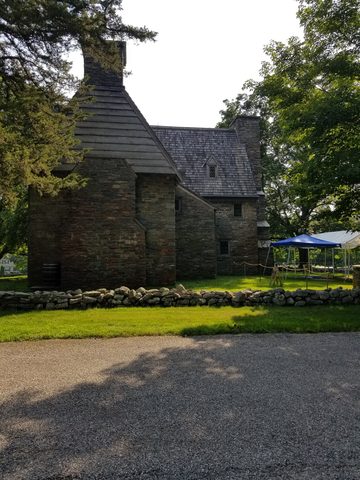
A small wood-frame building of about 1885 on an elevated foundation of cut and dressed sandstone.
-
tip
The parking lot at Lands End where the wheelchair-accessible trails begin from the trailhead.
-
The visitor centre at 680 Point Lobos Avenue, open 9 a.m. to 5 p.m. seven days a week; the telephone number is (415) 426-5240.
-
Trails winding around rocky cliffs above the ocean through cypress and eucalyptus; Lands End is open from 6 a.m. until one hour after sunset.
-
A memorial to a Second World War cruiser that sustained 45 hits and 25 fires during the Battle of Guadalcanal in 1942.
-
sight
The promontory the Spanish named for the lobos marinos, the sea lions that once hauled up on the rocks offshore.
The strand and the Great Highway frontage
The beach is federal ground, administered by the National Park Service within the Golden Gate National Recreation Area, and the Golden Gate National Parks Conservancy gives it as open 24 hours a day. Fires are permitted from 1 March to 31 October and are not permitted from 1 November to the end of February; they are allowed only in the provided fire rings, and only between Stairwells 15 and 20. The Western Snowy Plover, a threatened species, rests here in winter, and the Ocean Beach Snowy Plover Protection Area is defined at 36 CFR 7.97(d): it covers the shoreline and beach between Stairwell 21 and Sloat Boulevard together with the tidelands and submerged lands to 1,000 feet offshore, and dogs there must be on a leash of not more than six feet from 1 July to 15 May. The National Park Service has built accessible routes from the parking lots to the promenade.
At the foot of Ortega Street, at very low tides, the worn ribs of the hull of the ship King Philip stand out of the sand. Between 1850 and 1926, 20 ships came to grief on Ocean Beach.
The Moss Flats Building faces the strand at 1626 Great Highway and was listed on the National Register of Historic Places on 24 February 1983, reference number 83001232. Behind the sand, San Francisco Recreation and Parks holds two properties. Sunset Dunes covers 50.60 acres of the former Great Highway roadway, is recorded with the property type Parkway and is grouped in the Stern Grove Complex; sf.gov names Irving, Judah, Lawton, Noriega, Taraval and Sloat as its access streets. The Balboa Natural Area covers 1.84 acres and is grouped in the Richmond Complex; no street address for it appears in the city's property records, so none is given here.
Sutro Heights, the Sutro Baths and Lands End
In 1885 Adolph Sutro created Sutro Heights Park, a formal public garden covering over twenty acres, with flower beds, forests, wide walkways, hedge mazes and parterres. He imported over 200 concrete replicas of Greek and Roman statuary from Belgium, and the reclining lions at the main gate are reproductions of the originals. The National Park Service records a full-time staff of seventeen: ten gardeners, a tree man, a coachman, driver, gatekeeper, machinist and helper, and a road maker. An observation platform plaza looks toward the Cliff House, and the Dolce far Niente balcony is a long terrace-like structure on the cliff above Ocean Beach; there were a glass-paned conservatory and garden sheds, and a semi-circular parapet stands at the western end of the site. Two octagonal wood-frame gatekeepers' houses were built around 1885 and 1886, one at the main gate and one at the lower gate, clad in horizontal tongue-in-groove siding, with pointed roofs and metal weathervanes in the shape of roosters. The well house, built around 1885, stands on an elevated foundation of cut and dressed sandstone. The park is open from 6 a.m. until one hour after sunset.
The first Cliff House was built in 1863, a one-storey wood-frame structure on top of the cliff overlooking Seal Rocks, reached by a private road built for the purpose, Point Lobos Avenue, and from the 1860s by a Sunday horse-drawn stagecoach from downtown. Adolph Sutro bought it in 1881, and fire destroyed the wood-frame building on Christmas Day 1894. The second Cliff House opened in 1896 at a cost of $75,000, an eight-storey castle-like structure with turrets, decorative spires, roof dormers and an observation tower; it survived the earthquake of 1906 and fire destroyed it in September 1907. The third building, of reinforced concrete and by the Reid Brothers, opened to the public on 1 July 1909. The Sutro family sold it in 1937, the National Park Service acquired the property in 1977 and rehabilitated the building in 2005 to return it to its original neoclassical design, adding an adjacent Sutro Wing. No source states current opening hours for it, so none are given here.
Behind the Cliff House stands the Camera Obscura, at 1096 Point Lobos Avenue, listed on the National Register of Historic Places on 23 May 2001, reference number 01000522. Floyd Jennings built it in 1946, a square wood-frame housing approximately 17.5 feet by 17.5 feet on a six-inch concrete pad. The apparatus is a circular parabolic dish of shaped plywood surfaced with white enamel, anchored by a metal frame and a rod that penetrates the floor into the native rock; a six-foot parabolic projection table stands centrally in the room, with the lens and mirror 150 inches above it in a rotating metal hood turned by an electric motor. In 1957 the exterior was remodelled to resemble a giant camera, following the wishes of the then Cliff House owner George K. Whitney, Sr.
Sutro began the baths in 1894 with an ocean pool aquarium among the rocks north of the Cliff House, filled through a tunnel eight feet by 153 feet cut through the cliff, and went on to build a public bathhouse covering three acres. A classic Greek portal opened to a glass enclosure containing seven swimming pools at various temperatures, with slides, trapezes, springboards and a high dive; the front entrance held natural history exhibits and galleries of sculpture, painting, tapestry and artifacts. High tide could fill the 1.7 million gallons the pools required in one hour. The baths could take 10,000 people at one time and offered 20,000 bathing suits and 40,000 towels for rent. In 1897 John Harris, an African American, challenged the baths' whites-only policy in court and won his case. Sutro died in 1898; the baths ran under Emma Merritt and then Gustav Sutro until 1937, when part was converted to an ice rink, and were sold to the Whitneys in 1952. In 1964 developers bought the site and began demolition, and in 1966 a fire destroyed what was left. The ruins are administered by the National Park Service.
Lands End is open from 6 a.m. until one hour after sunset. Its trails wind around rocky cliffs above the ocean, through stands of cypress and eucalyptus, and wheelchair-accessible trails begin from the trailhead at the Merrie Way parking lot. The Lands End Lookout Visitor Center is at 680 Point Lobos Avenue. Along the trails is the memorial to the USS San Francisco, a Second World War cruiser that sustained 45 hits and 25 fires during the Battle of Guadalcanal in 1942. The Spanish named the promontory Point Lobos for the lobos marinos, the sea lions that once hauled up on the rocks offshore, and under Mexican rule this section of coastline was part of a land grant called Rancho Punta de Lobos.
Getting there
Steer by the addresses and by the numbered stairwells instead, which are how the National Park Service and 36 CFR 7.97(d) both address the sand: fires between Stairwells 15 and 20, and the Snowy Plover Protection Area from Stairwell 21 south to Sloat Boulevard.
The addresses that matter: the Lands End Lookout Visitor Center, 680 Point Lobos Avenue, San Francisco, CA 94121, telephone (415) 426-5240, open 9 a.m. to 5 p.m. seven days a week. The Camera Obscura, 1096 Point Lobos Avenue. The Moss Flats Building, 1626 Great Highway. Sunset Dunes is reached from Irving, Judah, Lawton, Noriega, Taraval and Sloat.
Wheelchair-accessible trails begin from the trailhead at the Merrie Way parking lot, and the National Park Service has built accessible routes from the beach parking lots to the promenade. Sutro Heights Park and Lands End are both open from 6 a.m. until one hour after sunset; the beach itself is open 24 hours a day.
Frequently asked questions
- When is Ocean Beach open, and can I light a fire?
- The Golden Gate National Parks Conservancy gives the beach as open 24 hours a day, seven days a week. Fires are permitted from 1 March to 31 October and are not permitted from 1 November to the end of February. They are allowed only in the provided fire rings, and only between Stairwells 15 and 20. Sutro Heights Park and Lands End keep different hours from the sand: both are open from 6 a.m. until one hour after sunset.
- What are the rules for dogs on the beach?
- The Ocean Beach Snowy Plover Protection Area is defined at 36 CFR 7.97(d). It covers the shoreline and beach between Stairwell 21 and Sloat Boulevard, together with the tidelands and submerged lands to 1,000 feet offshore. Within it, dogs must be on a leash of not more than six feet from 1 July to 15 May. The Western Snowy Plover is a threatened species and rests on Ocean Beach in winter.
- Can I go inside the Cliff House or the Camera Obscura?
- No source states current opening hours for either, so none are given here. The Cliff House is a reinforced concrete building by the Reid Brothers that opened to the public on 1 July 1909; the National Park Service acquired the property in 1977 and rehabilitated the building in 2005, adding an adjacent Sutro Wing. The Camera Obscura stands behind it at 1096 Point Lobos Avenue. The Lands End Lookout Visitor Center at 680 Point Lobos Avenue is open 9 a.m. to 5 p.m. seven days a week, telephone (415) 426-5240.
- What is there to see at Sutro Heights Park?
- Adolph Sutro created the garden in 1885 and it covers over twenty acres, with flower beds, forests, wide walkways, hedge mazes and parterres. He imported over 200 concrete replicas of Greek and Roman statuary from Belgium; the reclining lions at the main gate are reproductions of the originals. An observation platform plaza looks toward the Cliff House, and the Dolce far Niente balcony is a long terrace-like structure on the cliff above Ocean Beach. A semi-circular parapet stands at the western end of the site, and two octagonal wood-frame gatekeepers' houses of about 1885 and 1886 carry pointed roofs and metal weathervanes in the shape of roosters. The well house, built around 1885, stands on an elevated foundation of cut and dressed sandstone. The park is open from 6 a.m. until one hour after sunset.
- Which buildings here carry a register citation?
- The Camera Obscura, at 1096 Point Lobos Avenue, was listed on the National Register of Historic Places on 23 May 2001, reference number 01000522. The Moss Flats Building, at 1626 Great Highway, was listed on the National Register of Historic Places on 24 February 1983, reference number 83001232. The Sutro Baths ruins, Sutro Heights Park, the Cliff House and Lands End all stand on ground the National Park Service administers within the Golden Gate National Recreation Area.
- What happened to the Sutro Baths?
- Adolph Sutro began the works in 1894 with an ocean pool aquarium among the rocks north of the Cliff House and went on to build a public bathhouse covering three acres, with seven swimming pools at various temperatures under a glass enclosure. Sutro died in 1898; the baths ran under Emma Merritt and then Gustav Sutro until 1937, when part was converted to an ice rink, and were sold to the Whitneys in 1952. In 1964 developers bought the site and began demolition, and in 1966 a fire destroyed what was left. The ruins are administered by the National Park Service.
Connected pages
Nearby
-
Golden Gate Park, San Francisco: the Music Concourse, the gardens, Stow Lake and the windmills
· Golden Gate Park, California
Across the Great Highway: the Beach Chalet at 1000 Great Highway, the Dutch and Murphy Windmills and the Roald Amundsen monument.
Same region
-
The Presidio, San Francisco: Fort Point, Crissy Field, the Main Post and the coast batteries
· The Presidio, California
The other Golden Gate National Recreation Area ground in the city, with Baker Beach, Fort Point and Crissy Field.
-
Inner Richmond, San Francisco: Clement Street, the Columbarium and the Richmond branch library
· Inner Richmond, California
The Pacific end of the Richmond: the beach, Sutro Heights Park and the Lands End Lookout Visitor Center at 680 Point Lobos Avenue.
What travelers think
Log in to react.
No reviews yet.