_-_south_facade.JPG)
Tower Hamlets, London: the Tower, three Hawksmoor churches, Brick Lane and the West India Docks
Tower Hamlets, England
Pictures from Tower Hamlets
See all 1 photos →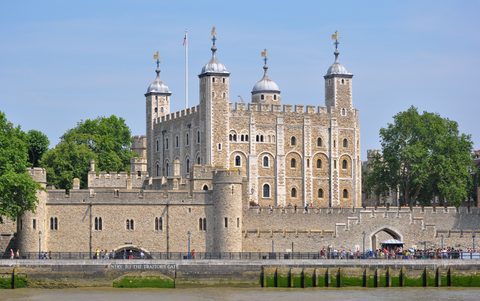
Tower Hamlets is a London borough east of the City, and nobody says they are going to Tower Hamlets: they say Brick Lane, Bethnal Green, Wapping or Canary Wharf. Nicholas Hawksmoor built three churches here between 1714 and 1730 — Christ Church Spitalfields, St George in the East and St Anne's Limehouse — and Historic England grades all three at I. The Tower of London stands at Tower Hill, immediately east of the City of London boundary, and is a World Heritage Site, NHLE 1000092. Victoria Park covers 85.15 hectares between the Regent's Canal and the Hertford Union Canal, and opens at 7am every day of the year. Young V&A and London Museum Docklands both charge nothing. Whitechapel Gallery closes on Mondays. Wilton's Music Hall of 1859 still works as a theatre, and a lighthouse of 1864-66 stands at Trinity Buoy Wharf where the Lea meets the Thames.
-
sight
A World Heritage Site, NHLE 1000092, and a scheduled monument, NHLE 1002061, at Tower Hill; the White Tower inside it is Grade I, NHLE 1260258.
-
The north bank half is Grade I, NHLE 1357515, and Tower Bridge Approach is Grade I, NHLE 1065833, both listed on 27 September 1973.
-
Hawksmoor's church of 1714 to 1729 on Commercial Street, with a tower and spire 202 feet high; Grade I, NHLE 1357795. The parish asks enquirers to telephone 020 7377 2440.
-
sight
A market hall of 1885 to 1893 by George Campbell Sherrin, Grade II, NHLE 1065750; free to enter, and open 8am on Thursdays against 10am on the other weekdays.
-
tour
Ten rooms on four storeys and a basement, staged by candlelight with no labels and no glass; visits are by timed booking. The terrace is Grade II, NHLE 1357829.
-
sight
A Huguenot chapel of 1743, then a Methodist chapel, then a synagogue, and a mosque since 1976; Grade II*, NHLE 1240697. Prayer times are published rather than opening hours.
-
sight
Opened 1901 in a Charles Harrison Townsend building, Grade II*, NHLE 1065820; closed Mondays, open to 9pm on Thursdays, with one ticketed exhibition a season.
-
sight
Free, open daily 10.00 to 17.45 with the galleries closing from 17.00; the 1872 building is Grade II*, NHLE 1357777, and reopened on 1 July 2023.
-
sight
Sir John Soane's church of 1826 to 1828, Grade I, NHLE 1065245, about 160 metres south of Young V&A across Bethnal Green Gardens.
-
walk
Open 7am to dusk, 365 days a year, and free; a registered park and garden at Grade II*, NHLE 1000178, of 85.15 hectares between two canals.
-
sight
Founded by Trinity House in 1695 as 28 dwellings for retired masters of ships and their widows; Grade I, NHLE 1241071, and seen from Mile End Road.
-
A music hall of 1859 seating 300, Grade II*, NHLE 1065173; check the performance programme, since no source states building or bar opening hours.
-
sight
Hawksmoor's church with four pepper-pot turrets, Grade I, NHLE 1357779; a 1964 church stands inside the shell the 1941 firebombing left.
-
The filled-in entrance lock of the London Docks, with a river stair down to the foreshore that is usable at low tide; the stairs are Grade II, NHLE 1065803.
-
sight
Hawksmoor's Limehouse church of 1727, Grade I, NHLE 1357808, flying the White Ensign 24 hours a day; a pyramid of about 1730 stands in the churchyard, NHLE 1031537.
-
sight
Free, open daily 10am to 5pm, in a sugar warehouse of 1802 that is Grade I, NHLE 1242440; twelve galleries plus Mudlarks over two floors.
-
Free and open daily to the public until 9pm or sunset in summer, under a timber lattice roof directly above the Elizabeth line platforms at Canary Wharf.
-
sight
A lighthouse of 1864-66 by James Douglass at the mouth of the Lea, Grade II, NHLE 1242382, now housing Longplayer; the site opens 7am to 7pm.
Spitalfields, Brick Lane and Whitechapel
Christ Church Spitalfields stands on Commercial Street over the market hall. Nicholas Hawksmoor designed it, it was built between 1714 and 1729, and it was consecrated in July 1729. The tower and spire stand 202 feet high. It was one of the churches funded under the 1711 Act of Parliament that created the Commission for Building Fifty New Churches; twelve were built, six of them by Hawksmoor. Richard Bridge built the organ in 1735, with more than two thousand pipes. Ewan Christian altered the church substantially in 1850, removing the side galleries and blocking the corner windows; the Friends of Christ Church Spitalfields was founded in 1976 and the restoration it funded was completed in 2004, returning the interior to its pre-1850 form. The church is Grade I, NHLE 1357795, the drinking fountain in the churchyard boundary wall is Grade II, NHLE 1065202, and the war memorial is Grade II, NHLE 1444657, listed on 15 March 2017. It is an active Anglican parish church and a concert venue. No source states its opening hours, so none are given here; the parish asks enquirers to telephone 020 7377 2440.
Old Spitalfields Market trades at 16 Horner Square. Charles I granted a licence in 1638 for flesh, fowl and roots to be sold on Spittle Fields, then open country east of the City. The surviving market hall was built between 1885 and 1893 for Robert Horner, the market's last private owner, to designs by George Campbell Sherrin, and is Grade II, NHLE 1065750, listed on 23 July 1986. The City of London Corporation bought the market in 1920 and extended it west to Steward Street in 1926. The wholesale fruit and vegetable trade moved out to New Spitalfields Market at Leyton in 1991, leaving the hall to retail traders, and a 2005 regeneration created Bishops Square and Crispin Place alongside it. Entry is free. The hall opens Monday, Tuesday, Wednesday and Friday 10am to 8pm, Thursday 8am to 6pm, Saturday 10am to 6pm and Sunday 10am to 5pm, and individual traders keep their own hours.
Dennis Severs' House at 18 Folgate Street was built in about 1724, one of a terrace of Huguenot silk-weavers' houses off Bishopsgate; the terrace is Grade II, NHLE 1357829, listed on 29 December 1950 as '10-18, Folgate Street E1', and stands in the Elder Street conservation area. The American artist Dennis Severs bought it in 1979 and lived in it until his death in 1999. It has ten rooms across four storeys and a basement, each staged as the interior of an imagined Huguenot silk-weaving family, the Jervises, and it is shown in silence, by candlelight, with no labels and no glass. The Spitalfields Trust, a registered charity numbered 273695, acquired the house shortly before Severs died and runs it. In 2021 recordings of Severs' own commentary were rediscovered and adapted into a guided Dennis Severs' Tour delivered by an actor. Visits are by timed booking, and the operator publishes bookable slots rather than fixed opening hours.
The Brick Lane Jamme Masjid at 59 Brick Lane went up in 1743 as La Neuve Eglise, a Protestant chapel for Huguenot refugees from France. In 1809 it became a Wesleyan chapel known as The Jews' Chapel, rented by the London Society for Promoting Christianity Amongst the Jews; from 1819 it was a Methodist chapel; in 1891 it became Machzike Hadath, the Spitalfields Great Synagogue, serving Jewish immigrants from eastern Europe; and in 1976 it reopened as the London Jamme Masjid for the growing Bangladeshi community, the same building in continuous religious use by three faiths. A sundial set into the Fournier Street elevation carries the Latin motto 'Umbra sumus', we are shadow, after Horace, and sermons are given in English, Arabic and Bengali. The building is Grade II*, NHLE 1240697, and the adjoining former school and vestry is Grade II, NHLE 1065278, listed on 19 February 1970. It is a working mosque and publishes prayer times rather than opening hours.
Whitechapel Gallery at 77-82 Whitechapel High Street opened in 1901 in a building by Charles Harrison Townsend in the British Modern Style, Grade II*, NHLE 1065820, listed on 27 September 1973. It showed Picasso's Guernica on its Roland Penrose-organised tour in protest at the Spanish Civil War, gave Jackson Pollock his first British retrospective in 1958, staged 'This is Tomorrow' in 1956, and showed David Hockney, Bridget Riley and Patrick Caulfield in 'The New Generation' in 1964. In 2009 it expanded into the neighbouring former Passmore Edwards library, Grade II, NHLE 1065733, at a cost of about £13.5 million, roughly doubling its size and nearly tripling exhibition space, part-funded by the Heritage Lottery Fund. It closes on Mondays and opens Tuesday and Wednesday 11am to 6pm, Thursday 11am to 9pm and Friday to Sunday 11am to 6pm, running one ticketed exhibition and several free displays each season.
Bethnal Green, Mile End and Bow
Young V&A stands on Cambridge Heath Road and opened in 1872 as the Bethnal Green Museum, a branch of the South Kensington Museum. Its iron frame is the prefabricated structure built at South Kensington in 1856-57, dismantled and re-erected here when the main V&A buildings went up, and James William Wild designed the red brick Rundbogenstil exterior around that iron shell. The mosaic panels on the facade were made from designs by F. W. Moody by female students of the South Kensington Museum's mosaic class. It was redefined as the Museum of Childhood in 1974, later the V&A Museum of Childhood, and reopened as Young V&A on 1 July 2023 after a £13 million transformation. The building is Grade II*, NHLE 1357777, listed on 27 September 1973, and stands in the Bethnal Green Gardens conservation area. Admission is free and it opens daily 10.00 to 17.45, with the galleries closing from 17.00.
Bethnal Green Gardens begin immediately south of the museum and are a registered park and garden, Grade II, NHLE 1001673, of 1.24 hectares. St John on Bethnal Green stands at their southern end, about 160 metres south of Young V&A. Sir John Soane designed it and it was built between 1826 and 1828; it is one of three churches Soane designed for the Church Building Commission, with St Peter's Walworth and Holy Trinity Marylebone. It is Grade I, NHLE 1065245, listed on 18 July 1949. The pipe organ was installed in 1950 by Rest Cartwright, with a case designed by Martin Travers, and fourteen Stations of the Cross were commissioned from the painter Chris Gollon in 2000. The parish describes its churchmanship as Modern Catholic. It is an active Anglican parish church, also used for concerts and events, and no source states its opening hours, so none are given here.
Victoria Park opens off Grove Road in Bow. It opened in 1845, laid out for the benefit of the East End working population, and the council gives its size as 86 hectares, about 212 acres, against the 85.15 hectares Historic England records for the registered area. It is a registered park and garden, Grade II, NHLE 1000178, registered on 1 October 1987, and there is a Victoria Park conservation area; a registered park carries a grade but is not a listed building. Angela Burdett-Coutts paid for the Gothic drinking fountain at the centre of the park, listed in its own right at Grade II, NHLE 1235552, on 4 February 1975. The Regent's Canal runs along the park's southern edge and the Hertford Union Canal along the north, and the Hackney boundary runs against its northern edge. The park opens at 7am and closes at dusk, 365 days a year, and is free.
Trinity Green Almshouses face Mile End Road. The Corporation of Trinity House founded them in 1695 on land given by Captain Henry Mudd of Ratcliffe and built them as 28 dwellings for, in the founding wording, 28 decay'd Masters and Commanders of Ships or the widows of such. The design is attributed to Sir William Ogbourne, though some accounts have credited Sir Christopher Wren. Two rows of houses face each other across a central green, with a chapel closing the far end. Bombing in the Second World War destroyed the range north of the chapel; the London County Council bought and restored what survived in 1954, refitting the chapel with 18th-century panelling from Bradmore House. The group is Grade I, NHLE 1241071, listed on 29 December 1950. The houses are private residences and the interiors are not open to visitors, so the green is seen from Mile End Road.
Columbia Road and its flower market are in Tower Hamlets rather than in Hackney. 2-12 Columbia Road and Leopold Buildings are Grade II, NHLE 1242116; the K2 telephone kiosk on the traffic island at the junction is Grade II, NHLE 1357551; and Columbia Market Nursery School is Grade II, NHLE 1393668, with its gate piers and iron railings Grade II, NHLE 1065225.
Wapping, Shadwell and Limehouse
The Tower of London stands at Tower Hill, immediately east of the City of London boundary. It is a World Heritage Site, NHLE 1000092, and a scheduled monument, NHLE 1002061, and neither of those designations carries a grade. The buildings inside carry their own: the White Tower is Grade I, NHLE 1260258, the Chapel of St Peter ad Vincula Grade I, NHLE 1357540, the inner curtain wall Grade I, NHLE 1242062, the outer curtain wall Grade I, NHLE 1242026, and the Middle Tower Grade I, NHLE 1065766. Tower Hamlets Council's list of conservation areas includes one named The Tower. No source states opening hours or an admission price, so neither is given here.
Tower Bridge leaves the borough at Tower Bridge Approach. Historic England lists the northern half separately from the southern: 'Tower Bridge (that part in London Borough of Tower Hamlets)' is Grade I, NHLE 1357515, listed on 27 September 1973, and Tower Bridge Approach is Grade I, NHLE 1065833, listed the same day, both on the north bank in E1W. The southern part carries its own entry, NHLE 1385980. No source states opening hours or an admission price for the crossing, so none are given here.
Wilton's Music Hall is at 1 Graces Alley, off Cable Street. The premises were known from about 1826 as the Mahogany Bar, reputedly because the landlord installed a mahogany bar before anyone else in the area. John Wilton took the business over around 1850 and built his Magnificent New Music Hall behind the pub in 1859, to a design by Jacob Maggs; the hall occupies the back of a terrace of three 18th-century houses plus the pub. Fire destroyed it in 1877 and it was rebuilt to designs by J. Buckley Wilson. The East End Mission of the Methodist Church bought it and ran it as a mission hall until 1956. It spent about twenty years on Historic England's Heritage at Risk Register; the second phase of restoration cost roughly £2.6 million and the restored spaces reopened in October 2015. The hall and gallery together seat 300. It is Grade II*, NHLE 1065173, listed on 7 April 1971, and stands in the Wiltons Music Hall conservation area. It works as a theatre and bar with a performance programme, and the operator also runs ticketed history tours of the building; no source states building or bar opening hours, so none are given here.
St George in the East is at 14 Cannon Street Road. Nicholas Hawksmoor designed it, it was built between 1714 and 1729 under the 1711 Commission for Building Fifty New Churches, and the first rector took office in 1729. Four octagonal 'pepper-pot' turrets on the roof give it its silhouette above Cable Street. German firebombing in May 1941 gutted the interior, but the outer walls, the west tower and the turrets stood; a modern church was built inside the surviving shell in 1964, with a flat constructed under each corner turret, so the ruin and the new church are one building. Its replacement bells were cast at the Whitechapel Bell Foundry on Whitechapel Road. It is Grade I, NHLE 1357779, listed on 29 December 1950, and stands in the St George in the East conservation area. It is an active Anglican parish church sharing its site with the Centre for Theology and Community, and no source states its opening hours, so none are given here.
Wapping Pier Head is the filled-in entrance lock of the London Docks on Wapping High Street, with a terrace of houses on either side of it. Historic England lists the parts of the group separately, which is why it carries six numbers: Wapping Old Stairs, meaning the stairs and the flagged passage down from Wapping High Street, is Grade II, NHLE 1065803, listed on 27 September 1973; 1-4 Wapping Pier Head is Grade II, NHLE 1260059, and 5-10 Wapping Pier Head is Grade II, NHLE 1065813, both listed on 29 December 1950, with 4½ Wapping Pier Head at NHLE 1065812; the iron railings and lamp brackets are Grade II, NHLE 1065811; and the stone bollards outside the Town of Ramsgate are Grade II, NHLE 1065805. The group stands in the Wapping Pierhead conservation area. Wapping Old Stairs runs down beside the Town of Ramsgate public house to the Thames foreshore and is usable at low tide. Five more river stairs in the borough carry their own entries at Grade II: Alderman Stairs, NHLE 1357873, Pelican Stairs, NHLE 1065814, Shadwell Dock Stairs, NHLE 1065138, Stone Stairs, NHLE 1065139, and Ratcliffe Cross Stairs, NHLE 1241304. The surviving boundary walls of the former London Docks at Thomas More Street and East Smithfield are Grade II, NHLE 1065828. The street, the garden and the stair are public and free.
St Anne's Limehouse stands on Three Colt Street. Nicholas Hawksmoor designed it, Edward Strong the Younger built it, it was completed in 1727 and it was consecrated in 1730. Queen Anne, holding that a church so close to the river would be a convenient place of registry for sea captains, granted it the right to display the White Ensign, and it flies it 24 hours a day, 365 days a year. The tower carries a golden ball on its flagpole which Trinity House adopted as a navigation mark for shipping on the Thames. A stone pyramid of about 1730 stands in the churchyard, inscribed 'The wisdom of Solomon', and is Grade II in its own right, NHLE 1031537, as 'Pyramid monument approximately 25 metres north west of St Anne's Limehouse parish church'. The church was gutted by fire on Good Friday 1850 and restored between 1851 and 1854 by Philip Hardwick; the 1741 Richard Bridge organ was lost in that fire, and its replacement by Gray and Davison won first prize at the Great Exhibition of 1851. The church is Grade I, NHLE 1357808, listed on 29 December 1950, its churchyard walls, railings, gates and gate piers are Grade II, NHLE 1065235, and it stands in the St Annes Church conservation area. It is an active Anglican parish church and no source states its opening hours, so none are given here. Tower Hamlets holds three Hawksmoor churches: this one, St George in the East and Christ Church Spitalfields.
Canary Wharf, Poplar and Leamouth
London Museum Docklands occupies No. 1 Warehouse on West India Quay, a Georgian 'low' sugar warehouse of 1802 built for the West India Docks and a survivor of the old docks. The warehouses and general offices at the western end of North Quay are Grade I, NHLE 1242440, listed on 19 July 1950; the quay walls, copings and buttresses to the Import and Export Docks are Grade I, NHLE 1065783; and Blackwall Basin is Grade I, NHLE 1242449. The building stands in the West India Dock conservation area. The National Heritage List for England records 911 listed-building entries inside the Tower Hamlets borough boundary as mapped by OpenStreetMap relation 51805 — 21 Grade I, 40 Grade II* and 850 Grade II — and this warehouse is one of the 21. The museum opened in 2003 and has twelve galleries plus the Mudlarks children's gallery over two floors, covering 400 years of the river and the port. 'London, Sugar and Slavery', a £14 million permanent gallery funded by the National Lottery Heritage Fund, opened in 2007 to mark the bicentenary of the Slave Trade Act 1807. Entry is free and it opens daily 10am to 5pm.
The Crossrail Place Roof Garden is at Crossrail Place. Crossrail Place opened on 1 May 2015, built in the water of the North Dock of the West India Docks, designed by Foster + Partners with Adamson Associates as executive architect and Arup as engineer, and the garden sits directly above the Elizabeth line platforms at Canary Wharf station. The operator states that Crossrail Place 'sits almost exactly on the Meridian line and the planting is arranged according to which hemisphere they are from with Asian plants such as bamboos to the east, and plants such as ferns from the Americas to the west'. It won Best Urban Regeneration Project at the 2016 MIPIM awards and first prize for Innovative Garden Design at the 2017 European Garden Awards. It is free and open daily to the public until 9pm or sunset in summer.
Trinity Buoy Wharf is at 64 Orchard Place in Poplar, where the Lea meets the Thames. Trinity House began using the wharf in 1803 as a depot for the buoys that marked the Thames and as a berth for repairing lightships. The surviving lighthouse was built in 1864-66 by James Douglass for Trinity House and was never a working navigation light: it held optical apparatus from the 1867 Paris Exposition and served to test lighting systems for Trinity House's lights around England and Wales. Michael Faraday carried out experiments on the site. The lighthouse now houses Longplayer, a self-extending musical composition intended to run for a thousand years. Container City 1 was built here in 2001 from shipping containers, taking five months with a four-day installation, and Container City 2 followed in 2002 with 22 more studios in a ziggurat. The Trinity House chain locker and lighthouse block is Grade II, NHLE 1242382, listed on 1 July 1983; the East India Dock boundary wall is Grade II, NHLE 1240379; and Blackwall Pier and the entrance lock to the former East India Dock Basin is Grade II, NHLE 1260086. The wharf opens 7am to 7pm every day apart from Christmas Day. The lighthouse has no step-free access, its staircase is narrow and fairly steep, and a maximum of six visitors may be inside at once. No source states an admission price, so none is given here.
Getting there
There is no station named for the borough and no single line across it. The District and Hammersmith & City lines run west to east through Aldgate East, Whitechapel, Stepney Green, Mile End and Bow Road. The Central line crosses the north through Bethnal Green and Mile End. The Elizabeth line stops at Whitechapel and Canary Wharf, and the Jubilee line at Canary Wharf. The Docklands Light Railway threads the south and east from Tower Gateway, which is itself in the City of London, through Shadwell, Limehouse and Westferry, where it divides: one branch runs West India Quay, Canary Wharf and Heron Quays south to Island Gardens, the other Poplar, Blackwall and East India east to Canning Town. Three London Overground lines cross the borough — Windrush north to south through Shoreditch High Street, Whitechapel, Shadwell and Wapping, Weaver north-east through Bethnal Green and Cambridge Heath, and Mildmay clipping the northern boundary above Fish Island, where Hackney Wick station itself is in Hackney. c2c runs to Limehouse and Fenchurch Street.
For Spitalfields, Brick Lane and Whitechapel take Aldgate East, on the District and Hammersmith & City lines: TfL gives it as 443 metres from Christ Church Spitalfields, 442 metres from the Brick Lane Jamme Masjid and 197 metres from Whitechapel Gallery. Shoreditch High Street on the Windrush line is 511 metres from Christ Church and is the way in from the north. Aldgate, Liverpool Street and Tower Gateway are all in the City of London rather than in the borough, and Liverpool Street is the mainline arrival, 594 metres from Christ Church.
For Bethnal Green, mind that two separate stations carry the name, about 460 metres apart: the Central line Underground station on Cambridge Heath Road and the Overground and Greater Anglia station on the viaduct at Three Colts Lane. Measured from Young V&A, TfL gives Bethnal Green Underground 224 metres, Cambridge Heath 401 metres and Bethnal Green Rail 685 metres, so Cambridge Heath is the nearer of the two Overground stations to the museum. Bethnal Green Rail is 504 metres from Trinity Green Almshouses, Whitechapel 445 metres and Stepney Green 522 metres. Victoria Park has no station of its own: from its west end TfL gives Bethnal Green Underground 901 metres, Cambridge Heath 926 metres and Mile End 971 metres, and from its east end Hackney Wick on the Mildmay line 865 metres, Bow Road 1,216 metres and Bow Church 1,274 metres. Mile End is where the Central line meets the District and Hammersmith & City.
For Wapping, Shadwell and Limehouse the answer is the Overground and the DLR rather than the tube. Shadwell on the Windrush line is 202 metres from St George in the East and Shadwell DLR 249 metres. Wapping station, on the Windrush line in the Thames Tunnel, is 513 metres from Wapping Pier Head and 660 metres from St George in the East. Wilton's Music Hall sits between Tower Gateway at 615 metres and Shadwell at 644 metres, with Tower Hill 730 metres away. Westferry DLR is 285 metres from St Anne's Limehouse, and Limehouse has both a DLR station and a c2c mainline station, each about 700 metres from the church.
For Canary Wharf, Poplar and Leamouth: West India Quay DLR is 256 metres from London Museum Docklands and Poplar DLR 466 metres. Canary Wharf is three stations under one name — the DLR station 140 metres from Crossrail Place, the Elizabeth line station 148 metres and directly beneath the roof garden, and the Jubilee line station 176 metres. Trinity Buoy Wharf is the awkward one, with the closest stations across water: Canning Town on the Jubilee line and the DLR at 733 metres, East India DLR at 762 metres and the Royal Docks terminal of the London Cable Car at 673 metres, Canning Town and Royal Docks both being in Newham. Island Gardens DLR, 145 metres from the southern tip of the Isle of Dogs, is the station for the north entrance of the Greenwich Foot Tunnel.
Frequently asked questions
- Is the Tower of London in Tower Hamlets or in the City of London?
- Tower Hamlets. The Tower stands at Tower Hill, immediately east of the City of London boundary. It is a World Heritage Site, NHLE 1000092, and a scheduled monument, NHLE 1002061, and neither of those designations carries a grade; the buildings inside carry their own, among them the White Tower at Grade I, NHLE 1260258, the Chapel of St Peter ad Vincula at Grade I, NHLE 1357540, the inner curtain wall at Grade I, NHLE 1242062, the outer curtain wall at Grade I, NHLE 1242026, and the Middle Tower at Grade I, NHLE 1065766. No source states opening hours or an admission price, so neither is given here.
- Which Tower Hamlets museums are free?
- Young V&A on Cambridge Heath Road is free and opens daily 10.00 to 17.45, with the galleries closing from 17.00. London Museum Docklands, in No. 1 Warehouse on West India Quay, is free and opens daily 10am to 5pm. Whitechapel Gallery runs one ticketed exhibition and several free displays each season; it closes on Mondays and opens 11am to 6pm on Tuesday and Wednesday, 11am to 9pm on Thursday and 11am to 6pm Friday to Sunday. Dennis Severs' House at 18 Folgate Street sells timed tickets instead of charging at the door.
- Can visitors go inside the three Hawksmoor churches?
- Christ Church Spitalfields, St George in the East and St Anne's Limehouse are all working Anglican parish churches, and Historic England grades all three at I: NHLE 1357795, NHLE 1357779 and NHLE 1357808. None of them publishes visitor opening hours, so none are given here, and Christ Church asks enquirers to telephone 020 7377 2440. Christ Church is also used as a concert venue, and St George in the East shares its site with the Centre for Theology and Community.
- When does Victoria Park open, and is it in Hackney?
- Victoria Park opens at 7am and closes at dusk, 365 days a year, and is free. It is a Tower Hamlets park: the Hackney boundary runs against its northern edge rather than through it. Historic England records it as a registered park and garden at Grade II*, NHLE 1000178, registered on 1 October 1987 and measuring 85.15 hectares, while the council gives 86 hectares, about 212 acres. The Baroness Burdett-Coutts drinking fountain at the centre of the park is listed in its own right at Grade II*, NHLE 1235552.
- What are the opening hours at Old Spitalfields Market?
- The hall opens Monday, Tuesday, Wednesday and Friday 10am to 8pm, Thursday 8am to 6pm, Saturday 10am to 6pm and Sunday 10am to 5pm. Thursday is the day that differs, opening two hours earlier and closing two hours earlier than the other weekdays. Entry is free and individual traders keep their own hours. The hall itself is Grade II, NHLE 1065750, listed on 23 July 1986, and was built between 1885 and 1893 for Robert Horner to designs by George Campbell Sherrin.
- Where does the borough meet the Thames on foot?
- At Wapping Pier Head, the filled-in entrance lock of the London Docks on Wapping High Street. Wapping Old Stairs, the stairs and flagged passage down from the street beside the Town of Ramsgate public house, is Grade II, NHLE 1065803, and is usable at low tide. Five more river stairs in the borough carry their own entries at Grade II: Alderman Stairs, NHLE 1357873, Pelican Stairs, NHLE 1065814, Shadwell Dock Stairs, NHLE 1065138, Stone Stairs, NHLE 1065139, and Ratcliffe Cross Stairs, NHLE 1241304. Further east, Island Gardens DLR is the station for the north entrance of the Greenwich Foot Tunnel.
Connected pages
Nearby
-
The City of London: St Paul's, the Bank junction, Guildhall and the Temple
· City of London, England
The Tower of London stands at Tower Hill immediately east of the City boundary, and the scheduled London Wall section, NHLE 1002063, runs between them.
-
Hackney, London: the Museum of the Home, Sutton House, the Hackney Empire and Abney Park Cemetery
· Hackney, England
The Regent's Canal runs from Hackney into Tower Hamlets, and Victoria Park, NHLE 1000178, meets the Hackney boundary along its northern edge.
-
Greenwich, London: Cutty Sark, the Old Royal Naval College and the prime meridian
· Royal Borough of Greenwich, England
The Greenwich Foot Tunnel runs under the Thames and surfaces at Island Gardens in Tower Hamlets, 145 metres from Island Gardens DLR on the Isle of Dogs.
-
Newham, London: the Queen Elizabeth Olympic Park, the House Mill, Abbey Mills and the Royal Docks
· Newham, England
The Bow Back Rivers straddle the boundary: the House Mill at Three Mills is Newham's, and Bow and the Lea's western bank are Tower Hamlets'.
Shared history
-
Southwark, London: Tate Modern, Borough Market, Southwark Cathedral and Dulwich Picture Gallery
· Southwark, England
Tower Bridge is one structure in two Historic England entries: NHLE 1357515 for the north bank half and NHLE 1385980 for the Southwark half.
-
Barking and Dagenham, London: Barking Abbey, Eastbury Manor House, Valence House and Dagenham Village
· Barking and Dagenham, England
Barking's Short Blue Fleet worked out of Barking Creek down the Thames to the Pool of London and the docks that Tower Hamlets carries.
What travelers think
Log in to react.
No reviews yet.