
Castro Pretorio, Rome: The Baths of Diocletian, Porta Pia and the Quarter Built After 1870
Castro Pretorio, Rome
Pictures from Castro Pretorio
See all 1 photos →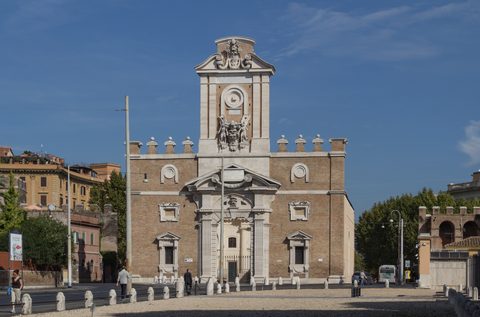
Castro Pretorio is rione XVIII in Roma Capitale's list of Rome's 22 rioni, toponymic code 118. It is named for the Castra Praetoria, the camp of the Praetorian Guard, whose walls Aurelian built into his city wall and whose interior is an army barracks today. The Historic Centre of Rome was inscribed on the UNESCO World Heritage List in 1980. What a visitor comes for is Roman or nineteenth-century, often both at once: the Baths of Diocletian, with Michelangelo's basilica inside their frigidarium and three sites of the Museo Nazionale Romano in and beside them; Piazza della Repubblica, laid out on the curve of the baths' great exedra; Michelangelo's Porta Pia on Via XX Settembre; and a planned quarter of ministries, palazzi and theatres built after 1870. Termini station itself is in the neighbouring rione of Esquilino. This is the rione you come out of its Via Marsala side into.
-
sight
Begun under Maximian in 298 AD and inaugurated between 305 and 306, covering 13 hectares and holding up to 3,000 people, in use until the Gothic war interrupted the water supply in the mid-6th century.
-
Michelangelo, then 86, worked the church into the frigidarium's Roman hall of over 90 metres without altering it and used the natatio for the apse; the bronze Linea Clementina in the floor was inaugurated in October 1702.
-
The Roman antiquities section has occupied part of the baths since 1889, arranged by topographic criterion, with funerary epigraphy and architecture in the garden.
-
Camillo Pistrucci's neo-Cinquecento palace of the 1880s holds the Discobolus Lancellotti, the Fanciulla di Anzio and, on the second floor, the frescoes from the Villa of Livia at Prima Porta.
-
Recovered antiquities shown in the octagonal hall in the western corner of the baths, at the junction with Via Parigi; the entrance is at Via Giuseppe Romita 8.
-
sight
Gaetano Koch's semicircular colonnade and its two porticoed palaces retrace the perimeter of the baths' great exedra, which gave the square its old name, Piazza Esedra.
-
sight
The terminal display of the Acqua Pia Antica Marcia: Guerrieri's architecture of 1885, Mario Rutelli's four bronze nymphs inaugurated in 1901 and the Glauco clasping a dolphin added in 1914.
-
A circular tower of the baths turned into a church in 1598 by Caterina Sforza Cesarini, 22 metres across inside, windowless and lit through the opening at the centre of its coffered dome, with eight stucco saints by Camillo Mariani.
-
sight
Erected between 1585 and 1589 for Sixtus V as the terminal display of the Acquedotto Felice, a travertine arch of three bays carrying Prospero Antichi's colossal Moses and reliefs of Aaron and Gideon.
-
sight
Built between 1561 and 1565 to replace Porta Nomentana, one of the eighteen gates of the Aurelian Walls, with the design given by Pius IV to Michelangelo; marks of the fighting of 20 September 1870 are still visible on the walls and the gate.
-
sight
The Praetorian camp of 21-23 AD under Tiberius measured 440 by 380 metres; Aurelian absorbed its walls, so its northern and eastern sides stand today as city wall while the interior is a working barracks.
-
Large blocks of yellow tufa from the rebuilding of the early 4th century BC survive in one stretch near Via Gaeta and Via Volturno.
-
Achille Sfondrini built it in eighteen months for Domenico Costanzi as a sounding box with a horseshoe auditorium, inaugurated on 27 November 1880 with Rossini's Semiramide; Cavalleria rusticana and Tosca had their world premieres here.
-
First stone laid by Pius IX in 1870, work resumed in 1880 through St John Bosco and completed in 1887; behind the choir are the rooms where he stayed from 30 April to 18 May 1887.
The Baths of Diocletian and what was built into them
The Baths of Diocletian are the reason this quarter looks the way it does. Turismo Roma, Roma Capitale's tourism service, records that construction was begun by the emperor Maximian in 298 AD, that the complex was inaugurated between 305 and 306 and dedicated to Diocletian, that it covered 13 hectares and held up to 3,000 people, and that it remained in use until the middle of the 6th century, when the Gothic war interrupted its water supply. The address is Viale Enrico De Nicola 78.
Almost everything else on this side of the rione is something later built into the ruins. The frigidarium is now the Basilica di Santa Maria degli Angeli e dei Martiri: Turismo Roma says Pius IV decided on the church in 1561, prompted by the Sicilian priest Antonio Lo Duca, and gave it to Michelangelo, then 86 years old, who worked it into the Roman hall - over 90 metres long - without altering it and used the natatio for the apse. The floor carries the Linea Clementina, a bronze meridian line about 45 metres long, inaugurated in October 1702. A circular hall on the west side of the baths became the church of San Bernardo alle Terme, which Turismo Roma describes as windowless and lit only through the opening at the centre of its coffered dome. The octagonal hall in the western corner, at the junction with today's Via Parigi, holds the Museo dell'Arte Salvata, and the facade of a demolished church of 1754, Sant'Isidoro alle Terme, still stands beside it. The great exedra of the baths set the curve of Piazza della Repubblica, whose semicircular colonnade retraces its perimeter.
Three sites of the Museo Nazionale Romano are in this rione: the Roman antiquities section inside the baths, Palazzo Massimo alle Terme, and the Museo dell'Arte Salvata in the Octagonal Hall. Turismo Roma records that the museum was instituted in 1889. Every opening time given here is Roma Capitale republishing a state museum's information, attributed as such, and Turismo Roma itself tells visitors to check the museum's site.
Porta Pia, the walls and the quarter built after 1870
The northern edge of the rione is the Aurelian Wall, and two gates in it are the rione's. Turismo Roma records that Porta Pia replaced the older Porta Nomentana between 1561 and 1565 and is one of the eighteen gates of the Aurelian Walls, and that Pius IV gave the design to Michelangelo. Two Roma Capitale bodies disagree about who finished the gate, and both accounts are carried in its entry. On 20 September 1870 the Breccia was opened in the walls a few tens of metres from the gate; a marble monument of 1920 and a commemorative column mark the event, and Turismo Roma says the marks of the fighting are still visible on the walls and on the gate itself. Porta Pia has housed the Museo Storico dei Bersaglieri since 1932. Italian Wikipedia says that Porta Nomentana, on Viale del Policlinico, was walled up in 1564 when Porta Pia opened, and that it now forms part of the perimeter wall of the British Embassy compound.
The older Servian Wall crosses this quarter too, but the Sovrintendenza Capitolina says its most monumental remains are the ones beside Termini station, at the former Porta Viminalis, and those are in Esquilino. One stretch, near Via Gaeta and Via Volturno, is in this rione, and that is the one this guide claims.
Between the wall and the baths is a planned nineteenth-century quarter that reads as a single piece. The Palazzo delle Finanze at Via XX Settembre 97 and Palazzo Esercito are the two ministries. Piazza dell'Indipendenza carries the Palazzo dei Marescialli of 1930, the Villino Centurini of 1874 and the Villino Semiradski, alongside two modernist blocks of the 1950s, the Palazzo della Federconsorzi and the Palazzo del Corriere dello Sport. Italian Wikipedia's article on the rione records that Via Cernaia carries bronzes of Quintino Sella and Silvio Spaventa, by Emilio Gallori in 1893 and Giulio Tadolini in 1898, and dates the church of the Santissimo Rosario di Pompei on the same street to 1889-1898. The Teatro dell'Opera di Roma, opened in 1880 as the Teatro Costanzi, faces Piazza Beniamino Gigli; the Teatro Nazionale, built in 1925 as the Supercinema, is on Via del Viminale and is the opera company's second house. The Biblioteca Nazionale Centrale di Roma is at Viale Castro Pretorio 105: Italian Wikipedia attributes it to Massimo Castellazzi, Tullio Dell'Anese and Annibale Vitellozzi and dates its occupation to 1975.
Getting there
Termini is the arrival for almost everyone and it is not in this rione. The station building, its forecourt and Piazza dei Cinquecento are in Esquilino, and Italian Wikipedia's article on the square calls it al confine tra i rioni Esquilino e Castro Pretorio. The rione's own boundary description runs the line along Via Marsala and Piazza dei Cinquecento. Leave Termini by the Via Marsala side and you are in Castro Pretorio: the Basilica del Sacro Cuore di Gesu stands on that street, and the Castra Praetoria is behind it.
The other pole of the rione is Piazza della Repubblica, with Santa Maria degli Angeli e dei Martiri in the frigidarium of the baths and the Fontana delle Naiadi at its centre. The Baths of Diocletian are at Viale Enrico De Nicola 78; Turismo Roma publishes Palazzo Massimo's address as Largo di Villa Peretti 1 and the Museo dell'Arte Salvata's as Via Giuseppe Romita 8.
From Piazza della Repubblica, Via XX Settembre runs past the ministries to Porta Pia. Italian Wikipedia's article on the rione names Via XX Settembre as part of the boundary with Trevi and Sallustiano, so the buildings along it are not all in one rione - and neither are the four churches on and around Piazza San Bernardo. San Bernardo alle Terme and the Fontana del Mose are Castro Pretorio's; Santa Susanna, on the same square, is not this rione's; Santa Maria della Vittoria opposite is in Sallustiano. Where Via delle Quattro Fontane meets Via XX Settembre, the Palazzo Mattei Albani Del Drago is in this rione.
Opening hours are the weak point here. Where hours appear here they are either the institution's own - the Basilica di Santa Maria degli Angeli publishes its own, and announced a reopening after restoration for Sunday 6 September - or Roma Capitale republishing a state museum's, said to be such. San Bernardo alle Terme, St Paul's Within the Walls and the Russian church of San Nicola have telephone numbers published by Turismo Roma and no hours at all. Check before travelling.
Frequently asked questions
- Is Termini station in Castro Pretorio?
- No. Termini is in the neighbouring rione of Esquilino. Italian Wikipedia's article on Piazza dei Cinquecento calls the square al confine tra i rioni Esquilino e Castro Pretorio and tags it to both. What is in Castro Pretorio is the Via Marsala side: the Basilica del Sacro Cuore di Gesu stands on that street and the Castra Praetoria is behind it. Neither the station nor Piazza dei Cinquecento is covered in this guide.
- Four churches stand on and around Piazza San Bernardo. Which of them are in this rione?
- Two things on that square are Castro Pretorio's: the church of San Bernardo alle Terme and the Fontana del Mose. The Sovrintendenza Capitolina's own record for the fountain carries a Rione field and it reads Castro Pretorio. Santa Susanna, on the same square, is not this rione's. Santa Maria della Vittoria opposite, with Bernini's Ecstasy of Saint Teresa, is in Sallustiano and is written up in the Sallustiano guide. The boundary runs through the square, which is why four churches a guidebook treats as one stop are not all in one guide.
- How many Museo Nazionale Romano sites are in this rione?
- Three: the Roman antiquities section inside the Baths of Diocletian at Viale Enrico De Nicola 78, Palazzo Massimo alle Terme, published by Turismo Roma at Largo di Villa Peretti 1, and the Museo dell'Arte Salvata in the Octagonal Hall at Via Giuseppe Romita 8. Turismo Roma records that the museum was instituted in 1889. Every opening time here comes from Roma Capitale republishing the state museum's information, and Turismo Roma itself directs visitors to the museum's site for updates. Check before travelling.
- Can you go inside the Castra Praetoria?
- No. The ground of the Praetorian camp is a working barracks of the Esercito Italiano on Viale Castro Pretorio and is not open to visitors. What you can see is the wall. Italian Wikipedia's article on the Castra Praetoria dates the camp to 21-23 AD under Tiberius and gives its extent as 440 by 380 metres, and Aurelian later absorbed its walls into his circuit, so the camp's northern and eastern sides stand today as part of the city wall.
- Who built Porta Pia?
- Two Roma Capitale bodies answer that differently, and this guide reports both rather than picking one. Turismo Roma says Pius IV gave the design to Michelangelo, that it was among his last works of architecture, and that after his death in 1564 the project passed to Giacomo Del Duca. The Sovrintendenza Capitolina, describing the same gate, says Michelangelo completed only the inner front and that the gate was finished in the 19th century by Virginio Vespignani. Turismo Roma adds that the attic and the outer facade toward Via Nomentana are 19th-century and unconnected to Michelangelo's project.
- The British Embassy is on Via XX Settembre. Is it foreign territory?
- No. The British Embassy is at Via XX Settembre 80/a, 00187 Rome, and GOV.UK states that public access to embassies, high commissions and consulates is by appointment only. It is not a visitor place and it has no entry in this guide. The compound stands on Italian soil: diplomatic premises are inviolable under the Vienna Convention on Diplomatic Relations, which is not the same thing as being foreign territory, and visitors and neighbours there are under Italian law. The same is true of the Russian embassy. Italian Wikipedia records that the walled-up Porta Nomentana now forms part of the perimeter wall of the British Embassy compound.
Connected pages
Nearby
-
Sallustiano, Rome: rione XVII, Bernini's Saint Teresa and the Gardens of Sallust
· Sallustiano, Rome
Sallustiano adjoins Castro Pretorio along Via XX Settembre. Santa Maria della Vittoria, at Via XX Settembre 17, is Sallustiano's and not this rione's.
-
Esquilino, Rome: Termini, piazza Vittorio and Santa Croce in Gerusalemme
· Esquilino, Rome
The rione on the other side of piazza dei Cinquecento, holding the Terme di Diocleziano, Palazzo Massimo and the Dogali monument.
Shared history
-
Ludovisi, Rome: Via Veneto, the Capuchin Crypt and the Villa That Was Sold Off
· Ludovisi, Rome
The Ludovisi antique sculptures were first placed in the Piccolo Chiostro at Santa Maria degli Angeli, which stands in Castro Pretorio.
-
Prati, Rome: the Palazzaccio, a Caryatid Fountain and the Only Rione Outside the Walls
· Prati, Rome
The Corte di cassazione's history page names Prati, Esquilino and Castro Pretorio together as the quarters built for Rome after 1871.
Same region
-
Ludovisi, Rome: Via Veneto, the Capuchin Crypt and the Villa That Was Sold Off
· Ludovisi, Rome
Ludovisi is rione XVI in Roma Capitale's list of Rome's 22 rioni; Castro Pretorio is rione XVIII.
-
Prati, Rome: the Palazzaccio, a Caryatid Fountain and the Only Rione Outside the Walls
· Prati, Rome
Prati is rione XXII in Roma Capitale's list of Rome's 22 rioni; Castro Pretorio is rione XVIII.
See also
-
3 Days in Rome: Colosseum Arena Floor, the Vatican, and the Back Streets of Monti
· Rome, Italy
A three-day Rome itinerary based on Piazza della Repubblica, which is in this rione.
What travelers think
Log in to react.
No reviews yet.