
Chinatown, San Francisco: the Dragon Gate, Waverly Place and the alleys
San Francisco Chinatown, California
Pictures from San Francisco Chinatown
See all 1 photos →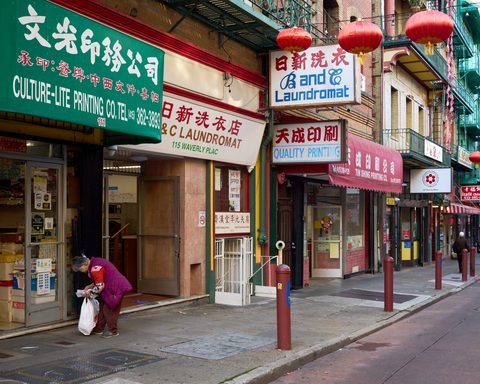
San Francisco's Chinatown runs between Broadway and Bush Street, on ground that climbs steeply to the west. SF Planning describes it as some 350 buildings along Stockton Street, Grant Avenue, Kearny Street and the connecting side streets and alleys, and gives its period of significance as 1906 to 1930. Almost everything standing went up in the decade after the earthquake and fire of April 1906. Grant Avenue, called Dupont Street until the rebuilding, runs north through the quarter as 都板街, Du Pon Gai; Stockton Street is where the produce and the fish are sold. The alleys between them carry temples on their top floors and family association halls behind their balconies. One thing to know before you come: Portsmouth Square is closed for renovation through mid-2028.
-
sight
A three-portal pailou at Grant Avenue and Bush Street, won in a 1967 design competition by Clayton Lee and dedicated on 18 October 1970.
-
walk
Dupont Street until the rebuilding that followed 1906, and 都板街, Du Pon Gai, in Chinese; SF Planning dates its frontages to 1906, 1907, 1908 and 1924.
-
walk
One block between Sacramento and Washington Streets, its Chinese name meaning Tin How Temple Street, with the temple on the top floor at No. 125.
-
walk
Laid out in 1849 beside the merchant Charles L. Ross's house, formerly Stout's Alley, and now the address of the fortune cookie factory at No. 56.
-
sight
Closed for renovation through mid-2028; the plaza was platted in about 1835 and renamed after the USS Portsmouth in 1846.
-
sight
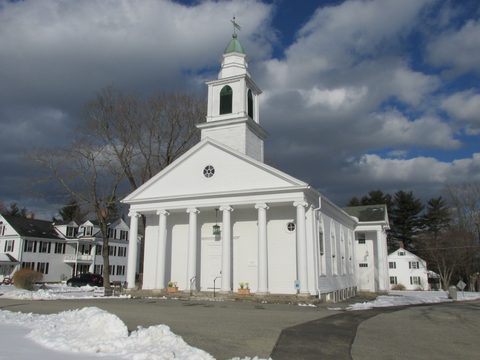
San Francisco Landmark No. 2, designated in 1968; the cornerstone was laid on 17 July 1853 and the church dedicated at midnight mass on Christmas 1854.
-
sight
On the top floor at 125 Waverly Place, dedicated to the sea goddess Mazu; it closed in 1955, reopened on 4 May 1975, and permits no photography inside.
-
In Julia Morgan's Chinatown YWCA of 1932 at 965 Clay Street, San Francisco Landmark No. 122, designated in 1981; open Wednesday and Saturday, 10am to 5pm.
-
San Francisco Landmark No. 235, the Chinatown Branch Carnegie Library, designated in 2002; SF Planning dates the building to 1921.
-
sight
Built in 1925 as the Great China Theater for Chinese opera; refurbished from 2010 and reopened on 18 June 2021.
-
food
At 28 Waverly Place, open Tuesday to Thursday 5pm to 9pm and Friday and Saturday 5pm to 9.30pm, with reservations taken online only.
-
food
Cantonese cooking at 631 Kearny Street, open Sunday to Thursday 11am to 9pm and Friday and Saturday 11am to 9.30pm.
-
Up to 10,000 cookies a day on a cast-iron rotating griddle wheel at 56 Ross Alley; photographs of the workers are charged at fifty cents.
-
tip
Woks and Asian kitchenware at 718 Grant Avenue, between Sacramento and Clay Streets, open 11am to 5pm seven days a week.
The streets and the alleys
Chinatown is built to a grid of long blocks and short alleys, and almost all of it went up at once. SF Planning's parcel records bear that out frontage by frontage along Grant Avenue: 700-720 in 1906, 733-741 in 1906, 715-717 in 1907, 824-843 in 1908, 900-916 in 1908, 942-951 in 1907, and 1019-1029 in 1924. Waverly Place is the same story a block over, with Nos. 100-108, 143-147 and 151-155 dating from 1906 and Nos. 29-35 and 125-129 from 1911. SF Planning records the Chinatown Historic District as eligible for the National Register of Historic Places and for the California Register, and its own note on the record says that neither has been formalised officially.
Grant Avenue is the wide street, 都板街 in Chinese. Stockton Street, which SF Planning dates in the same years — 1000-1032 in 1907, 843 in 1908, 1009-1011 in 1910, 830-848 in 1915, 1040-1044 in 1920 — is where the produce and fish shops are. The alleys are where the temples and the association halls sit: Waverly Place, whose Chinese name 天后廟街 means Tin How Temple Street, after the temple on the top floor at No. 125; Ross Alley, laid out in 1849; Spofford Street, whose buildings SF Planning dates to 1906, 1907 and 1908. At Grant Avenue and California Street the Sing Chong Building faces the Sing Fat Building across the intersection. At 743 Washington Street is the building that housed the Chinese Telephone Exchange, which SF Planning dates to 1909.
Two institutions with long histories are working buildings rather than visitor sites, and a traveller reads them from the pavement. Gordon J. Lau Elementary School at 950 Clay Street opened in September 1859 as a segregated public school for Chinese children, later became the Oriental Public School, and was renamed in 1998 for the San Francisco supervisor Gordon J. Lau; a California law of 1860 barred "Negroes, Mongolians, and Indians" from the public schools and permitted segregated schools instead. Chinese Hospital at 845 Jackson Street traces its origins to 1899 and the Oriental Dispensary, which opened as the Tung Wah Yi Kuk at 828 Sacramento Street and moved after 1906 to 14 Trenton Street. Bruce Lee was born at Chinese Hospital on 27 November 1940.
Getting there
Chinatown-Rose Pak station is under Stockton Street at Washington Street and opened on 19 November 2022 as part of the Central Subway. Muni routes 1, 8, 30 and 45, the 8AX and 8BX peak expresses, the T Bus and the 91 Owl also serve it. The station structure extends 100 feet below ground and carries a 5,400-square-foot plaza on its roof.
The California Street cable car line crosses Grant Avenue. Stockton Street runs under the hill through the Stockton Street Tunnel, whose south portal is at Bush Street and whose north portal is at Sacramento Street; it opened in 1914 and holds a maximum grade of 4.29 percent, against the 18 percent climb north from Sutter Street and the 12 percent climb south from Sacramento Street that it replaced.
Steer by addresses. The Dragon Gate stands at Grant Avenue and Bush Street. Old St Mary's is at 660 California Street, on the corner of Grant Avenue. The Chinese Historical Society of America is at 965 Clay Street, the Chinatown/Him Mark Lai branch library at 1135 Powell Street and Donaldina Cameron House at 920 Sacramento Street. The Chinese Culture Center's Art Center and Design Store is at 667 Grant Avenue and its office at 750 Kearny Street, third floor mezzanine. Portsmouth Square is bounded by Kearny Street, Washington Street, Clay Street and Walter U. Lum Place. Willie "Woo Woo" Wong Playground is at 830 Sacramento Street, between Waverly Place and Pagoda Place, on the number given by Rec & Park's own project page and by OpenStreetMap; Rec & Park's property dataset gives 850 Sacramento Street for the same park.
What is open and what is shut
Start with the closure at the centre of the quarter. Rec & Park's advisory reads: "Portsmouth Square is now closed for renovation through mid-2028." Construction began on 10 June 2026, and demolition of the pedestrian bridge that carried walkers over Kearny Street was completed on 14 August 2026.
Four institutions publish their own hours. The Chinese Historical Society of America opens Wednesday and Saturday, 10am to 5pm, and states that it is closed on Monday, Tuesday, Thursday, Friday and Sunday; it names no admission price. The Chinatown/Him Mark Lai branch library opens Sunday 1 to 5, Monday 10 to 6, Tuesday to Thursday 10 to 8, Friday 1 to 6 and Saturday 10 to 6. The Chinese Culture Center's Art Center and Design Store opens 11am to 6pm, Thursday to Monday, its office 9am to 6pm, and its Him Mark Lai Learning Center by appointment. Old St Mary's gives church hours of Tuesday to Friday 10am to 4.30pm, Saturday 11.30am to 6pm and Sunday 8am to 3pm, with mass at 5pm on Saturday, 9am and 11am on Sunday and 12.05pm Tuesday to Friday.
The temples are harder. No source states opening hours for Tin How Temple, for Kong Chow Temple or for the Ma-Tsu Temple of U.S.A., so none are given here; photography is not permitted inside Tin How. The Golden Gate Fortune Cookie Factory's own site states two different sets of opening hours, so none are given for it either.
Among the places to eat and shop, Mister Jiu's, R&G Lounge, Z & Y Restaurant, Sam Wo, the Wok Shop and Red Blossom Tea Company all publish a full week on their own sites; Sam Wo opens Tuesday to Sunday, 11am to 9pm, and closes on Monday. Hang Ah Tea Room publishes only the current day's hours, so none are given here.
Frequently asked questions
- Can you go into Portsmouth Square?
- No. Rec & Park's advisory reads "Portsmouth Square is now closed for renovation through mid-2028." Construction began on 10 June 2026 and Swinerton Builders is the contractor; demolition of the pedestrian bridge over Kearny Street was completed on 14 August 2026. The rebuilt square is to have a flexible outdoor event space with an elevated stage, an 8,500-square-foot community clubhouse with an assembly area and meeting rooms, a shade structure, and a consolidated playground with adult fitness equipment. Rec & Park records the plaza as platted in about 1835 for the Yerba Buena settlement and renamed after the USS Portsmouth in 1846. Captain John Berrien Montgomery landed with seventeen men and raised the flag near the custom house on 9 July 1846, Sam Brannan announced the discovery of gold on 11 May 1848, and the square held a refugee camp after the earthquake and fire of 1906.
- Which buildings in Chinatown carry a designation?
- Old St Mary's at 660 California Street is San Francisco Landmark No. 2, designated in 1968. Donaldina Cameron House at 920 Sacramento Street is San Francisco Landmark No. 44, designated in 1971. The Chinese Historical Society of America's building at 965 Clay Street is San Francisco Landmark No. 122, the Clay Street Center, designated in 1981. The branch library at 1135 Powell Street is San Francisco Landmark No. 235, the Chinatown Branch Carnegie Library, designated in 2002. The Chinatown Historic District itself is recorded by SF Planning as eligible for the National Register of Historic Places and for the California Register, and formalised in neither.
- Can you go into the temples?
- Tin How Temple occupies the top floor of a building at 125 Waverly Place and is dedicated to the sea goddess Mazu, known in Cantonese as Tin How; photography is not permitted inside. Kong Chow Temple stands on Stockton Street above the post office and is dedicated to Guan Di, and the prediction slip Bess Truman drew on a visit in 1948 is displayed in it. The Ma-Tsu Temple of U.S.A. is at 30 Beckett Street. No source states opening hours for any of the three, so none are given here. Old St Mary's, a working Catholic parish, does publish hours: Tuesday to Friday 10am to 4.30pm, Saturday 11.30am to 6pm and Sunday 8am to 3pm.
- Where can you eat, and when?
- Mister Jiu's, at 28 Waverly Place, opens Tuesday to Thursday 5pm to 9pm and Friday and Saturday 5pm to 9.30pm, closed Sunday and Monday, and takes reservations online only. R&G Lounge, at 631 Kearny Street, opens Sunday to Thursday 11am to 9pm and Friday and Saturday 11am to 9.30pm. Z & Y Restaurant, at 655 Jackson Street, opens 11.30am to 3pm and 4.30pm to 9pm on Monday and Wednesday to Sunday, and closes on Tuesday. Sam Wo, at 713 Clay Street, opens Tuesday to Sunday 11am to 9pm and closes on Monday. Hang Ah Tea Room at 1 Pagoda Place publishes only the current day's hours, so none are given here, and no source states hours for Great Eastern Restaurant, House of Nanking, Good Mong Kok Bakery, Eastern Bakery or Li Po Cocktail Lounge.
- What is the fortune cookie factory, and can you photograph it?
- The Golden Gate Fortune Cookie Factory is at 56 Ross Alley, its main entrance on the alley between Jackson Street and Washington Street. Its own site says it makes up to 10,000 fortune cookies a day, baked fresh on a cast-iron rotating griddle wheel, and sells chocolate, strawberry and green-tea cookies as well as custom fortunes for collection in the shop. That same site gives two different sets of opening hours in two blocks on one page, so none are given here. Wikipedia records a charge of fifty cents for photographs of the workers and of the factory interior.
Connected pages
Nearby
-
North Beach, San Francisco: Coit Tower, Washington Square and the Columbus Avenue blocks
· North Beach, California
The neighbour across Broadway and along Columbus Avenue, holding City Lights Booksellers, Coit Tower and Washington Square.
-
Nob Hill, San Francisco: Grace Cathedral, the cable car powerhouse and the Flood Mansion
· Nob Hill, California
The neighbour uphill along California, Sacramento and Clay Streets, with Grace Cathedral and the Cable Car Museum and powerhouse at 1201 Mason Street.
-
Union Square, San Francisco: the plaza, Maiden Lane and the north side of Market Street
· Union Square San Francisco, California
Grant Avenue and Stockton Street run north from the shopping blocks into Chinatown.
-
Financial District, San Francisco: the Ferry Building, Montgomery Street and the downtown plazas
· San Francisco Financial District, California
Grant Avenue and Portsmouth Square.
Same region
-
SoMa, San Francisco: the Yerba Buena museums, the Old Mint and the warehouse blocks
· SoMa, California
Another San Francisco neighbourhood in this series: SFMOMA, Yerba Buena Gardens and the museum quarter around Third and Mission Streets.
What travelers think
Log in to react.
No reviews yet.