
Enfield, London: Forty Hall, Elsyng Palace, Trent Park and the Holden stations of the Piccadilly line
London Borough of Enfield, England
Pictures from London Borough of Enfield
See all 1 photos →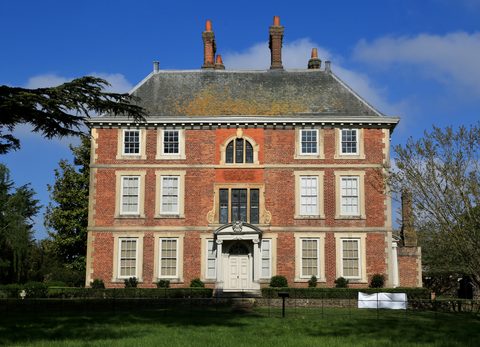
Enfield is a London borough running from the Lee Valley reservoirs to the Hertfordshire boundary, and it reads as four places rather than one. Forty Hill, Bulls Cross and Whitewebbs hold a Caroline house of 1629-36, the buried palace where Edward VI and Elizabeth I spent part of their childhood, and two botanical gardens on the line of the New River. Enfield Town is a market square with the medieval parish church behind it and the New River Loop curling through the Town Park. Southgate, Palmers Green and Cockfosters carry Repton and Nash landscape parks and the 1932-33 Piccadilly line extension that suburbanised them. Edmonton and the Lee Valley run out to Charles Lamb's parish, a timber-framed house of about 1600 and a reservoir edge of waterworks. The National Heritage List for England records 300 listed-building entries, five scheduled monuments and five registered parks and gardens inside the borough boundary as mapped by OpenStreetMap relation 51841.
-
sight
A house of 1629-36 for Sir Nicholas Raynton, listed Grade I as NHLE 1294469; the house opens Thursday to Sunday 11am to 5pm in summer and entry to house and garden is free.
-
sight
The earthworks of Henry VIII's palace in the Forty Hall parkland, a scheduled monument of 22.14 hectares, NHLE 1002040; the gardens open daily 8.30am to 6.30pm.
-
E A Bowles's garden at Bulls Cross, a Grade II registered park and garden of 7.35 hectares, NHLE 1000243; open daily 10:00 to 16:00, free to enter, parking £3.
-
walk
Thirty acres of themed gardens with a mini zoo in the grounds of Capel Manor College; the house is listed Grade II* as 'Capel House', NHLE 1078898. Adult £10.
-
Vintage cars, buses and lorries in an 1898 pumping station, open only on Tuesdays and the last Sunday of the month, 10am to 4pm; plan the visit around those days.
-
The parish church behind the market square, listed Grade II* as NHLE 1079549, with clerestories of about 1522 and a west tower whose windows are late 14th-century.
-
A market square framed by listed buildings, among them the 1897 Barclays Bank at 20 The Town, Grade II, NHLE 1484988, where an ATM was inaugurated on 27 June 1967.
-
The 1613 aqueduct's bypassed loop through the Town Park, with four bridges listed Grade II under NHLE 1079457 and Bush Hill Sluice of 1796 downstream, NHLE 1260895.
-
walk
A Grade II registered park and garden of 213.02 hectares, NHLE 1000484, on old Enfield Chase, with Camlet Moat scheduled inside it, NHLE 1005551.
-
The wartime interrogation centre inside Trent Park House, listed Grade II as NHLE 1078931; open Tuesday to Sunday 10.00am to 5.00pm, adult £14.
-
walk
Repton's park and lake of about 1796 around Nash's house of 1797, a Grade II* registered park and garden of 48.42 hectares, NHLE 1000395.
-
Charles Holden's circular booking hall of March 1933 on Station Parade, listed Grade II* as NHLE 1188692, with its pylons a separate entry, NHLE 1359011.
-
Holden's drum of 1932 on Bowes Road, listed Grade II* as NHLE 1358981 for glazing the designation calls 'particularly evocative when lit at night'.
-
Charles Lamb's parish church, listed Grade II* as NHLE 1079548; Lamb and his sister Mary are buried in the churchyard and Lamb's Cottage is Grade II*, NHLE 1188759.
-
A late 18th-century house listed Grade II* as NHLE 1079504, with an oval stairwell under a glass dome, working as an arts centre with a 360-seat theatre.
-
sight
A plastered timber-framed house of the late 16th or early 17th century on Bury Street West, listed Grade II* as NHLE 1188620, run as an arts centre.
-
The 1854-58 Machine Shop with its clock tower, listed Grade II as NHLE 1240468; the exhibition opens for community events, and the operator welcomes visits by prior arrangement.
-
A retort house of 1913 by William Booth Bryan for the Metropolitan Water Board, listed Grade II as NHLE 1079455, seen from the reservoir path rather than entered.
Forty Hill, Bulls Cross and Whitewebbs
This is the green end of the borough, where the built-up city gives out into fields, and it holds three gardens and a royal palace site. Forty Hall stands on Forty Hill, EN2 9HA, listed at Grade I on 19 March 1951 as NHLE 1294469; the list entry reads 'Built in 1629-36 for Sir Nicholas Raynton. Square house of 3 storeys, 6 windows'. The operator writes that 'Sir Nicholas Rainton built Forty Hall between 1629-1632' and that 'He became Mayor of London in 1632 and was Knighted by King Charles I in 1633'. The screen wall, gateway and north pavilions to the west are a separate Grade I entry, NHLE 1079565, and the estate around them is a Grade II registered park and garden, NHLE 1001357, registered on 10 June 1996 over 31.70 hectares. Three further Grade II entries cover the setting: the entrance gateway, NHLE 1079564, the stable ranges to the west, NHLE 1358682, and the barns to Forty Hall Farm, NHLE 1294433. The house opens Thursday to Sunday 11am to 5pm and the gardens daily 8.30am to 6.30pm; the Cedar Tree Cafe opens Tuesday to Friday 9am to 4pm and Saturday and Sunday 9.30am to 5pm and closes on Mondays; the farm opens Saturday and Sunday 11am to 3pm with last entry at 2.30pm; the farm shop opens Tuesday to Sunday 11am to 4pm. The operator qualifies all of these as its summer hours, which it says run from 2 April to 31 October. Entry to the house and garden is free with donations welcome, parking is free, and a guided tour of the house costs £5.00 per person in public hours.
The parkland north-east of the hall covers a royal palace. Elsyng is a scheduled monument, NHLE 1002040, first scheduled on 6 April 1967 and amended on 30 March 2015 over 22.14 hectares; a scheduled monument carries no grade. Historic England calls it 'A multi-phase complex monument with medieval origins, later converted to an early Tudor courtier house belonging to Sir Thomas Lovell which was then taken over and adapted as a royal palace by Henry VIII', and cites its 'Historic significance: as a royal residence belonging to Henry VIII and the childhood residence of King Edward VI and Queen Elizabeth I'. The earliest known reference to Elsyng dates from 1374; Thomas Lovell gained custody of the estate in 1492 and built a royal suite that Henry VII used on two visits, in 1497 and 1498, and the estate was exchanged with Henry VIII in 1539. The scheduling covers the buried remains of the manor and palace, its ponds, ridge and furrow, terraces of a possible former garden and part of the Turkey Brook. The remains are earthworks and nothing stands above ground, so the visit is the gardens, which open daily 8.30am to 6.30pm.
Bulls Cross holds two gardens on the line of the New River. Myddelton House Gardens, at Bulls Cross, EN2 9HG, is a Grade II registered park and garden, NHLE 1000243, registered on 1 October 1987 over 7.35 hectares, and the house at its centre is separately listed Grade II, NHLE 1078893, dated by its list entry to 1819 as 'the home of the Bowles family. Mr E A Bowles, the Vice President of the Royal Horticultural Society, laid out the garden.' The operator calls it an 'Eight acre botanical garden and lifelong home of renowned horticulturist EA Bowles', opens daily 10:00 to 16:00, states that it is 'Free to enter - donations welcome to help fund raise for our Rock Garden project' and charges 'Cars: £3'. The New River, completed in 1613 under Sir Hugh Myddelton, ran through the property; the operator says it 'became redundant in 1859 but was kept as a feature in the garden until 1967', and its course survives as the New River Lawn. Four Grade II entries stand in the grounds: the stable block, NHLE 1359004, the iron bridge, NHLE 1079479, the market cross, NHLE 1079478, and the lake terrace, NHLE 1358715, the last three listed on 15 August 1979. Capel Manor Gardens, on Bullsmoor Lane, EN1 4RQ, is the grounds of Capel Manor College; the operator advertises '30 acres of beautiful gardens' with 'over 40 colourful themed gardens, a mini zoo, cacti house and Fairy Forest'. Its house is listed at Grade II* as 'Capel House', NHLE 1078898, a 'Mid-late C18 house' by the list entry, with the stables and former coach house range separately Grade II, NHLE 1358742, and the garden walls to the east Grade II, NHLE 1078899. Summer opening, March to October including bank holidays, is daily 10am to 5.30pm with last admission 4pm; winter opening, November to February, is Monday to Friday 10am to 5pm with last admission 3.30pm, and the operator notes 'Our Gardens are closed on weekends between November to March.' Admission is £10 for an adult, £9 concession, £6 for a child aged 3 to 15, free under 3 and £30 for a family ticket.
Whitewebbs is old Enfield Chase woodland. The Whitewebbs Museum of Transport on Whitewebbs Road, EN2 9HW, occupies what its operator describes as 'a Victorian water pumping station built in 1898' and is run by the Enfield and District Veteran Vehicle Trust, a volunteer body that states it 'receives no Lottery or Council funding'. The collection is vintage cars, buses and commercial vehicles, among them a 1959 Morris Mini Minor and a Bedford dropside truck. It opens every Tuesday and the last Sunday of the month, 10am to 4pm, with last admission at 3pm, so a visit is planned around those days. The museum building carries no entry on the National Heritage List for England; Whitewebbs Farmhouse nearby is Grade II, NHLE 1079519, its barn Grade II, NHLE 1079480, and the King and Tinker public house on Whitewebbs Lane Grade II, NHLE 1189296, listed on 19 March 1951. Crews Hill station is about 970 m from the museum and Gordon Hill about 1,939 m.
Enfield Town
Enfield Town is a market square with a charter town's grain to it and the parish church immediately behind. St Andrew's stands on Church Walk off Silver Street, EN1 3EG, listed at Grade II on 19 March 1951 and amended on 10 December 1975 as NHLE 1079549, under the statutory name 'Church of St Andrew, Church Walk'. The list entry gives the building sequence as 'C12 origins; C15-16; 1824 restoration by W.C Lochner; 1852-3 restoration by J P St Aubyn; 1866-7 works by Sir George Gilbert Scott; further restoration by J O and C M O Scott, early C20.' Historic England calls it 'A grand town church, both high and long', with an aisled nave and chancel of equal length, five-bay north and south arcades and clerestories of about 1522; the unbuttressed west tower has no stair turret, which Historic England says 'suggests an early original date for the tower', and its windows are late 14th-century. The wall to the east of the church is a separate Grade II entry, NHLE 1079550, and the north-east building of Enfield Grammar School is Grade II, NHLE 1079551, listed on 19 March 1951. It is a working parish church and no source states its opening hours, so none are given here.
The Market Place at The Town, EN2 6LS, is framed by listed buildings. Barclays Bank at 20 The Town is Grade II, NHLE 1484988, listed on 30 March 2023 under the statutory address 'Barclays Bank, 20 The Town, Enfield, EN2 6LS'; Historic England's entry cites the inauguration of an automated teller machine at the branch on 27 June 1967 among its reasons, and records that the building was 'Built in 1897 to designs by William Gilbee Scott for the London and Provincial Bank', which had been 'the first bank to open a branch in Enfield Town in 1875'. The winning competition design was exhibited at the Royal Academy and published in 'The Builder' in January 1897, and Historic England records group value with 'the adjacent Old Vestry Office and its forecourt railings, both listed at Grade II'. Numbers 3-4 The Town are Grade II, NHLE 1189251, listed on 31 January 1974. The market trades in the square under The Old Enfield Charitable Trust; no source states its trading days, so none are given here.
West of the square the New River Loop curls through Enfield Town Park, entered from River View, EN2 6PZ. The New River is an artificial aqueduct completed in 1613 under Sir Hugh Myddelton to bring water from Hertfordshire to New River Head in Clerkenwell, and the bypassed Enfield Town loop survives as an ornamental watercourse. Four bridges over it - one at the south end of Parsonage Gardens, the others on the east side of River Walk - are covered by a single Grade II entry, NHLE 1079457, listed on 20 March 1990. The Crown and Horseshoes public house on the loop is Grade II, NHLE 1079501, listed on 31 January 1974. About 1.5 km downstream, Bush Hill Sluice is Grade II, NHLE 1260895, added to the list on 20 March 1990; Historic England dates it to 1796, attributes it 'probably by Robert Mylne, for the New River Company' and describes a 'Single cell, square on plan, straddling the watercourse' in painted brick on a stone arch, with a Welsh slate hipped roof and a spike finial. Further north the Flash Lane aqueduct, which carried the New River across the Salmons Brook, is a scheduled monument, NHLE 1001989, scheduled on 26 April 1972 over 0.04 hectares. No source states the park's opening hours, so none are given here.
Southgate, Palmers Green and Cockfosters
Two landscape parks and a modernist railway make this quarter of the borough. Trent Country Park, entered from Cockfosters Road, EN4 0DZ, is a Grade II registered park and garden, NHLE 1000484, registered on 1 October 1987 over 213.02 hectares, which Historic England describes as a 'Late C18 landscape park, lakes and woodland, developed throughout the C19, and further developed early C20 by Sir Philip Sassoon with advice from Norah Lindsay.' The land was part of the royal hunting forest of Enfield Chase until an Act of Parliament of 1777 divided and disafforested it; the lease was granted about 1780 to Sir Richard Jebb, physician to George III, and Sir William Chambers converted an old Chase lodge into a villa called Trent Place. Historic England's register entry puts the park at about 700 acres by the mid-19th century and the whole estate at about 3,000 acres, with a seven-mile ride around the perimeter. Camlet Moat, a medieval moated site in Moat Wood, is a scheduled monument, NHLE 1005551, first scheduled on 22 March 1949 over 0.72 hectares, which Historic England calls 'a fine example of a medieval moated site which survives well'. Garden and sculptural features around the house carry their own Grade II entries: the obelisk on the west side of Moat Wood, NHLE 1358677, the pair of sphinxes on the terrace, NHLE 1079461, the statue of Actaeon, NHLE 1079459, the statue of Venus, NHLE 1260775, and the Wisteria Walk pergola, NHLE 1358746. No source states the country park's opening hours, so none are given here.
Trent Park House itself is Grade II, NHLE 1078931, listed on 31 January 1974 and amended on 10 December 1975, and it is open as a museum. Trent Park House of Secrets, at Daffodil Crescent, EN4 0PS, opens Tuesday to Sunday 10.00am to 5.00pm with last admission at 4.00pm and closes on Mondays; the operator states that it 'is open until 31 December 2026. We then close throughout January for conservation and maintenance, and reopen in February 2027.' Tickets are £14 for an adult, £12 for students, £12 for a junior aged 5 to 17, free under 5, free for carers accompanying a disabled visitor and free for members of the UK Museums Association or ICOM; the cafe opens Tuesday to Sunday 9.00am to 5.00pm. Historic England's register entry for the park records that after Sir Philip Sassoon died in 1939 'the house was requisitioned as an officers' prisoner of war camp and interrogation centre for enemy airmen (the Combined Services Detailed Interrogation Centre)', and the operator frames the visit as 'From glittering 1930s social hub to WWII surveillance centre', on two levels: restored 1930s state rooms above and the basement where 'the Secret Listeners' worked. There is no general parking inside the estate; the operator directs visitors to the free Trent Country Park car park on the A111 Cockfosters Road, about a 15-minute walk, or to Oakwood station, which it names as the nearest and easiest Underground station, with a bookable shuttle bus from Snakes Lane or a 20-minute walk.
Grovelands Park, on The Bourne, N14 6RA, is a Grade II registered park and garden, NHLE 1000395, registered on 1 October 1987 over 48.42 hectares, and Historic England describes it as a 'Late C18 landscape park and lake by Humphry Repton, extended in the mid C19, and laid out as a public park in early C20 by Thomas H Mawson.' About 1796 the Quaker brandy merchant Walker Gray bought roughly 230 acres and 'commissioned John Nash (1752-1835) to design a new house and Humphry Repton (1752-1818) to lay out the gardens and park'; Repton formed the lake with a bridge and a fishing temple. The house is listed at Grade I as 'Grovelands Park Hospital (original block only)', NHLE 1078925, on 31 January 1974, dated by its entry '1797 by John Nash' and described down to a 'Small drawing room, of octagonal shape with pointed roof, painted to resemble a bird cage, with garden scenes between the wires.' It is in private hospital use and is not open to visitors; the park around it is public. No source states the park's opening hours, so none are given here. In Palmers Green, Broomfield House is Grade II, NHLE 1078934, and its grounds are a Grade II registered park and garden, NHLE 1000517, of 21.48 hectares; the house was gutted by fire and its shell is fenced off, so the grounds are the visit.
The Piccadilly line extension of 1932-33 gave the borough four listed stations, three of them at Grade II. Southgate, on Station Parade, N14 5BH, is NHLE 1188692, first listed on 19 February 1971 and amended on 28 July 2009 under the statutory name 'Southgate Underground Station, including surface buildings and platforms, Station Parade N14'; Historic England records it as 'Opened March 1933 to the designs of Charles Holden of Adams, Holden and Pearson for the London Passenger Transport Board', built on a 'Reinforced concrete frame, the street-level entrance building clad in red and brown brick on Cornish granite plinth'. Its circular booking hall with drum and finial is the landmark of the extension, and the station pylons to the north and south are a separate Grade II entry, NHLE 1359011. Arnos Grove, on Bowes Road, N11 1AN, is NHLE 1358981, first listed on 19 February 1971 and amended on 20 July 2011; Historic England summarises it as 'Underground railway station, 1932 by Charles Holden. Minor later alterations' and cites 'a striking design with a prominent circular booking hall providing both an effective landmark and hugely impressive interior space. Its large panels of glazing making it particularly evocative when lit at night'. Bowes Road Library and Arnos Pool, a few metres away, are Grade II as a single entry, NHLE 1381394, listed on 7 August 2000. Two more Holden stations on the same branch are listed: Oakwood at Grade II*, NHLE 1078930, with its station sign separately Grade II, NHLE 1358982, and Cockfosters at Grade II, NHLE 1358718, listed on 26 May 1987.
Edmonton and the Lee Valley
The eastern half of the borough is Charles Lamb's parish and the industrial Lea. All Saints', on Church Street, N9 9PB, is listed at Grade II as NHLE 1079548, first listed on 10 April 1954 and amended on 10 December 1975 under the statutory name 'Church of All Saints, Church Street N9'. Historic England dates it 'C12 in origin, largely rebuilt in the C15 and early C16 (chancel, nave, tower, N aisle, N chapel, N vestry), with some C17 roofs', clad in brick in 1772 when the window tracery was removed and replaced in timber, restored in 1855 by Ewan Christian, its windows redone in stone in 1868 and its south aisle and organ chamber added in 1885 by W G Scott; externally only the four-stage 15th-century west tower is medieval, with angle buttresses and an embattled polygonal south-east stair turret. The essayist Charles Lamb and his sister Mary are buried in the churchyard. Lamb's Cottage on Church Street, where he died, is Grade II, NHLE 1188759, listed on 14 January 1950, with its forecourt railings and gate separately Grade II, NHLE 1359014, and the Charles Lamb Halls are Grade II, NHLE 1078914, listed on 24 May 1973. It is a working parish church and no source states its opening hours, so none are given here.
Two houses in these streets are open as arts venues. Millfield House, on Silver Street, N18 1PJ, is Grade II, NHLE 1079504, first listed on 31 January 1974 and amended on 10 December 1975 under the statutory address 'Millfield House, Silver Street N18'; Historic England describes a 'Late C18 former country house now linked at back to later hospital buildings. 2 storeys, 9 windows, the central 3-bay section recessed', with 'an oval entrance lobby and an oval stairwell with curved staircase and glass dome.' It was formerly St David's Hospital and the older list text is filed under that name, and its entrance lodge is separately Grade II, NHLE 1079505. The operator describes the site as 'Millfield Arts Centre features the 360 seat proscenium style Millfield Theatre and the beautiful Grade II listed Georgian Millfield House featuring 7 rooms available to hire', and directs visitors to 'Silver Street Station: via Enfield Town, Cheshunt or Liverpool Street lines' and then a 15-minute walk or buses 34, 102 and 144 from opposite the station. Salisbury House, on Bury Street West, N9 9LL, is Grade II*, NHLE 1188620, first listed on 10 April 1954 and amended on 10 December 1975; Historic England dates it 'Late C16 or early C17' and describes '3 storeys, gabled. Timber framing plastered, tiled roofs. Upper storeys oversail at 1st and 2nd floor levels on all sides', with three gables on the west front, 'a semi-octagonal gabled turret cutting into central and southern gables' and two three-shaft chimney stacks. The wall to the east of the house is Grade II, NHLE 1188630, and the wall to the south-west of the garden Grade II, NHLE 1359006. It is run as an arts centre; no source states its opening hours, so none are given here.
Out at the Lea, Enfield Island Village is the site of the Royal Small Arms Factory. The operator states that 'Between 1816 and 1988 The Royal Small Arms Factory was at the heart of Britain's military small arms industry' on 'a 90 acre site in the far North East corner of the London Borough of Enfield', and the Lee-Enfield rifle carries the name. The Machine Shop and the attached range to the west are Grade II, NHLE 1240468, listed on 2 February 1989; Historic England dates the building '1854-58 for Board of Ordnance' and describes an 'Italianate style front to Machine Shop. One storey, 23 window range. 3-storey clock tower and belfry to centre', with cast-iron columns at roughly 20 ft intervals inside carrying wrought-iron trusses and 'Original columns cast with Board of Ordnance initials.' The railings to the east of the west range of offices are Grade II, NHLE 1079487. Restoration cost about £4 million: 'Refurbishment commenced in 1998' and 'The RSA Island Centre you see today was opened in October 2001'. The RSA Interpretation Centre inside it, at 12 Island Centre Way, EN3 6GS, is 'a small exhibition of the Royal Small Arms Factory's history' which the operator says is 'opened when community events take place around the canal basin and Community Hall', adding 'We welcome visits by prior arrangement.'
At the edge of the King George V Reservoir in the Lee Valley Regional Park, the King George V Pumping Station stands on Swan and Pike Road, EN3 6JH. The retort house and pumping station are Grade II, NHLE 1079455, listed on 25 September 1989 under the statutory address 'Retort House and King George Pumping Station, Swan and Pike Lane'; Historic England records the retort house as 'Opened 1913. Designed by William Booth Bryan for Metropolitan Water Board', in English bond red brick with limestone ashlar dressings on a blue brick plinth, with cast-iron roof trusses inside, and explains the process: 'The retort house stored gas, which was made from anthracite in Dowson producers, before it was passed through a scrubber into the gas bags of the Pump House', citing 'The Engineer, March 14, 1913, pp.269-275'. Five Grade II entries make up the group: the retort house and pumping station, NHLE 1079455, the pump house, NHLE 1079456, the water tower house, NHLE 1260935, the weir with inlet pipes, NHLE 1358747, listed on 14 January 1991, and the sluice gates and flanking walls at the intake from the Lea Navigation, NHLE 1260607, listed on 22 November 1991. It is an operational water-industry site rather than a visitor attraction, seen from the towpath and the reservoir path rather than entered.
Getting there
Enfield has four Underground stations - Arnos Grove, Southgate, Oakwood and Cockfosters - and all four are on the Piccadilly line, strung along the western third of the borough. Everywhere else in Enfield is reached by National Rail or London Overground: there is no Underground station in Enfield Town, in Edmonton or anywhere in the Lee Valley half of the borough, and the nearest tube to Enfield Lock is over 10 km away. The borough has no DLR, no tram, no Elizabeth line and no river service.
The Overground Weaver line, running from Liverpool Street to Enfield Town, Cheshunt and Chingford, serves six stations inside the borough: Enfield Town, Bush Hill Park, Southbury, Silver Street, Edmonton Green and Turkey Street. Two Weaver-line stations a traveller meets on the same journeys are outside it - White Hart Lane is in Haringey and Theobalds Grove in Broxbourne, Hertfordshire. Great Northern runs the Hertford Loop down the west side through Palmers Green, Winchmore Hill, Grange Park, Enfield Chase, Gordon Hill and Crews Hill, with Thameslink services at Palmers Green, Winchmore Hill, Enfield Chase and Gordon Hill. Greater Anglia runs the Lea Valley lines on the east side through Meridian Water, Brimsdown and Enfield Lock and shares the Weaver-line stations; Waltham Cross, the next stop north of Enfield Lock, is in Broxbourne rather than Enfield. New Southgate, served by Great Northern and Thameslink, sits on the East Coast main line about 725 m from Arnos Grove Underground station.
For Forty Hill, Bulls Cross and Whitewebbs, take Greater Anglia or the Weaver line to Turkey Street, which is about 987 m from Myddelton House Gardens, about 1,111 m from Capel Manor Gardens and about 1,485 m from Forty Hall; the Forty Hall operator reckons the walk from Turkey Street, Gordon Hill or Enfield Town at approximately 20 minutes. Gordon Hill, on Great Northern and Thameslink, is about 1,966 m from Forty Hall. For the Whitewebbs Museum of Transport, take Great Northern to Crews Hill, about 970 m away; Gordon Hill is about 1,939 m. Theobalds Grove, about 2,137 m from Capel Manor, is in Hertfordshire.
For Enfield Town, take the Weaver line to Enfield Town, the end of the branch from Liverpool Street, about 186 m from the market square and about 215 m from St Andrew's; or take Great Northern or Thameslink to Enfield Chase on the Hertford Loop from Moorgate, about 611 m from the square. At the Bush Hill Sluice end of the New River Loop, Grange Park is about 997 m and Bush Hill Park about 1,046 m.
For Southgate, Palmers Green and Cockfosters, take the Piccadilly line. Southgate is about 714 m from Grovelands House, and Winchmore Hill, on Great Northern and Thameslink, about 1,161 m. Cockfosters and Oakwood are about the same walk from Trent Park House - TfL gives 1,038 m and 1,084 m from the museum postcode - and the museum operator names Oakwood as its nearest and easiest Underground station, with a bookable shuttle bus from Snakes Lane. Palmers Green, on Great Northern and Thameslink, is about 443 m from Broomfield Park.
For Edmonton and the Lee Valley, take Greater Anglia or the Weaver line. Edmonton Green is about 338 m from All Saints'; Bush Hill Park is the nearest station to Salisbury House at about 950 m, with Edmonton Green about 1,344 m; Silver Street is about 907 m from Millfield House, and the theatre reckons the walk at 15 minutes and names buses 34, 102 and 144 from opposite the station. Enfield Lock, on Greater Anglia, is about 882 m from the Royal Small Arms Factory site and about 1,193 m from the King George V Pumping Station; Brimsdown is about 1,331 m from the pumping station. Every distance above is a straight-line approximation, not a walking measurement.
Frequently asked questions
- Does Enfield have an Underground station?
- It has four - Arnos Grove, Southgate, Oakwood and Cockfosters - and all four are on the Piccadilly line, in the western third of the borough. Enfield Town, Edmonton and the Lee Valley are served by London Overground's Weaver line and by National Rail instead: Great Northern and Thameslink on the Hertford Loop through Enfield Chase and Gordon Hill, and Greater Anglia on the Lea Valley lines through Meridian Water, Brimsdown and Enfield Lock. There is no DLR, tram, Elizabeth line or river service in the borough.
- What are Forty Hall's opening hours, and does it charge?
- Forty Hall, on Forty Hill, EN2 9HA, opens Thursday to Sunday 11am to 5pm, with the gardens open daily 8.30am to 6.30pm, the Cedar Tree Cafe Tuesday to Friday 9am to 4pm and Saturday and Sunday 9.30am to 5pm, the farm Saturday and Sunday 11am to 3pm and the farm shop Tuesday to Sunday 11am to 4pm. The operator qualifies these as summer hours running from 2 April to 31 October. Entry to the house and garden is free with donations welcome, parking is free, and a guided tour of the house costs £5.00 per person. The house is listed at Grade I, NHLE 1294469.
- What is there to see at Elsyng Palace?
- Earthworks in the parkland of the Forty Hall estate, and nothing above ground. Elsyng is a scheduled monument, NHLE 1002040, covering 22.14 hectares, and Historic England describes it as a medieval complex converted into an early Tudor courtier house for Sir Thomas Lovell and then adapted by Henry VIII as a royal palace, the childhood residence of Edward VI and Elizabeth I. Lovell gained custody in 1492 and built a royal suite that Henry VII used in 1497 and 1498; the estate passed to Henry VIII in 1539. The gardens around the site open daily 8.30am to 6.30pm.
- Which Enfield gardens are open all year, and what do they cost?
- Myddelton House Gardens at Bulls Cross, EN2 9HG, opens daily 10:00 to 16:00 and is free to enter, with car parking at £3; it is a Grade II registered park and garden, NHLE 1000243, of 7.35 hectares. Capel Manor Gardens on Bullsmoor Lane, EN1 4RQ, opens daily 10am to 5.30pm from March to October and Monday to Friday 10am to 5pm from November to February, and states that its gardens are closed at weekends between November and March; admission is £10 for an adult, £9 concession, £6 for a child aged 3 to 15 and £30 for a family.
- Can you go inside Trent Park House?
- Yes. Trent Park House of Secrets, at Daffodil Crescent, EN4 0PS, occupies the house, which is listed at Grade II, NHLE 1078931, and opens Tuesday to Sunday 10.00am to 5.00pm with last admission at 4.00pm. The operator states that it is open until 31 December 2026, closes throughout January for conservation and maintenance and reopens in February 2027. Adult tickets are £14. Historic England's register entry for the park records that after Sir Philip Sassoon died in 1939 the house was requisitioned as an officers' prisoner of war camp and interrogation centre for enemy airmen, the Combined Services Detailed Interrogation Centre.
- How many listed buildings does Enfield hold?
- The National Heritage List for England records 300 listed-building entries inside the borough boundary as mapped by OpenStreetMap relation 51841: 3 at Grade I, 23 at Grade II* and 274 at Grade II, alongside 5 scheduled monuments and 5 registered parks and gardens, 310 designated entries in all. The three Grade I entries are Forty Hall, NHLE 1294469; the screen wall, gateway and north pavilions to the west of it, NHLE 1079565; and Grovelands Park Hospital, original block only, NHLE 1078925. The registered landscapes are Trent Park at 213.02 hectares, Grovelands Park at 48.42, Forty Hall at 31.70, Broomfield House at 21.48 and Myddelton House at 7.35.
Connected pages
Nearby
-
Barnet, London: the RAF Museum, Hampstead Garden Suburb, Chipping Barnet and the field of 1471
· Barnet, England
Trent Park and Monken Hadley Common are surviving fragments of Enfield Chase, disafforested by the Act of 1777, and Cockfosters station serves both boroughs.
-
Haringey, London: Alexandra Palace, Bruce Castle, the Highgate Grade I group and Tottenham High Road
· Haringey, England
The New River runs south out of Enfield through Wood Green and Harringay; Southgate, Arnos Grove and Turnpike Lane are Holden stations on one Piccadilly branch.
Shared history
-
Islington, London: the Charterhouse, St John's Gate, Sadler's Wells and Highbury Fields
· Islington, England
The New River, begun under Sir Hugh Myddelton and completed in 1613, ends at New River Head in Islington; Myddelton House Gardens in Enfield carries his name.
-
Barnet, London: the RAF Museum, Hampstead Garden Suburb, Chipping Barnet and the field of 1471
· Barnet, England
Trent Park and Monken Hadley Common are surviving fragments of Enfield Chase, disafforested by the Act of 1777; the 1471 field, NHLE 1000001, lies between them.
-
Haringey, London: Alexandra Palace, Bruce Castle, the Highgate Grade I group and Tottenham High Road
· Haringey, England
The New River runs out of Enfield through Wood Green and Harringay; Turnpike Lane, Southgate and Arnos Grove are Holden stations on one Piccadilly branch.
What travelers think
Log in to react.
No reviews yet.