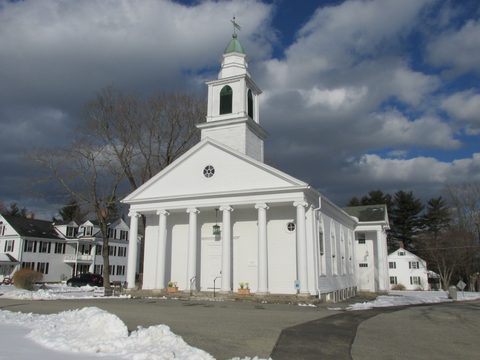

Ostia Antica, Rome: the excavated port town, the Museo Ostiense and the castle on Piazza della Rocca
Ostia Antica, Rome
Ostia Antica is a zona of Rome, the thirty-fifth in the city's toponymic series, and it lies in Municipio Roma X at the mouth of the Tiber. Two separate places fill it. The first is the excavated Roman town, about sixty-nine hectares walled in the middle of the first century BC and entered from one ticket office at Viale dei Romagnoli 717: streets of apartment blocks, warehouses, baths, a theatre, a synagogue and mithraea, with a state museum in a former salt store among them. The second is a small brick borgo on Piazza della Rocca, the citadel Pope Gregory IV made out of the medieval settlement, rebuilt in the fifteenth century around a triangular castle, a cathedral and three rows of terraced houses that are still lived in. The zona runs several kilometres, so every place here carries a street.
-
One ticket office at Viale dei Romagnoli 717 opens the whole excavation: 18.00 euro full, 2.00 euro reduced, valid eight consecutive days across all the institute's sites.
-
sight
Built in the last years of the first century BC and enlarged at the end of the second century AD to hold four thousand, it still stages a summer festival run by the Teatro di Roma.
-
The mosaics of this porticoed square behind the theatre carry trading motifs and inscriptions naming Ostian and foreign guilds of merchants and shipowners.
-
A Roman bar carved out of a Hadrianic block in the third century AD, with its marble counter, its washing basins and paintings above the shelves advertising what was served.
-
sight
A Hadrianic apartment block on Via di Diana, perhaps five storeys when new, with shops on the street, a porticoed courtyard and a mithraeum installed in its inner rooms late on.
-
sight
Baths begun at the end of the first century AD, rebuilt by Hadrian and completed in 139 AD by Antoninus Pius, with figured mosaics and a colonnaded palestra.
-
sight
Built about the middle of the first century AD and rebuilt in the fourth, with a bimah oriented towards Jerusalem and corbels carved with the seven-branched menorah.
-
The attic inscription of the gate records that Cicero began the walls of the Ostian colony and let the contract, and that Clodius Pulcher completed and approved the work.
-
sight
The finds are shown in twelve rooms on seven themes inside the Casone del Sale, a salt store restored for Pius IX and opened as a museum on 2 November 1934.
-
Do not plan on this one: the operator states that the necropolis is closed to the public for maintenance and restoration work.
-
sight
Begun in 1483 for Cardinal Giuliano della Rovere and completed in 1486, with a staircase frescoed with the myth of Hercules attributed to Baldassarre Peruzzi.
-
Gregory IV made a fortified citadel of the settlement in the ninth century, and the three rows of terraced houses d'Estouteville built inside its walls are still lived in.
-
sight
The cathedral of the diocese of Ostia, finished in 1483 by the architect of the fortress beside it, with an oval Martirio di santa Aurea given to Andrea Sacchi.
The excavated town, its ticket and its hours
The Parco archeologico di Ostia antica is an autonomous institute of the Ministero della cultura, created on 23 January 2016 and directed by Alessandro D'Alessio since 30 October 2020. It runs the excavations, the Museo Ostiense inside them, the Castello di Giulio II in the borgo, the riverside quay area at the Saline, and further sites in the Comune di Fiumicino, which is a different comune.
The operator's own page gives the excavations as open Tuesday to Sunday and on public holidays, opening at 08.30 and closing at 16.30 from 25 October to the end of February, 17.15 from 1 to 31 March, 19.00 from 1 April to 30 September and 18.30 from 1 to 24 October. Last entry is one hour before closing and the ticket office shuts an hour before as well. Closed Mondays and 25 December. The integrated ticket is 18.00 euro full and 2.00 euro reduced for EU citizens aged 18 to 25, valid for eight consecutive days across all the institute's sites, and entry is free on the first Sunday of the month. Audio guides are 7.00 euro for the long route and 5.00 euro for the short route and for children. Guided visits are run by the concessionaire CoopCulture.
The Museo Ostiense keeps its own hours inside those: Tuesday to Sunday, opening at 09.30 from 1 April to 24 October and at 10.30 from 25 October to 31 March, and always closed on the free first Sunday of the month and on the other ministry free days, 25 April, 2 June and 4 November. The Castello di Giulio II is ticketed separately at 6.00 euro full and 2.00 euro reduced, and is also covered by the 18.00 euro integrated ticket. One part of the site is shut: the operator states that the Necropoli Laurentina is closed to the public for maintenance and restoration.
Getting there
No source states a station or a bus route for this zona, so none is given here. Steer by addresses instead, and note that the excavations and the borgo are two different destinations with two different doors.
The excavations, the Museo Ostiense and the park's ticket office are at Viale dei Romagnoli 717, 00119 Roma. The operator publishes a telephone line on +39 06 5635801, answered daily from 09.00 to 17.30; the Ministero della cultura lists +39 06 56358099 for the same institute.
The Castello di Giulio II, the basilica of Sant'Aurea and the terraced houses of the borgo stand together on Piazza della Rocca. The operator gives the castle's postal address as Viale dei Romagnoli 717, while Roma Capitale gives Piazza della Rocca; in a zona several kilometres across, the square is the locator worth having, and the basilica's own parish gives Piazza della Rocca 13. The Parco dei Ravennati lies between via dei Martiri Ostiensi, via della Gente Salinatoria, via del Mare, viale dei Romagnoli, via Gesualdo and via Gloriano. The archaeological and naturalistic area of the Saline, with the Roman quay, is reached from viale dei Romagnoli by via delle Saline.
Inside the excavations the monuments are addressed by their ancient streets rather than by numbers: the Decumano Massimo and the Cardo Massimo cross at the Forum, Via di Diana runs past the Casa di Diana and the Thermopolium, Via della Forica leads to the later entrance of the Terme del Foro, and Via delle Tombe runs out of Porta Romana through the necropolis.
The borgo on Piazza della Rocca
The medieval and Renaissance settlement is a second cluster, unconnected to the excavations except by the road between them. From late antiquity the area held the Christian community's cemetery, on the site where tradition placed the tombs of martyrs, among them Santa Aurea. Pope Gregory IV, who reigned from 827 to 844, turned the settlement into a fortified citadel and gave it his name, Gregoriopoli. Martin V had a round tower with a moat built to watch the Tiber; it.wikipedia dates that tower to 1423 and 1424.
Cardinal Guillaume d'Estouteville, bishop of Ostia from 1461 to 1483, restored the Gregoriopoli walls and built three rows of terraced houses inside them, which are still lived in. The year 1483 is the hinge of the borgo's calendar: work began on the fortress, at the expense of Cardinal Giuliano della Rovere, later Julius II, and the basilica of Sant'Aurea was finished. Baccio Pontelli is named as the architect of both, and the castle was completed in 1486.
The borgo emptied after the siege by the Duke of Alba in 1556 and the flood of 1557, which diverted the Tiber away from the town and left malarial marshes behind it. The rocca and the borgo were restored in stages during the twentieth century. Twelve bishops of Ostia have been elected pope, and the see's cardinalatial title has been held since the twelfth century by the Dean of the College of Cardinals.
Frequently asked questions
- What does the ticket cover, and how long is it valid?
- The integrated ticket is 18.00 euro full and 2.00 euro reduced for EU citizens aged 18 to 25, and the operator states that it is valid for eight consecutive days across all the sites of the Parco archeologico di Ostia antica. That includes the excavations, the Museo Ostiense and the Castello di Giulio II, and it also includes sites the institute administers in the Comune di Fiumicino, which is outside Rome. Entry is free on the first Sunday of the month. The castle can also be entered on its own ticket, 6.00 euro full and 2.00 euro reduced. Audio guides are 7.00 euro for the long route and 5.00 euro for the short route and for children, and guided visits are run by CoopCulture.
- When are the excavations open?
- Tuesday to Sunday and on public holidays, opening at 08.30. Closing time changes four times a year: 16.30 from 25 October to the end of February, 17.15 from 1 to 31 March, 19.00 from 1 April to 30 September and 18.30 from 1 to 24 October. Last entry is one hour before closing and the ticket office closes an hour before as well. The site is closed on Mondays and on 25 December.
- Is the Museo Ostiense open, and what is in it?
- It is open, Tuesday to Sunday, from 09.30 between 1 April and 24 October and from 10.30 between 25 October and 31 March. It is always closed on the free first Sunday of the month and on the other ministry free days, 25 April, 2 June and 4 November. The museum occupies the Casone del Sale inside the excavations and shows the finds in twelve rooms on seven themes, among them the Vittoria Alata from the attic of Porta Romana, the statue of Cartilio Poplicola, fragments of the Fasti Ostienses, the group of Mithras killing the bull signed by the Athenian artist Kriton, the statue of Trajan from the Schola del Traiano and the Sarcofago delle Muse.
- Is anything here closed to visitors?
- Yes. The operator states that the Necropoli Laurentina is closed to the public for maintenance and restoration work. Restoration, consolidation and enhancement works are also under way at the Castello di Giulio II, and there the operator states that the castle stays open on its usual hours, with panels explaining the work. The castle is showing the exhibition IN HOC SIGNO. Testimonianze cristiane tra Ostia e Porto until 21 November 2026.
- Is Ostia Antica the same as the seaside at Ostia?
- No. Ostia Antica is Z. XXXV, a zona at the mouth of the Tiber holding the excavated Roman town and the borgo on Piazza della Rocca. The seafront belongs to the marine quartieri, which are separate units and are written elsewhere in this series. The ancient town was a river port rather than a beach resort: the park's own account records that the Tiber ran along the north side of the town until the flood of 1557 changed its course, and that the coastline is now about four kilometres away.
- How old is the town, and why was it abandoned?
- The park's own account takes the name from ostium, mouth, and records the tradition that Ancus Marcius founded the town in 620 BC to work the salt pans, while the remains identified on the ground begin with the tufa-block castrum of the second half of the fourth century BC. Walls of about the middle of the first century BC enclosed roughly sixty-nine hectares behind three gates, and population estimates for the second century AD run to around fifty thousand. Commerce moved to Portus from the middle of the third century AD, and literary sources describe the town as abandoned by the middle of the sixth.
Connected pages
Nearby
-
Ostia Lido, Rome: Q. XXXIII at the mouth of the Tiber, its two towers and the seaplane base
· Ostia Lido, Rome
The marine quartiere south of this zona, on the coast at the mouth of the Tiber.
Same region
-
Ostiense, Rome: San Paolo fuori le Mura, Centrale Montemartini and Garbatella
· Ostiense, Rome
The quartiere the road to Ostia leaves the city through, holding San Paolo fuori le Mura and the Centrale Montemartini.
-
EUR, Rome: the E42 palazzi, the lake park and the 1960 Olympic venues
· EUR, Rome
Another outer unit in this series, holding the Museo delle Civilta and the Palazzo della Civilta Italiana.
See also
-
3 Days in Rome: Colosseum Arena Floor, the Vatican, and the Back Streets of Monti
· Rome, Italy
The three-day Rome itinerary in this series, for the days either side of a trip out to the excavations.
What travelers think
Log in to react.
No reviews yet.