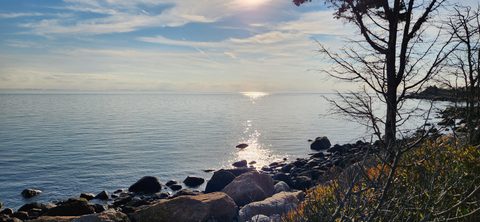

EUR, Rome: the E42 palazzi, the lake park and the 1960 Olympic venues
EUR, Rome
EUR is the thirty-second of Rome's quartieri, Q. XXXII, and its official name is Europa. It was laid out from 1937 for a world exposition, the Esposizione Universale di Roma, that was to have opened in 1942 and never did. The acronym stuck. What a visitor finds today is a planned district of travertine palazzi set on wide axes, four of them designed around a single square; an artificial lake with a terraced water garden above it; a state museum with published hours and prices, a national archive with a free exhibition inside its document stores, and a planetarium; two venues built for the 1960 Olympic Games; a funfair opened in 1953; and a domed basilica at the head of a monumental stair. It is also a working business district, and it is large.
-
Guerrini, Lapadula and Romano's block of six orders of arches, 51 m per side and 68 m high, begun in December 1938 and Fendi's headquarters since 2015.
-
sight
A state museum in two palazzi facing each other on Piazza Guglielmo Marconi, open Tuesday to Sunday 8.00 to 19.00, free on the first Sunday of every month.
-
Free, and open Wednesday and Thursday: an exhibition inside the national archive's document stores, around one of the three originals of the Constitution.
-
sight
A 14-metre dome with 98 seats, back in operation since 22 April 2022, with shows at 18.00, 19.00 and 21.30 from Tuesday to Sunday.
-
sight
Arturo Dazzi's 45-metre obelisk, faced with 92 slabs of Carrara marble, commissioned in 1939 and inaugurated on 12 December 1959.
-
Adalberto Libera's congress building, begun in 1938 and completed in 1954, which held the fencing events of the 1960 Olympic Games.
-
sight
Gaetano Minnucci's building of 1937 to 1939, with an air-raid shelter of about 475 m2 in its second basement powered by two tandem bicycles.
-
The 165,130 m2 park around a basin about 1 km long, inaugurated in 1962, with cherries from Tokyo along the Passeggiata del Giappone.
-
Raffaele De Vico's terraced water garden of about 42,000 m2, inaugurated on 29 June 1961; its lowest section opened to the public on 5 May 2017.
-
A Greek-cross church with a hemispherical dome 32 m across, opened for worship in July 1955; it opens 7.00 to 12.00 and 16.00 to 19.00.
-
Piacentini and Nervi's domed arena of 1958 to 1960, which held the Olympic basketball and boxing, and is in use as a concert and events arena.
-
food
Dinner at the top of the 53-metre water tower on Piazza Pakistan, Tuesday to Saturday 19.30 to 23.00; closed Sunday and Monday.
-
food
A cafe at Piazzale Konrad Adenauer 12, inside the block Ettore Rossi designed in 1939 as the exposition's official restaurant.
-
tip
A funfair built in 1953 inside the agricultural exposition, reopened on 27 October 2016 for children up to 12 and their families.
The exposition that never opened
EUR exists because of an exposition that did not take place. Law n. 2174 of 26 December 1936 created the Ente autonomo E42 to stage the Esposizione Universale di Roma in 1942, with senator Vittorio Cini as Commissario Generale. The parish of Santi Pietro e Paolo records that about 400 hectares of land belonging to the Trappist monks of the Abbazia delle Tre Fontane were expropriated to build it. Work began in 1937, slowed in the war and stopped in 1943 with much of the site unfinished, and the exposition never opened.
The buildings were completed in the 1950s, several of them for the agricultural exposition of 1953, and the quartiere took its present shape around the 1960 Olympic Games, for which the Palazzo dello Sport and the Piscina delle Rose were built. The parks were designed from 1937 and carried out after the war under Raffaele De Vico, whose name recurs on the lake gardens, the Giardino delle Cascate and the Giardino degli Ulivi. The administrative act came later still: Quartiere XXXII - E.U.R. was created by delibera n. 2453 of 13 September 1961, and renamed Quartiere XXXII - Europa by delibera n. 2509 of 5 May 1965, on the favourable opinion of the Commissione Consultiva di Toponomastica of 8 April 1965. Roma Capitale's toponymic code for the quartiere is 232.
The delibere describe the edges: the Magliana viaduct and viale di Val Fiorita, then via delle Tre Fontane and via Laurentina, to the north and east; viale dell'Umanesimo and viale dell'Oceano Pacifico to the south; and the Tiber to the west. Via Cristoforo Colombo, the former via Imperiale, runs the length of the quartiere and far beyond it in both directions, and belongs to no single zone; the Magliana viaduct is itself the northern line. The Abbazia delle Tre Fontane, whose monks planted the eucalyptus wood that is now the Parco degli Eucalipti, stands east of via Laurentina and outside this quartiere. The name Tre Fontane survives here in a street, in a funfair's address and in a park's history, and in nothing more.
Getting there
EUR is a quartiere rather than a rione, which means it is large enough that the name alone locates nothing. Steer by addresses.
Two institutions publish their own directions. The Archivio Centrale dello Stato, at Piazzale degli Archivi 27, gives Metro B to EUR Fermi, or bus 714 to Colombo/Marconi. The Museo storico della comunicazione gives its visitor entrance as Viale Europa at the corner of Via Cristoforo Colombo, by the Metro B station EUR Palasport.
The rest of the quartiere is addressed off a handful of names that recur below. Piazza Guglielmo Marconi carries the two palazzi of the Museo delle Civilta, at nos. 14 and 8, with Arturo Dazzi's obelisk at the centre of its elliptical lawn. Piazzale Konrad Adenauer carries the Palazzo degli Uffici, the Salone delle Fontane and the caffe Palombini at no. 12. Piazza Giovanni Agnelli 10 is one address for two things, the planetarium and the closed Museo della Civilta Romana. The Palazzo dei Congressi is at Piazza John Kennedy 10, La Nuvola at Viale Asia 40, the basilica at Piazzale dei Santi Pietro e Paolo 8, and the water tower with its restaurant at Piazza Pakistan. The Palazzo della Civilta Italiana stands in the Quadrato della Concordia, which is the address Roma Capitale's tourism service gives for it.
Opening hours, tickets and what is closed
Five places here publish hours a traveller can act on. The Museo delle Civilta opens Tuesday to Sunday 8.00 to 19.00, last entry 18.30, closed Monday; admission is 10,00 euro full, 2,00 euro reduced and 5,00 euro on its Amico ticket, with free entry on the first Sunday of every month and on Saturday 25 April. Its Sala Grotta Guattari is temporarily closed for maintenance. The Planetario di Roma opens Tuesday to Sunday 9.30 to 21.30, with shows at 18.00, 19.00 and 21.30, last entry an hour before closing, 10.00 to 14.00 on 24 and 31 December, and closed on Mondays, 1 January, 1 May and 25 December; its ticket office and bookshop keep winter hours of 9.30 to 18.00, and Roma Capitale's call centre is 060608, daily 9.00 to 19.00. Lo scrigno della memoria, inside the Archivio Centrale dello Stato, is free, and opens Wednesday and Thursday 10.00 to 12.00 and 15.30 to 17.00; guided visits are by compulsory booking, on Thursdays, in groups of no more than thirty, and last an hour. The basilica of Santi Pietro e Paolo opens 7.00 to 12.00 and 16.00 to 19.00, with the parish office Monday to Saturday 10.00 to 12.00. The rooftop Ristorante Il Fungo is closed Sunday and Monday and serves dinner 19.30 to 23.00 from Tuesday to Saturday.
Three things are shut, and each is shut on its own operator's word. The Museo della Civilta Romana at Piazza Giovanni Agnelli 10 is closed for refurbishment and safety works, with no reopening date stated; the planetarium in the same building is open. The Museo storico della comunicazione on Viale Europa is temporarily closed. The Torri Ligini have stood disused since the late 1990s and are under refurbishment.
No source publishes hours for several of the rest: the Palazzo della Civilta Italiana, which is Fendi's headquarters and states nothing about visitor access; the Palazzo degli Uffici; Luneur Park; the Piscina delle Rose; and the sanctuary on via Laurentina. The Palazzo dei Congressi and La Nuvola are working congress buildings whose owner publishes an events calendar rather than opening times.
Frequently asked questions
- What does EUR stand for, and why is the quartiere also called Europa?
- EUR is the acronym of Esposizione Universale di Roma, the world exposition that was to open in Rome in 1942 and never did. The unit was created as Quartiere XXXII - E.U.R. by delibera n. 2453 of 13 September 1961, and renamed Quartiere XXXII - Europa by delibera n. 2509 of 5 May 1965 on the favourable opinion of the Commissione Consultiva di Toponomastica of 8 April 1965. Both names are in use; Roma Capitale's toponymic code is 232.
- What can you actually go inside?
- The Museo delle Civilta, in two palazzi on Piazza Guglielmo Marconi, is a full museum visit, open Tuesday to Sunday 8.00 to 19.00. The Planetario di Roma runs shows at 18.00, 19.00 and 21.30, Tuesday to Sunday. Lo scrigno della memoria, the free permanent exhibition laid out inside the Archivio Centrale dello Stato's document stores, opens Wednesday and Thursday mornings and afternoons, with guided visits on Thursdays by compulsory booking. The basilica of Santi Pietro e Paolo opens twice a day, and the parks and the lake cost nothing. The rest of EUR, the E42 palazzi included, is looked at from the outside.
- Can you go into the Palazzo della Civilta Italiana?
- The building has housed the headquarters of Fendi since 2015, and its owner, EUR S.p.A., publishes no visiting arrangements for it; no source states its opening hours, so none are given here. What is visible from the ground is the point of it anyway: a travertine-clad block 51 metres per side and 68 metres high, eight floors of which six answer the six orders of arches, 28 marble statues of 3.40 metres under the entrance arcades, four groups of the Dioscuri by Publio Morbiducci and Alberto Felci beside the staircases, and the inscription across the frontone, Un popolo di poeti di artisti di eroi di santi di pensatori di scienziati di navigatori di trasmigratori.
- Is the Museo della Civilta Romana open?
- No. Roma Capitale's own museum site states that it is closed for refurbishment and safety works, and no source states a reopening date. It closed on 31 January 2014, and its collections, including the complete cast series of Trajan's Column and Italo Gismondi's 1:250 model of imperial Rome, cannot currently be seen. The Planetario di Roma occupies the same building at Piazza Giovanni Agnelli 10 and is open.
- Where do you eat in EUR?
- Thinly. EUR is an office district whose bars and restaurants are ordinary neighbourhood trade with no published history. Two have a sourced history behind them: the Ristorante Il Fungo, at the top of the 53-metre water tower on Piazza Pakistan, which serves dinner from Tuesday to Saturday, 19.30 to 23.00, and is closed Sunday and Monday; and the caffe Palombini at Piazzale Konrad Adenauer 12, which EUR S.p.A. records as still occupying the Palazzo ex Ristorante Ufficiale, a building designed by Ettore Rossi in 1939. The Hilton Rome EUR La Lama on Viale Europa occupies the 55-metre slab tower connected to the congress centre.
- Is the Abbazia delle Tre Fontane in EUR?
- No. The abbey stands east of via Laurentina, outside this quartiere, although its monks planted the eucalyptus wood that became the Parco degli Eucalipti and about 400 hectares of their land was expropriated to build E42. What is in EUR, on via Laurentina, is a separate place: the Santuario della Vergine della Rivelazione - Madre della Chiesa, which is not part of the abbey's complex. It stands at the grotto where, on 12 April 1947, Bruno Cornacchiola said the Madonna appeared to him and his three children. The Catholic Church has not recognised the apparitions.
Connected pages
Nearby
-
Ostiense, Rome: San Paolo fuori le Mura, Centrale Montemartini and Garbatella
· Ostiense, Rome
Q. X Ostiense, the quartiere across EUR's northern boundary, running back along via Ostiense towards the Aurelian Walls.
-
Ardeatino, Rome: the Appian catacombs, the Fosse Ardeatine and the Tre Fontane abbey
· Ardeatino, Rome
Q. XX Ardeatino, the neighbour across via Laurentina, which the delibere make EUR's eastern line.
Same region
-
Ostia Lido, Rome: Q. XXXIII at the mouth of the Tiber, its two towers and the seaplane base
· Ostia Lido, Rome
Q. XXXIII, on the coast, and like EUR a quartiere rather than one of the twenty-two rioni.
-
Testaccio, Rome: the ancient river port, the mountain of amphorae and the slaughterhouse quarter
· Testaccio, Rome
R. XX Testaccio, the rione at the Pyramid and the Aurelian Walls, where the road out to EUR begins.
-
Ostia Antica, Rome: the excavated port town, the Museo Ostiense and the castle on Piazza della Rocca
· Ostia Antica, Rome
Another outer unit in this series, holding the Museo delle Civilta and the Palazzo della Civilta Italiana.
See also
-
3 Days in Rome: Colosseum Arena Floor, the Vatican, and the Back Streets of Monti
· Rome, Italy
The three-day Rome itinerary in this series. EUR lies well outside the walls and none of its places are in the historic centre.
What travelers think
Log in to react.
No reviews yet.