
Richmond upon Thames, London: Kew, Richmond Park, Hampton Court Palace, Ham House and Strawberry Hill
Richmond upon Thames, England
Pictures from Richmond upon Thames
See all 1 photos →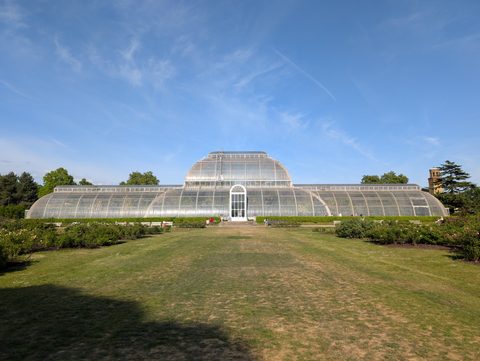
Richmond upon Thames is an outer London borough with land on both banks of the Thames, and the river rather than a town centre is what organises it. The water enters the borough at Hammersmith Bridge and leaves past Hampton, and the whole place runs as a twelve-mile ribbon beside it. Kew and Barnes hold a World Heritage Site of 132 hectares and four disused Victorian reservoirs turned to wetland. Richmond town keeps a twelve-acre Crown green, a stone bridge of 1777 and 955 hectares of royal park on the hill behind. Twickenham lines the Middlesex bank with Georgian villas and puts an 82,000-capacity stadium a mile inland. Ham, Petersham and Hampton close the ribbon at Wolsey's palace. The National Heritage List for England records 815 listed-building entries inside the borough as mapped by OpenStreetMap relation 151795: 40 at Grade I, 88 at Grade II* and 687 at Grade II.
-
A World Heritage Site of 132 hectares inscribed in 2003, NHLE 1000102, and a Grade I registered park and garden, NHLE 1000830, with the Palm House of 1848.
-
sight
The Dutch House of 1631, Grade I listed as NHLE 1263073, with the remains of the earlier palace a scheduled monument, NHLE 1002019; run by Historic Royal Palaces.
-
A neo-classical church of 1714 on Kew Green, Grade II* listed as NHLE 1194022, its churchyard sections separately Grade II*, NHLE 1065407 and NHLE 1357735.
-
Four Victorian reservoirs at Barn Elms turned to wetland in May 2000, over 100 acres, with 29.9 hectares holding Site of Special Scientific Interest status since 2002.
-
walk
Twelve acres of Crown Estate grass with thirty-four list entries within 150 m, among them Maids of Honour Row, Grade I listed as NHLE 1065317, at 62 m.
-
sight
Frank Matcham's theatre of 18 September 1899 on Little Green, Grade II* listed as NHLE 1065384, run by ATG Entertainment as a receiving house.
-
sight
Free entry in the Old Town Hall, Whittaker Avenue; Tuesday to Friday 11am to 5pm and Saturday 10am to 4pm, closed Sundays and Mondays including Bank Holidays.
-
walk
A stone arch bridge of 1774-77 by James Paine and Kenton Couse, about 300 ft (91 m) long, Grade I listed as NHLE 1180951; tolls were charged until 1859.
-
walk
955 hectares of deer park created by Charles I, a Grade I registered park and garden, NHLE 1000828; pedestrian gates 24/7, vehicle gates 7am to 7:45pm.
-
An 82,000-capacity ground opened on 2 October 1909, with 37,000 pieces of memorabilia in the South Stand; the museum opens Tuesday to Saturday 10:00 to 17:00.
-
sight
Henrietta Howard's villa of 1724-29, Grade I listed as NHLE 1285673 in a Grade II* registered park, NHLE 1000400; house Wednesday to Sunday 10am to 5pm, free ticket.
-
sight
James Gibbs's Octagon Room of the villa of 1710, Grade I listed as NHLE 1250280; Tuesday to Sunday 10am to 5pm, closed Mondays, free admission.
-
Horace Walpole's Gothic house begun in 1749, Grade I listed as NHLE 1261987; open Wednesday to Sunday 10am to 5pm with last entry at 4pm.
-
sight
A house of 1610 on the Thames bank, Grade I listed as NHLE 1080832, its garden a Grade II* registered park, NHLE 1000282; route 371 and the Hammerton's ferry serve it.
-
Georgian box pews, an 1796 two-decker pulpit and the tomb of Captain George Vancouver, Grade II listed as NHLE 1380182; the church is Grade II*, NHLE 1065334.
-
sight
Wolsey's palace of 1514 rebuilt by William III in the 1690s, Grade I listed as NHLE 1193127, a scheduled monument, NHLE 1002009, and Grade I registered, NHLE 1000108.
-
walk
445 hectares with Wren's Chestnut Avenue and the Grade I Arethusa 'Diana' Fountain, NHLE 1080871; pedestrian gates 24/7, vehicle gates 6:30am to 7pm.
-
David Garrick's folly of 1756, Grade I listed as NHLE 1065456, open Sunday afternoons 2pm to 5pm from 29 March to 25 October 2026, with free exhibition entry.
Kew and Barnes
The northern tip of the borough sits inside a loop of the Thames and carries three things: a World Heritage Site, a Crown-owned green with a neo-classical church on it, and four Victorian reservoirs turned into a wetland reserve at Barn Elms in Barnes.
The Royal Botanic Gardens, Kew, Richmond, TW9 3AE, were inscribed on the World Heritage List in 2003 as dossier 1084 under criteria (ii), (iii) and (iv), with a property area of 132 hectares and a buffer zone of 350 hectares; UNESCO records the location as "London Borough of Richmond upon Thames, southwest Greater London". The World Heritage Site entry is NHLE 1000102 and carries no grade, and the landscape is separately a Grade I registered park and garden, NHLE 1000830. The botanic gardens formally started in 1759, and UNESCO's citation notes they have made "a significant and uninterrupted contribution to the study of plant diversity and economic botany" since that year. The living collections draw on the 27,000 taxa curated by Royal Botanic Gardens, Kew; the herbarium holds over 8.5 million preserved plant and fungal specimens, the library more than 750,000 volumes and the illustrations collection more than 175,000 prints and drawings. Buildings inside the gardens carry their own entries: the Palm House, completed in 1848 in wrought iron and glass, is Grade I listed, NHLE 1262670; the Temperate House Grade I, NHLE 1262590; and the Marianne North Gallery Grade II*, NHLE 1251787. The Great Pagoda, Grade I listed as NHLE 1262593, was built in 1761 by Sir William Chambers for Princess Augusta — grey brick, ten storeys, 163 ft (50 m) high, 253 steps to the viewing gallery and 80 restored dragons on the roofs; it closed for repairs in 2006 and reopened in 2018. Kew is run with Wakehurst in Sussex by Royal Botanic Gardens, Kew, a non-departmental public body sponsored by Defra employing over 1,100 staff. No source states the gardens' opening hours, so none are given here.
Kew Palace stands inside the same grounds. The surviving main building, known as the Dutch House, dates to 1631 and was built on the undercroft of an earlier building; royal occupation ran from about 1728 until 1818, with a final short-lived occupation in 1844. It is Grade I listed, NHLE 1263073, the adjoining service range separately Grade I as Kew Palace Flats, NHLE 1263074, and the Orangery Grade I, NHLE 1263075. The remains of the earlier palace are a scheduled monument, NHLE 1002019, which carries no grade. Historic Royal Palaces, an independent charity that receives no funding from the government or the Crown, cares for the house; the Royal Kitchens are open to the public, while the former housekeeper's cottage, brewhouse and kitchen block are mostly private. Queen Charlotte's Cottage elsewhere in the gardens is Grade II* listed, NHLE 1262486, and is also run by Historic Royal Palaces. No source states the palace's opening hours, so none are given here.
On Kew Green, TW9 3AA, St Anne's Church is a neo-classical building of 1714 and the central focus of the green; it is Grade II listed, NHLE 1194022. The raised churchyard on three sides of the church holds the tombs of the painters Thomas Gainsborough and Johan Zoffany. Neither tomb has an entry of its own: the two Grade II designations here are the churchyard sections themselves, NHLE 1065407 to the south of the church and NHLE 1357735 to the east. Camille Pissarro, resident at 10 Kew Green, painted the church as "Church at Kew" in 1892. The green is owned by the Crown Estate and leased to the London Borough of Richmond upon Thames, its grassland extends to about thirty acres, and cricket has been played on it since the 1730s. Elizabeth Gate at the west end of the green is one of the two main entrances to the gardens, and the principal entrance gates and railings fronting Kew Green are Grade II* listed, NHLE 1250801.
Across the loop at Barnes, the WWT London Wetland Centre occupies more than 100 acres (40 hectares) of four disused Victorian reservoirs at Barn Elms, on Queen Elizabeth Walk, SW13 9WT, and opened in May 2000. An area of 29.9 hectares has carried Site of Special Scientific Interest status since 2002 as Barn Elms Wetland Centre. The reserve holds nationally significant numbers of gadwall and northern shoveler and records bittern, northern pintail, lapwing, water rail, sparrowhawk, sand martin, kingfisher and little grebe. It is run by the Wildfowl and Wetlands Trust and carries no entry on the National Heritage List for England. No source states its opening hours, so none are given here.
Richmond town, the Green and Richmond Park
This is the civic half of the borough on the Surrey bank: a twelve-acre green on the site of a vanished Tudor palace, a theatre and a museum beside it, an eighteenth-century bridge across to the Middlesex side, and 955 hectares of royal park climbing the hill behind.
Richmond Green, TW9 1NQ, is owned by the Crown Estate and leased to the London Borough of Richmond upon Thames, and its grassland covers roughly twelve acres (5 hectares). The green itself carries no entry on the National Heritage List for England; the weight of designation is in the houses around it. Nothing is listed within 60 m of the green's centre — that radius is all grass — but thirty-four separate list entries fall within 150 m of it, the nearest being Maids of Honour Row at 62 m. That row, built for the maids of honour to Caroline of Ansbach, is Grade I listed together with its gates and railings, NHLE 1065317. The Gate House of the Old Palace, the surviving fragment of Richmond Palace, is Grade I listed, NHLE 1065318; the Wardrobe is Grade I, NHLE 1357730; and the Trumpeters' House is Grade I, NHLE 1357749. Richmond Palace itself is gone, and what remains beyond the gatehouse is a stretch of Grade II listed palace wall, NHLE 1379965, with the site of the Shene Charterhouse nearby a scheduled monument, NHLE 1412036. Tournaments and archery contests were held on the green from the sixteenth century and cricket has been played there since the mid-eighteenth. Even the street furniture carries entries: the drinking fountain at the south corner is Grade II, NHLE 1065308, and a pair of K6 telephone kiosks is Grade II, NHLE 1261332.
Richmond Theatre stands on Little Green, TW9 1QJ, the smaller open space on the north-east side of Richmond Green. Frank Matcham designed it and it opened on 18 September 1899; it is Grade II listed, NHLE 1065384, one of 88 Grade II entries in the borough. ATG Entertainment runs it as a receiving house and programmes it by performance rather than by fixed opening hours. The Orange Tree Theatre publishes its own address as 1 Clarence Street, Richmond TW9 2SA.
The Museum of Richmond occupies the Old Town Hall, Whittaker Avenue, TW9 1TP, and publishes "Tuesday to Fridays, 11am to 5pm" and "Saturdays, 10am to 4pm. We are closed on Sundays and Mondays, including Bank Holidays". Entry is free. Queen Elizabeth II formally opened it on 28 October 1988. It is an independent museum and a charity supported by Richmond upon Thames Borough Council, and its permanent displays run from medieval times to the present across Richmond, Kew, Petersham and Ham, the four places that formed the Municipal Borough of Richmond (Surrey) until the 1965 boundary changes. Highlights include sixteenth-century glass from Richmond Palace. The Old Town Hall itself has no entry on the National Heritage List for England, although the streets immediately around it hold dozens.
Richmond Bridge, Grade I listed as NHLE 1180951, was built between 1774 and 1777 to designs by James Paine and Kenton Couse, replacing a ferry. It opened to pedestrians in September 1776 and to other traffic on 12 January 1777, at which point the ferry closed. A tontine funded it privately and tolls were charged until 1859. The stone arch bridge is about 300 ft (91 m) long and 36 ft (11 m) wide, and was widened and slightly flattened in 1937-40 but otherwise conforms to its original design. It joins the two halves of the borough, whose banks are still called the Surrey side at Richmond and the Middlesex side at Twickenham after the historic counties. The milestone obelisk at its east end is separately Grade II listed, NHLE 1080869, and Twickenham Bridge downstream is Grade II* listed together with its railings, lamp standards and light brackets, NHLE 1253011.
Richmond Park is entered for the park office at Holly Lodge, TW10 5HS. Charles I created it as a deer park in the seventeenth century, it still holds herds of deer, and it covers 955 hectares. The Royal Parks publishes "Pedestrian gates 24/7 Vehicle gates 7am - 7:45pm". It is a Grade I registered park and garden, NHLE 1000828 — a registered landscape rather than a listed building — and it carries Site of Special Scientific Interest, National Nature Reserve and Special Area of Conservation status. King Henry VIII's Mound, possibly a round barrow, was scheduled by Historic England in 2020 as NHLE 1457267 and carries the protected view of St Paul's Cathedral in the City of London; a second mound at TQ1891972117 is a scheduled monument, NHLE 1457269. Neither carries a grade. White Lodge, Grade I listed as NHLE 1250045, was a royal residence and is now the Royal Ballet School, closed to general visitors. Pembroke Lodge, Grade II listed as NHLE 1263437, was the home of the Victorian prime minister Lord John Russell and the childhood home of his grandson Bertrand Russell; it has 11 acres of landscaped grounds and runs as a catering and events venue on a lease from The Royal Parks.
Twickenham, St Margarets and Strawberry Hill
The Middlesex bank is a chain of Georgian villas built by wits and courtiers, with an 82,000-capacity stadium and its museum a mile inland at Whitton Road.
The Rugby Football Union bought a 10.25-acre market garden at Twickenham in 1907 for £5,500 12s 6d; the first stands went up the following year and the ground opened on 2 October 1909. Capacity is 82,000. The RFU owns the ground, has its headquarters on the site, and the England national rugby union team plays its home matches there; the ground is known for sponsorship purposes as the Allianz Stadium Twickenham, Whitton Road, TW2 7BA. The World Rugby Museum occupies the South Stand and holds over 37,000 pieces of rugby memorabilia — boots, balls, jerseys, programmes, match tickets and books. It opened as the Museum of Rugby in 1996, took its present name in 2007 and reopened after refurbishment in early 2018, and publishes "Tue - Sat: 10:00 - 17:00 Sun: 11:00 - 17:00 Bank Holidays: 11:00 - 17:00 Monday: Only over LBRuT school holidays". Neither the stadium nor the museum carries an entry on the National Heritage List for England. Harlequins play at the Twickenham Stoop immediately across Langhorn Drive.
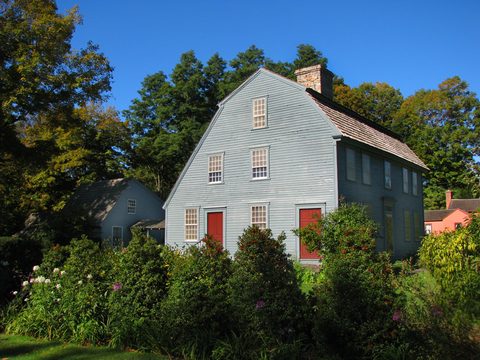
Marble Hill, on Richmond Road, TW1 2NL, is a Neo-Palladian villa built between 1724 and 1729 for Henrietta Howard, Countess of Suffolk, who lived there until her death. Its compact design became a standard model for the Georgian English villa and for plantation houses in the American colonies. The estate came into London County Council ownership and opened to the public in 1903; restoration began under the Greater London Council in 1965 and the freehold passed to English Heritage after the GLC was dissolved. English Heritage publishes "Park and café open daily, house open Wed-Sun" and, in more detail, "The house is open from Wednesday to Sunday (and bank holidays), 10am to 5pm", with admission to the house by free ticket. The house is Grade I listed, NHLE 1285673, and its park is a Grade II* registered park and garden, NHLE 1000400: two designations of different type and grade. The stable block is Grade II listed, NHLE 1357725, the ice house Grade II, NHLE 1194472, and White Lodge to Marble Hill Park Grade II, NHLE 1250209 — a different building from the Grade I White Lodge in Richmond Park, NHLE 1250045.
Orleans House Gallery, Orleans Road, TW1 3BL, publishes "Tuesday–Sunday: 10am–5pm Closed Mondays" and "Free admission". John James built the Palladian villa in 1710 for the politician and diplomat James Johnston, with construction of the wider house running from 1702 to 1737, and it takes its name from Louis-Philippe, Duke of Orléans and later the last King of France, who stayed there in the early nineteenth century. The house was derelict by the early twentieth century and mostly demolished in 1926, but the baroque octagonal room designed by James Gibbs was preserved. NHLE 1250280 is Grade I and names "Orleans House the Octagon Room and service wing adjoining", which is what survives; the villa is not there. The Octagon Room, its service wing and a converted stable block now form the gallery, which shows art relating to the borough and neighbouring areas.
Strawberry Hill House, 268 Waldegrave Road, TW1 4ST, publishes "House & Shop: Open 5 days a week, Wednesday-Sunday, 10am–5pm. Last entry 4pm. Café: Open 5 days a week, Wednesday-Friday, 9.30am–5pm & Saturday-Sunday 9am-5pm." Horace Walpole rebuilt the existing house in stages from 1749, with further phases in 1760, 1772 and 1776, and the result is the prototypical example of Strawberry Hill Gothic, prefiguring the nineteenth-century Gothic Revival. Walpole sought "gloomth" inside to suit his collection of antiquarian objects, against a deliberately cheerful garden; the interior includes gilded ceilings and a fireplace by Robert Adam, and James Essex designed parts of the exterior. The garden's Rococo shell-shaped seat was recreated in the 2012 restoration. The house is Grade I listed, NHLE 1261987, filed under the entry name "Strawberry Hill (St Mary's Training College)" after the teacher-training college that later occupied the site; its grounds are a Grade II* registered park and garden, NHLE 1000214, and the Chapel in the Wood is separately Grade I listed, NHLE 1253028. The house states that it "has been open to visitors for over 250 years" and directs visitors to take "Bus 33 or R68 from Richmond station", alighting at Strawberry Vale from the 33 and at Popes Grotto from the R68.
Ham, Petersham and Hampton Court
The southern half of the ribbon holds a Stuart house on the Thames bank at Ham, a village church at Petersham with its pre-Victorian interior intact, and at the far end the palace at Hampton Court with 445 hectares of Bushy Park beside it.
Ham House and Garden stands on the river at Ham Street, TW10 7RS, in the care of the National Trust. Thomas Vavasour, an Elizabethan courtier and Knight Marshal to James I, completed the original house in 1610. William Murray, a close friend and supporter of Charles I, leased and then bought it; the house was sequestrated during the Civil War and recovered by his wife Catherine on payment of a fine. Elizabeth Murray married John Maitland, 1st Duke of Lauderdale, a member of Charles II's Cabal ministry, as her second husband in 1672, and the seventeenth-century interiors date from that period. Nine separate entries stand within 250 m of the house. One is the house itself, Grade I listed as NHLE 1080832; the other eight are Grade II curtilage entries — the forecourt, NHLE 1192685; its entrance gates and railings, NHLE 1358078; the stables, NHLE 1080790; the ice house, NHLE 1358079; the garden walls and gatepiers to the south of the house, NHLE 1080833; the service yard entrance to the west, NHLE 1358096; the tea room, NHLE 1192746; and the boundary wall on the east side of Ham Street, NHLE 1358098. The garden is a Grade II* registered park and garden, NHLE 1000282. No source states the house's opening hours, so none are given here.
St Peter's Church, Petersham Road, TW10 7AA, is Grade II listed, NHLE 1065334, under the entry name "Parish Church of St Peter". The main body of the church dates from the sixteenth century and parts of the chancel from the thirteenth, and Domesday Book suggests a church may have stood on the site in Saxon times. Pevsner and Bridget Cherry describe it as a "church of uncommon charm" whose interior is "well preserved in its pre-Victorian state". It keeps Georgian box pews, a two-decker pulpit made in 1796 and a relief of the royal arms of the House of Hanover installed in 1810. The churchyard holds the tomb of Captain George Vancouver, Grade II listed in its own right as NHLE 1380182, along with at least eight other individually listed tombs. It is a working parish church in the Diocese of Southwark, and no source states its opening hours, so none are given here. Petersham village around it is dense with entries: Petersham House's garden gates and railings are Grade II listed, NHLE 1065336; Montrose House is Grade II, NHLE 1065342; and Rutland Lodge with its entrance gate and piers is Grade II, NHLE 1065338.
Hampton Court Palace, East Molesey, KT8 9AU, stands in the London Borough of Richmond upon Thames despite the Surrey postal address that Historic Royal Palaces publishes. The Office for National Statistics postcode directory gives KT8 9AU the administrative district "Richmond upon Thames" and the ward "Hampton", and the ONS boundary of local authority E09000027 encloses the palace. Building began in 1514 for Cardinal Thomas Wolsey; in 1529, as Wolsey fell from favour, he gave the palace to Henry VIII, who enlarged it for his retinue. William III's rebuilding in the early 1690s, intended to rival Versailles, destroyed much of the Tudor palace, and work ceased in 1703, leaving the building in two contrasting styles, domestic Tudor and Baroque. The palace carries three designations of three different types at once: Grade I listed, NHLE 1193127; scheduled monument, NHLE 1002009, which has no grade; and Grade I registered park and garden, NHLE 1000108. The walls and railings to the palace are separately Grade I listed, NHLE 1358066. Twenty-three separate entries fall within 250 m of the palace centre, among them the Banqueting House, NHLE 1357714; the Tennis Court, NHLE 1080809; the Lower Orangery, NHLE 1193195; the Royal Mews and Great Barn, NHLE 1192945; the Lion Gates, NHLE 1065442; the Trophy Gates, NHLE 1065444; and the Tilt Yard Tower, NHLE 1065440, all Grade I. Six of the twenty-three are named "Privy Garden", one of them Grade I, NHLE 1065446, and five Grade II, and six more are named "Fountain Garden", all Grade II. No source states the palace's opening hours, so none are given here.
Bushy Park, entered from Hampton Court Road, Hampton, TW12 2EJ, covers 445 hectares (1,100 acres) immediately north of Hampton Court Palace and Hampton Court Park, with Teddington, Hampton, Hampton Hill and Hampton Wick around it. The Royal Parks publishes "Pedestrian gates 24/7 Vehicle gates 6:30am - 7pm" and runs an annual deer cull that closes gates early for six weeks from the start of September. It is a Grade I registered park and garden, NHLE 1000281. In September 2014 the greater part of the park, together with Hampton Court Park and Hampton Court Golf Course, was notified as the Bushy Park and Home Park biological Site of Special Scientific Interest. Sir Christopher Wren designed Chestnut Avenue and the Arethusa "Diana" Fountain as a grand approach to Hampton Court Palace; the fountain is Grade I listed, NHLE 1080871, under the entry name "Arethusa or 'Diana' Fountain". The Old Brew House is a scheduled monument, NHLE 1002046, and carries no grade, and Bushy House, now occupied by the National Physical Laboratory, is Grade II* listed, NHLE 1080870.
Garrick's Temple to Shakespeare stands on the riverside at Hampton, Hampton Court Road, TW12 2EN, and opens "Sunday afternoons (2pm-5pm) from Sunday 29th March 2026 until Sunday 25th October 2026"; admission to the Garrick Exhibition is free. The actor-manager David Garrick erected the garden folly in 1756 on the north bank of the Thames to honour Shakespeare, used it to house his collection of Shakespearean relics and entertained family and guests in it. It came into public ownership in the 1930s, fell into serious disrepair by the end of the twentieth century and was restored in the late 1990s with National Lottery funding after a campaign supported by leading actors; it now runs as a museum and memorial to Garrick's life and career. The temple is Grade I listed, NHLE 1065456, under the entry name "Garrick's Shakespeare Temple". Garrick's Villa across the road, about 70 m away, is separately Grade I listed, NHLE 1193477, and its grounds are a Grade II registered park and garden, NHLE 1000805.
Getting there
Richmond upon Thames is served by the District line, the London Overground Mildmay line and South Western Railway. The District line reaches only the two northern stations, Richmond and Kew Gardens; there is no DLR, no Elizabeth line and no tram. Everything south and west of Richmond — Twickenham, St Margarets, Strawberry Hill, Teddington, Whitton, Hampton, Hampton Court, Barnes and Mortlake — is National Rail, operated by South Western Railway out of London Waterloo. All three modes meet at Richmond, naptanIds 910GRICHMND and 940GZZLURMD, and nowhere else in the borough.
For Kew and Barnes, Kew Gardens has two adjacent stations of the same name: Kew Gardens Underground Station, 940GZZLUKWG, on the District line, and Kew Gardens Rail Station, 910GKEWGRDN, on the Mildmay line. The Underground station is Grade II listed, NHLE 1031878, and its footbridge separately Grade II listed, NHLE 1031879. Routes 65, 110 and night route N65 serve the Victoria Gate side of the gardens, 400 m from the stop. Barnes, 910GBARNES, and Barnes Bridge, both South Western Railway, are the stations for the Wetland Centre, and Mortlake, 910GMRTLKE, also South Western Railway, is the fifth station in this part of the borough.
For Richmond town, the Green and Richmond Park, take the District line, the Mildmay line or South Western Railway to Richmond. Routes 33, 65, 110, 190, 337, 371, 419, 490, 493, 969, H37, R68, R70 and night routes N22, N33 and N65 serve Richmond Green. Richmond Park has no station inside it: Pembroke Lodge is served by routes 65 and 371 and night route N65, and the nearest rail stations to White Lodge in the middle of the park are Mortlake, North Sheen and Barnes, all South Western Railway and all more than 2 km away.
For Twickenham, St Margarets and Strawberry Hill, South Western Railway calls at Twickenham, 910GTWCKNHM, St Margarets, 910GSTMGTS, Strawberry Hill, 910GSTRWBYH, and Whitton, 910GWHTTON. Routes 110, 281, 481, 618, 681, 969 and H20 serve the stadium; routes 33, 490, R68, R70 and night routes N22 and N33 serve Marble Hill and Orleans House; and routes 33, R68 and night route N33 serve Strawberry Hill House.
For Ham, Petersham and Hampton Court, South Western Railway calls at Teddington, 910GTEDNGTN, Hampton, 910GHAMPTON, and Hampton Court, 910GHCRT. Hampton Court Rail Station is across the bridge in Elmbridge, Surrey, outside Greater London, although the palace it serves is inside the borough. Routes 111, 216, 411 and R68 serve Hampton Court Palace, and routes 111, 216 and R68 serve Garrick's Temple at Hampton. Ham House has one bus route, the 371, and no station within 2 km; the approaches are Twickenham or St Margarets across the river, or Richmond, or the Hammerton's foot ferry, which TfL lists as "Richmond - Ham House Ferry Landing", naptanId 930GRHH. Petersham is served by routes 65 and 371 and night route N65. The borough's other piers are Richmond St. Helena Pier, 930GRSH; Richmond Landing Stage, 930GRLS; Twickenham Hammerton's Pier, 930GTHP; Hampton Court Pier, 930GHCP; and Hampton Ferry Landing, 930GHMP.
Frequently asked questions
- Is Hampton Court Palace in London or in Surrey?
- The palace stands in the London Borough of Richmond upon Thames. Historic Royal Palaces publishes the postal address as Hampton Court Palace, East Molesey, Surrey, KT8 9AU, but the Office for National Statistics postcode directory gives KT8 9AU the administrative district "Richmond upon Thames" and the ward "Hampton", and the ONS boundary of local authority E09000027 encloses the site. The palace is Grade I listed, NHLE 1193127, a scheduled monument, NHLE 1002009, and a Grade I registered park and garden, NHLE 1000108. Hampton Court Rail Station, on South Western Railway, is across the bridge in Elmbridge, Surrey, outside Greater London.
- Does Richmond upon Thames have an Underground station?
- Yes, two: Richmond and Kew Gardens, both on the District line. Richmond, naptanIds 910GRICHMND and 940GZZLURMD, is also served by South Western Railway and by the London Overground Mildmay line, and is where all three modes meet. Kew Gardens has separate adjacent Underground and Overground stations of the same name, 940GZZLUKWG and 910GKEWGRDN; the Underground station is Grade II listed, NHLE 1031878, and its footbridge Grade II listed, NHLE 1031879. Everything south and west of Richmond is South Western Railway out of London Waterloo. The borough has no DLR, no Elizabeth line and no tram.
- What are the opening hours at Strawberry Hill House, Orleans House Gallery and the Museum of Richmond?
- Strawberry Hill House, 268 Waldegrave Road, TW1 4ST, publishes "House & Shop: Open 5 days a week, Wednesday-Sunday, 10am–5pm. Last entry 4pm." and a café open Wednesday to Friday 9.30am to 5pm and Saturday and Sunday 9am to 5pm. Orleans House Gallery, Orleans Road, TW1 3BL, publishes "Tuesday–Sunday: 10am–5pm Closed Mondays" with free admission. The Museum of Richmond, in the Old Town Hall, Whittaker Avenue, TW9 1TP, publishes "Tuesday to Fridays, 11am to 5pm" and "Saturdays, 10am to 4pm. We are closed on Sundays and Mondays, including Bank Holidays", and entry is free.
- How many listed buildings does Richmond upon Thames hold?
- The National Heritage List for England records 815 listed-building entries inside the borough as mapped by OpenStreetMap relation 151795: 40 at Grade I, 88 at Grade II* and 687 at Grade II. Counted instead against the Office for National Statistics boundary for local authority E09000027, the figure is 816, split 40, 88 and 688, so the total depends on which boundary is used. Beyond the listed buildings the borough holds one World Heritage Site, the Royal Botanic Gardens at Kew, NHLE 1000102; six scheduled monuments, none of which carries a grade; and fifteen registered parks and gardens, of which four are Grade I — Kew, NHLE 1000830; Richmond Park, NHLE 1000828; Bushy Park, NHLE 1000281; and Hampton Court, NHLE 1000108.
- When are the gates of Richmond Park and Bushy Park open?
- The Royal Parks publishes "Pedestrian gates 24/7 Vehicle gates 7am - 7:45pm" for Richmond Park and "Pedestrian gates 24/7 Vehicle gates 6:30am - 7pm" for Bushy Park. An annual deer cull closes Bushy Park's gates early for six weeks from the start of September. Richmond Park covers 955 hectares and is a Grade I registered park and garden, NHLE 1000828; Bushy Park covers 445 hectares and is a Grade I registered park and garden, NHLE 1000281. Both hold herds of deer, and both carry Site of Special Scientific Interest status.
- How do I reach Ham House?
- Ham House and Garden, Ham Street, TW10 7RS, has one bus route, the 371, and no station within 2 km. The approaches are Twickenham or St Margarets across the river, or Richmond, or the Hammerton's foot ferry, which TfL lists as "Richmond - Ham House Ferry Landing", naptanId 930GRHH. The house is Grade I listed, NHLE 1080832, its garden is a Grade II* registered park and garden, NHLE 1000282, and eight further Grade II curtilage entries stand within 250 m. It is in the care of the National Trust. No source states its opening hours, so none are given here.
Connected pages
Nearby
-
Hounslow, London: Chiswick House, Syon Park, Osterley, Gunnersbury and the Kew Bridge steam museum
· Hounslow, England
Syon House and the Royal Botanic Gardens at Kew face each other across the tidal Thames, the Duke of Northumberland's estate on one bank and Kew on the other.
-
Wandsworth, London: Battersea Power Station, Putney Embankment, the Alton Estate and the Granada Tooting
· Wandsworth, England
Barnes station is the nearest to Wandsworth's Alton Estate at 1,603 m, and the Thames between Barnes and Putney is the boundary the two boroughs share.
Shared history
-
Kingston upon Thames, London: the Coronation Stone, Clattern Bridge, the Tudor conduits and Chessington
· Kingston upon Thames, England
Kingston's Tudor conduit houses piped spring water under the Thames to Hampton Court, and Richmond Park's Kingston Gate opens onto Kingston Hill.
What travelers think
Log in to react.
No reviews yet.