
Waltham Forest, London: Walthamstow Wetlands, God's Own Junkyard, Queen Elizabeth's Hunting Lodge and Epping Forest
Waltham Forest, England
Pictures from Waltham Forest
See all 1 photos →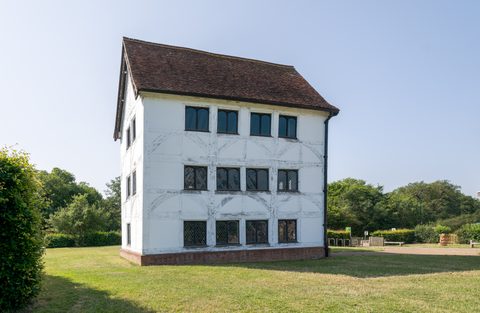
Waltham Forest is an outer London borough between the Lea and Epping Forest, and it reads as four places rather than one. Walthamstow Village keeps a conservation area designated in 1967 around a twelfth-century parish church, a timber-framed hall house of about 1435 and a parish workhouse of 1730, with Forest Road running west to the Georgian Water House of 1762 in Lloyd Park. Central Walthamstow holds a street market of about 500 stalls, a super-cinema of 1930 reopened as a theatre on 1 May 2025, and working Thames Water reservoirs opened to the public in October 2017. Chingford runs out into Epping Forest at Chingford Plain, where Henry VIII's timber Great Standing of 1543 survives. Leyton and Leytonstone close the borough to the south. The National Heritage List for England records 117 listed-building entries inside the borough: none at Grade I, 13 at Grade II* and 104 at Grade II.
-
A parish church of twelfth-century foundation with a Tudor brick tower of 1535 and over one hundred and fifty brasses, listed Grade II* as NHLE 1357600.
-
sight
A timber-framed hall house of about 1435 on Church Lane, listed Grade II as NHLE 1190795; four dwellings now, and a building to look at from the street.
-
Closed for redevelopment with no reopening date given. The 1730 parish workhouse is listed Grade II as NHLE 1191188 and holds the Bremer car of 1892.
-
Closed for renovations from 22 June 2026. The Water House of 1762, where Morris lived from 1848 to 1856, is listed Grade II* as NHLE 1065620.
-
walk
The moated former grounds of the Water House on Forest Road, with the Winns Gallery, an aviary and a skate park; Walthamstow Central is about 800 m away.
-
sight
About 500 stalls along the High Street, trading Tuesday to Saturday, from St James Street station at one end to Walthamstow Central at the other.
-
sight
The Granada of 1930 by Cecil Masey and Theodore Komisarjevsky, listed Grade II* as NHLE 1065590, reopened on 1 May 2025 with a 960-seat auditorium.
-
sight
Over 1,500 neon pieces in an industrial unit off Shernhall Street; free, and open Friday and Saturday 11am to 10pm and Sunday 11am to 6pm.
-
walk
Ten working Thames Water reservoirs opened to the public in October 2017; 9.30am to 4pm October to March, 9.30am to 5pm April to September.
-
A mill rebuilt in 1806 that rolled copper coin blanks from 1808, listed Grade II as NHLE 1065618; the 1864 tower opens only on scheduled climbs.
-
A sewage pumping station of 1877 listed Grade II as NHLE 1379203, running its 1897 Marshall engines; open every Sunday 10:30 to 16:00, free.
-
Henry VIII's Great Standing of 1543, listed Grade II* as NHLE 1293481 and run as a museum by the City of London Corporation; free, with £5 private tours.
-
food
An early nineteenth-century forest temperance retreat, listed Grade II as NHLE 1065599, a cafe again since 2012 and about 70 m from the Hunting Lodge.
-
Roofless from 1904 and rebuilt by 1930 on a £6,000 gift from Miss Louisa Heathcote, listed Grade II* as NHLE 1065596 and still holding services.
-
About 2,400 hectares of forest kept unenclosed under the Epping Forest Act 1878, entered from Rangers Road beside the Chingford Visitor Centre.
-
John Johnson's Italianate town hall of 1895, listed Grade II as NHLE 1065587, beside the public library, NHLE 1190991; 187 m from Leyton station.
-
sight
Recorded from about 1200 and rebuilt by John Shaw in 1822, listed Grade II* as NHLE 1293623, with a Flaxman monument to William Bosanquet.
-
sight
A branch library of 1934 with shops below and the library above, listed Grade II* as NHLE 1418380 on 28 April 2014 and still a working library.
Walthamstow Village and Forest Road
The heritage core of the borough is a few hundred metres of Church Lane, Church End and Vestry Road, with Forest Road running west from it to Lloyd Park. The Walthamstow Village Conservation Area was designated by the borough in 1967, and a further conservation area covers Orford Road.
The Church of St Mary, at Church End, Church Hill, E17 9RL, is a parish church of twelfth-century foundation, and Norman pillar bases with their chisel marks survive above ground level. The north aisle is thirteenth century, the south aisle fourteenth, and the tower was rebuilt in Tudor brick in 1535. The church holds more than one hundred and fifty brasses and monuments, the oldest dating from 1436. In 1819 the galleries were linked, the nave walls raised and Gothic Revival windows cut; in 1843 the remaining walls were raised and the nave pillars remodelled. The church was bombed on 4 October 1940 and again on 8 October 1944 and restored after the war, refurbished between 1995 and 2001, and regenerated from 2021 at a cost of about £3.37 million, a project for which Matthew Lloyd Architects won a RIBA London award in 2025. It is listed Grade II* as NHLE 1357600, first listed on 19 October 1951. Four table tombs in the churchyard carry their own Grade II entries — the Solly family tomb, NHLE 1065609; the Wise family tomb, NHLE 1065610; the Riggs family tomb, NHLE 1065611; and the Morley Wilson family tomb, NHLE 1357601 — as do the graveyard wall, NHLE 1357602, and a pillar box on the corner of Church Lane, NHLE 1065613. No source states the church's opening hours, so none are given here.
The Ancient House, at 2, 4, 6 and 8 Church Lane, E17 9RW, is a timber-framed hall house built about 1435, originally with wattle-and-daub infill. The medieval frame stayed hidden under protective weatherboarding until a restoration in 1934, carried out by Robert Fuller under the supervision of the architect C. J. Brewin as a memorial to W. G. Fuller, head of the Fuller's firm of builders; the house was restored again in 2002. One list entry, Grade II, NHLE 1190795, covers all four numbers and was first listed on 19 October 1951; it records that despite conversion into four apartments, much of the original timber frame is exposed. The house is divided into four dwellings and is not open to the public, and it stands a few metres from Vestry House Museum and St Mary's churchyard.
Vestry House Museum, on Vestry Road, E17 9NH, is closed for redevelopment. Its own site states that the museum 'is currently closed for redevelopment. We are due to reopen in 2026', and gives no date. The building was put up in 1730 as the parish workhouse for Walthamstow and afterwards served as a police station, an armoury, a builder's merchant's store and a private house; it opened as a local history museum in 1931. It holds the Bremer car, built by Frederick Bremer in 1892 and given to the museum in 1933, claimed as the first British motor car with an internal combustion engine. The redevelopment, by the architects Studio Weave, began in 2023. The building is listed Grade II as NHLE 1191188 under the statutory name 'Walthamstow Museum (Vestry House)', first listed on 19 October 1951, and stands inside the Walthamstow Village Conservation Area.
The William Morris Gallery, at Lloyd Park, Forest Road, E17 4PP, is also closed. The operator's Renewal Project 2026 page states that the gallery building 'is now closed for renovations', that the project begins on Monday 22 June 2026, and that the work will be completed ahead of the gallery's next major exhibition, Earthly Paradise, opening on 3 October 2026; no reopening date as such is published, and Deeney's Cafe stays open through the works. The gallery occupies the Water House, a Georgian house of 1762, listed Grade II* as NHLE 1065620 under the statutory name 'The Water House, Lloyd Park (William Morris Gallery)', first listed on 19 October 1951. William Morris lived here with his family from 1848 to 1856, from the age of fourteen; the newspaper proprietor Edward Lloyd bought the house in 1856, and his son gave house and grounds to Walthamstow in 1900. The gallery opened in 1950, inaugurated by Clement Attlee, then Prime Minister, and won the Art Fund Prize for Museum of the Year in 2013. A refurbishment costing £3.023 million was completed in 2012, funded by £1.523 million from the Heritage Lottery Fund and £1.5 million from the London Borough of Waltham Forest, and produced nine permanent exhibition rooms. A K6 telephone kiosk outside on Forest Road carries a separate Grade II listing, NHLE 1357624, made on 15 September 1987.
Lloyd Park, Forest Road, E17 4PP, is the former grounds of the Water House and surrounds the gallery; the moat that rings the house predates the Georgian building. It became a public park after Edward Lloyd's son gave the house and its grounds to Walthamstow in 1900. It holds the Winns Gallery, an exhibition space run alongside the William Morris Gallery, together with an aviary and a skate park, and it carries no entry on the National Heritage List for England.
Central Walthamstow and the Lea Valley
This is the commercial and industrial spine of the borough: the High Street market, Hoe Street, an industrial estate off Shernhall Street, and, on the Lea, the reservoirs.
Walthamstow Market occupies all but the last stretch of Walthamstow High Street, E17 7LD, running from St James Street station at the western end to Walthamstow Central at the eastern end. Wikipedia measures it at approximately one kilometre. It has about 500 stalls and trades five days a week, Tuesday to Saturday, not on Sunday and not on Monday. OpenStreetMap records the market as relation 11370057, tagged amenity=marketplace and linked to Wikidata Q7966631, with no opening hours tagged. The claim that this is the longest outdoor street market in Europe is contested: Wikipedia calls it the second longest, after the Porta Portese in Rome at 2 km. At 76 High Street, the L. Manze pie and mash shop was listed Grade II as NHLE 1416834 on 28 October 2013 for its 1929 interior, and it is closed.
Soho Theatre Walthamstow, at 186 Hoe Street, E17 4QH, opened in 1930 as the Granada, with exteriors by Cecil Masey and interior decoration by Theodore Komisarjevsky, seating 2,697. It traded successively as the Granada, MGM, ABC and EMD and closed as a cinema in December 2003. Its Christie organ was still in working order in the building where it had been installed when the cinema shut. The Universal Church of the Kingdom of God bought the building intending conversion, and a local campaign supported by Griff Rhys Jones and Paul McGann opposed the change of use. Waltham Forest Council bought the building from Antic in May 2019 and partnered with Soho Theatre; the venue reopened on 1 May 2025 with a 960-seat main auditorium, three studio spaces and four bars, and the operator states that Soho Theatre Walthamstow is now open. It is listed Grade II* as NHLE 1065590, first listed on 24 February 1987 and amended on 5 October 2000, under the statutory name 'ABC Cinema', which is the trading name it carried in the 1980s rather than its present one.
God's Own Junkyard is at Unit 12, Ravenswood Industrial Estate, Shernhall Street, E17 9HQ, and holds over 1,500 neon pieces, among them film props and vintage signs made for fairgrounds and circuses. The business began in 1952 as Electro Signs, founded by Richard 'Dick' Bracey, a Welsh former miner; the collection was assembled by his son Chris Bracey, who made neon for films, and since Chris Bracey's death in November 2014 it has been run by his widow Linda Bracey and their sons Matthew, Marcus and Max. The operator publishes opening as Friday 11am to 10pm, Saturday 11am to 10pm and Sunday 11am to 6pm, three days a week, and states that the Rolling Scones Cafe/Bar is open for food and drinks all weekend. Entry is free. Wood Street station is 555 m away.
Walthamstow Wetlands is entered at the Engine House, 2 Forest Road, N17 9NH. The postcode is a Tottenham one, but the Engine House and the reservoirs east of the Lea Navigation are inside the London Borough of Waltham Forest. The site opened to the public in October 2017, for the first time in 150 years, after a £10.6 million scheme by London Wildlife Trust with Thames Water and Waltham Forest Council. London Wildlife Trust, which manages the reserve, describes it as a fully operational 160-hectare Thames Water reservoir site; Wikipedia gives the reserve extent as 211 hectares, covering ten water bodies — Lockwood, High Maynard, Low Maynard, East Warwick, West Warwick and Reservoirs 1 to 5. The reservoirs remain a working part of London's water supply, owned and operated by Thames Water. The site is a Site of Special Scientific Interest for its breeding, migratory and wintering waterbirds and part of a Site of Metropolitan Importance for Nature Conservation. The visitor centre is the Marine Engine House of 1894; the operator states that the Engine House and the main concrete pathway through the site are accessible for wheelchair users, with a platform lift and accessible toilets, and there is an Engine House Cafe with terrace seating. Opening is 9.30am to 4pm from October to March and 9.30am to 5pm from April to September, with last entry 15 minutes before closing on weekdays and 30 minutes before at weekends in both seasons, and the cafe and toilets closing 30 minutes before the site.
The Coppermill stands on Coppermill Lane, E17 7HQ, inside the reserve, and the path from the Engine House runs to it. The mill ground corn in the fourteenth century, made paper from 1659 to 1703 and leather in the 1700s, and worked as an oil mill until 1806, when it was rebuilt. The British Copper Company bought it in 1808 and rolled copper for penny and halfpenny coin blanks; copper production ceased in 1857, the East London Waterworks Company bought the site in 1859, and the Italianate tower was added in 1864. The building is still an operational hub for Thames Water, and the tower opens to visitors only on scheduled climbs run by the reserve. It is listed Grade II as NHLE 1065618 under the statutory name 'The Coppermills (Waterboard Stores)', first listed on 19 October 1951 and amended on 15 September 1987; the entry dates the building 1806 and describes the later Italianate tower attached to the north of the main block, so the tower carries no separate list entry. The Coppermills Water Treatment Works alongside is a modern Thames Water plant and is not the listed structure.
The Walthamstow Pumphouse Museum, at 10 South Access Road, E17 8AX, opens every Sunday between 10:30 and 16:00, last entry 15:45, and states that entry is free and donations are welcome. It is a one-day-a-week museum. The list entry describes a sewage pumping station of 1877 for Walthamstow Urban District Council, extended to the west in 1896, with the present engines installed in 1897: the pair of Marshall C-type horizontal steam engines the museum runs, numbers 27384 and 27385, are those 1897 engines and replaced a Tangye set. The museum also holds fire-fighting equipment from late Victorian pumps and ladder-carts to a modern fire engine, original Victoria line tube carriages, and a model railway representing the Liverpool Street to Chingford line across several periods. The building is listed Grade II as NHLE 1379203 under the statutory name 'The Pump House', first listed on 26 October 1999, a late date among the borough's mostly 1951 and 1987 entries. St James Street station is 559 m away.
Chingford and the Epping Forest edge
The northern end of the borough runs out into the southern reach of Epping Forest, and three of its four set pieces stand within 500 m of each other on Rangers Road, E4 7QH.
Epping Forest covers about 2,400 hectares, or 5,900 acres, and runs roughly 19 km north to south while nowhere exceeding about 4 km in width; its Site of Special Scientific Interest covers 1,728 hectares. The City of London Corporation bought out the nineteen forest manors under Acts of 1871 and 1872, and the Epping Forest Act 1878 required it to keep Epping Forest unenclosed and unbuilt on as an open space for the recreation and enjoyment of the people. Queen Victoria dedicated the forest 'to the use and enjoyment of my people for all time' at Chingford on 6 May 1882, which is where the name the People's Forest comes from. The parts of the forest inside this borough are Chingford Plain, Walthamstow Forest, Gilbert's Slade, Leyton Flats and Bush Wood; Wanstead Flats lies mainly beyond the borough boundary, and Connaught Water, the lake near the Chingford entrance, is in Epping Forest District, Essex. Wanstead Park, a Grade II* registered park and garden, NHLE 1000194, is Redbridge's, and the forest continues into it: the western fringe of the registered landscape, at Bush Wood, falls inside the Waltham Forest boundary. The National Heritage List for England records no registered park or garden of the borough's own and no scheduled monument in the borough at all. The Corporation runs the Epping Forest Visitor Centre at Chingford, with maps and leaflets, public toilets, a gift shop and exhibitions; the nearby car parks are Barn Hoppitt, E4 7QH, Bury Road, E4 7AZ, and Connaught Water, IG9 5UB, all with ANPR cameras.
Queen Elizabeth's Hunting Lodge, 6 Rangers Road, E4 7QH, is a timber-framed grandstand built in 1543 for Henry VIII as the Great Standing, from which the court watched deer being driven across Chingford Plain; Elizabeth I ordered its renovation in 1589. The City of London Corporation, which has owned Epping Forest since the Epping Forest Act 1878, has run the Lodge as a museum since 1960. The Corporation states that entry is free and that a private tour can be booked at £5 per person, adult or child, and it describes carpenters' marks left nearly 500 years ago, a Tudor kitchen display, period dressing-up clothes — which the same page marks as presently unavailable — and a view over Epping Forest from the top floor. The Corporation publishes closures for wedding ceremonies in 2026 on 16 July, 25 July, 11 August, 24 October and 14 November, each from 1pm. The 'Tuesday to Sunday, 10am to 5pm' the Corporation gives is the staffing of its Visitor Centre phone line rather than the Lodge's own opening; OpenStreetMap tags the Lodge Tu-Su 11:00-13:00 and 14:00-16:00. No source states the Lodge's opening hours, so none are given here. It is listed Grade II* as NHLE 1293481, first listed on 28 June 1954, the entry reading 'Former hunting lodge, now museum. Early C16, much restored ... Early and rare example of this building type'. Chingford station is 501 m away.
The Butler's Retreat, 12 Rangers Road, E4 7QH, is an early nineteenth-century barn converted into one of the temperance retreats of Epping Forest, which served non-alcoholic refreshments to day-trippers out from the East End. It takes its name from John Butler, who occupied it in 1891, and Wikipedia describes it as one of the few remaining Victorian retreats within the forest. The City of London Corporation refurbished it and it reopened as a cafe in 2012, now trading as The Larder at the Butler's Retreat, and the Corporation notes that a resin bonded path leads to it from the Lodge. It is listed Grade II as NHLE 1065599, first listed on 30 October 1986, described in the entry as a 'Detached house. Probably early C19. Timber framed, weatherboarded, on brick base' and included for group value. It stands about 70 m from Queen Elizabeth's Hunting Lodge; the two grid references, TQ 39790 94780 and TQ 39724 94776, are 66 m apart. No source states its opening hours, so none are given here.
All Saints Church, on Old Church Road, E4 6ST, is the old parish church of Chingford. The north nave wall is probably twelfth century, the south aisle and arcade late thirteenth, and the bell tower was added around 1400. St Peter and St Paul, built on Chingford Green in 1844, superseded it as the parish church, and the old church was left to decay; in the nineteenth century it was known as the green church because it was covered in ivy, and it was much painted. The nave and south aisle roof collapsed in 1904; after patching in 1905, a full restoration was completed in 1930, paid for with a £6,000 gift from Miss Louisa Heathcote, with C. C. Winmill as architect. It holds regular services and its hall is used by local societies, and it is a chapel of ease within the parish of St Peter and St Paul. It is listed Grade II as NHLE 1065596, first listed on 28 June 1954. Its successor church on Chingford Green is separately listed Grade II, NHLE 1065582, also on 28 June 1954: built in 1844 by Lewis Vulliamy and extended in 1903 by Sir Arthur Blomfield, paid for with £5,000 of his own money by the rector Robert Boothby Heathcote.
Leyton and Leytonstone
The southern third of the borough was the Municipal Borough of Leyton, and its civic buildings are what survive of it: a town hall group of 1895 on High Road Leyton, a parish church recorded from about 1200, and a branch library of 1934 on Church Lane, Leytonstone.
Leyton Town Hall, at 1A Adelaide Road, E10 5NN, was built in 1895 to designs by John Johnson and formally opened on 18 March 1896 as the town hall of the Urban District, later Municipal Borough, of Leyton. Pevsner called it 'fussy but enjoyable, in an eclectic and enriched Italianate style'. A two-storey technical institute block was put up alongside on Adelaide Street. The complex was extensively restored and reopened in 2010 as a business centre, and it now houses the Legacy Business Centre and Leyton Great Hall, together the Leyton Municipal Offices, managed by Lee Valley Estates; the East London Cabaret Theatre launched there in 2021. Two Grade II entries stand side by side, both first listed on 1 August 1986: the town hall, NHLE 1065587, whose statutory address is High Road Leyton, west side, including blocks to Adelaide Road and Ruckholt Road, and which the entry describes as 'Town hall. Dated 1895. By John Johnson'; and Leyton Public Library, NHLE 1190991. The two accounts of the library building differ and neither is settled: the list entry reads 'Public library. Dated 1881. By John Knight' and 'Forms part of Leyton Town Hall complex', while Wikipedia says the earlier town hall of 1882 by John Johnson, at High Road and Ruckholt Road, was converted into the library. Leyton Underground station is 187 m away.
The Church of St Mary, at 35 Church Road, E10 5JP, is dedicated as the Parish Church of St Mary with St Edward and St Luke. A church is recorded on the site from about 1200, and the oldest surviving fabric dates from 1658. John Shaw rebuilt much of it in 1822, adding the brick south aisle with the Y-tracery windows that are still its most obvious feature, and a long restoration ran from 1929 into 1935. The antiquary John Strype was curate here from 1669 and held the post for 68 years until his death in 1737. The monuments inside include one to William Bosanquet, who died in 1813, by John Flaxman, along with memorials to Sir Michael Hicks, 1543 to 1612, and his family, to Sir John Strange and to Charles Goring, 2nd Earl of Norwich. It is listed Grade II* as NHLE 1293623, first listed on 27 May 1954 and amended on 24 February 1987. No source states its opening hours, so none are given here.
Leytonstone Library, on Church Lane, E11 1HG, was built in 1934. The list entry reads 'Public library and shops. Built in 1934 by Leyton Urban District Council to the design of James Ambrose Dartnall (d1985). The builders were AE Symes Ltd.' The art deco front entrance and lobby were built at the instruction of the borough librarian Edward Sydney. Historic England listed it Grade II on 28 April 2014, NHLE 1418380, describing it as an inter-war suburban branch library of considerable architectural ambition which illustrates the most progressive library practice of the period, and as a pioneering, possibly the earliest, example of a public library conceived as part of a multi-functional building combining municipal and commercial services, with shops on the ground floor and the library above. It is one of thirteen Grade II entries in the borough and the most recently designated of them. A £1.5 million refurbishment finished in September 2015 added a theatre hall and upgraded facilities, and it remains a working public library run by the London Borough of Waltham Forest. Leytonstone Underground station is 130 m away and Leytonstone High Road 507 m; the mosaics of Alfred Hitchcock's life and work in the Underground station's entrance passages were commissioned by the borough from the Greenwich Mural Workshop for the centenary of his birth, begun in June 2000 and unveiled on 3 May 2001.
Getting there
Twelve stations lie inside Waltham Forest, and two operators run all but one of them. London Underground works the Victoria line, which terminates at Walthamstow Central and also calls at Blackhorse Road, and the Central line, which calls at Leyton and Leytonstone and splits at Leytonstone for the Hainault loop and Epping. London Overground works the Weaver line, the former Chingford branch out of Liverpool Street, and the Suffragette line, the former Gospel Oak to Barking Riverside line; both took their present names in the November 2024 London Overground renaming. There is no DLR station, no Elizabeth line station and no tram in the borough, and Lea Bridge, reopened in 2016 on the Lea Valley lines and served by Greater Anglia, is the single National Rail station inside it. Stratford, one borough south in Newham and two stops from Leyton on the Central line, is the nearest Elizabeth line and DLR access.
For Walthamstow Village and Forest Road, take the Victoria line or the Weaver line to Walthamstow Central: 554 m from Vestry House Museum and 794 m to 798 m from Lloyd Park and the William Morris Gallery. Wood Street, on the Weaver line, is 723 m from Vestry House and Walthamstow Queen's Road, on the Suffragette line, 865 m. Blackhorse Road, on the Victoria and Suffragette lines, is 1,637 m from Lloyd Park and is the station for the west end of Forest Road rather than for the park. Buses 34, 97, 212, 357, 675, W12, W15, W16 and W19 stop within 500 m of Vestry House; for Lloyd Park and the gallery the routes within 500 m are 34, 97, 123, 212, 215, 230, 275, 357, 675, SL1, SL2, W11, W12, W15, W19 and night routes N26 and N73, with the Superloop SL1 and SL2 both calling on Forest Road.
For central Walthamstow and the Lea valley, Walthamstow Central is 227 m from Soho Theatre Walthamstow by Underground entrance and 232 m by Overground. St James Street, on the Weaver line, is 294 m from the west end of Walthamstow Market and 559 m from the Pumphouse Museum, and Wood Street is 555 m from God's Own Junkyard. For Walthamstow Wetlands, Blackhorse Road is 677 m to 681 m from the Engine House and Tottenham Hale, on the Victoria line and Greater Anglia, is 634 m to 651 m, though Tottenham Hale stands in Haringey. Buses W4, 123, 230 and night route N73 pass within 500 m of the Engine House; the Hoe Street and market stops take 20, 34, 55, 69, 97, 212, 215, 230, 257, 275, 357, 675, SL1, SL2, W11, W12, W15, W19 and night routes N26, N38 and N73; God's Own Junkyard takes 20, 56, 212, 230, 257, 357, W12, W15, W16, W19 and night route N55; and the Pumphouse Museum takes 58, 158, 212, 230, 675 and W19.
For Chingford and the Epping Forest edge, take the Weaver line to its northern terminus at Chingford: 501 m from Queen Elizabeth's Hunting Lodge, with the Chingford Plain entrance to the forest beside the Lodge and the Butler's Retreat about 70 m further along Rangers Road. Highams Park is the next station south on the same branch. Buses 97, 179, 212, 397, 444 and night route N26 serve Rangers Road within 500 m. There is no Underground station in this half of the borough; the Weaver line is a branch line and it is the only rail service here.
For Leyton and Leytonstone, take the Central line: Leyton is 187 m from Leyton Town Hall and 969 m from the Church of St Mary, Leyton, and Leytonstone is 130 m from Leytonstone Library. On the Suffragette line, Leyton Midland Road is 890 m from the Church of St Mary and Leytonstone High Road is 507 m from the library, about 500 m on foot from Leytonstone Underground station. Buses 58, 69, 97, 158, W13, W15 and night route N26 serve Leyton Town Hall; 66, 145, 257, 339, W12, W13, W15, W16, W19 and night route N8 serve Leytonstone Library; and 58, 69, 97, 158 and night route N26 serve the Church of St Mary, Leyton.
Frequently asked questions
- Does Waltham Forest have an Underground station?
- It has four. The Victoria line terminates at Walthamstow Central and also calls at Blackhorse Road; the Central line calls at Leyton and Leytonstone and splits at Leytonstone for the Hainault loop and Epping. London Overground adds the Weaver line, the former Chingford branch out of Liverpool Street, and the Suffragette line, the former Gospel Oak to Barking Riverside line, both renamed in November 2024. There is no DLR station, no Elizabeth line station and no tram in the borough, and Lea Bridge, served by Greater Anglia, is the single National Rail station inside it. Stratford, in Newham and two stops from Leyton on the Central line, is the nearest Elizabeth line and DLR access.
- Is the William Morris Gallery open?
- No. The gallery at Lloyd Park, Forest Road, E17 4PP, is closed for renovations. The operator's Renewal Project 2026 page states that the building 'is now closed for renovations', that the project begins on Monday 22 June 2026, and that the work will be completed ahead of the gallery's next major exhibition, Earthly Paradise, opening on 3 October 2026. No reopening date as such is published. Deeney's Cafe stays open through the works, and Lloyd Park around the building remains open. The Water House the gallery occupies is listed Grade II* as NHLE 1065620 and was first listed on 19 October 1951.
- Which museums and collections in Waltham Forest can I visit now?
- Three. The Walthamstow Pumphouse Museum, 10 South Access Road, E17 8AX, opens every Sunday from 10:30 to 16:00, last entry 15:45, and entry is free. Queen Elizabeth's Hunting Lodge, 6 Rangers Road, Chingford, E4 7QH, is run by the City of London Corporation, entry is free and a private tour costs £5 per person; no source states its opening hours, so none are given here, and the Corporation publishes closures for weddings on 16 July, 25 July, 11 August, 24 October and 14 November 2026, each from 1pm. God's Own Junkyard, Unit 12, Ravenswood Industrial Estate, E17 9HQ, opens Friday and Saturday 11am to 10pm and Sunday 11am to 6pm, free. The William Morris Gallery and Vestry House Museum are both shut.
- When is Walthamstow Wetlands open, and is it in Haringey?
- It opens 9.30am to 4pm from October to March and 9.30am to 5pm from April to September, with last entry 15 minutes before closing on weekdays and 30 minutes before at weekends in both seasons; the cafe and toilets close 30 minutes before the site. The entrance is the Engine House of 1894 at 2 Forest Road, N17 9NH. The postcode is a Tottenham one, but the Engine House and the reservoirs east of the Lea Navigation are inside the London Borough of Waltham Forest. Blackhorse Road is 677 m to 681 m away and Tottenham Hale, which is in Haringey, 634 m to 651 m.
- When does Walthamstow Market trade?
- Five days a week, Tuesday to Saturday, and not on Sunday or Monday. It runs along Walthamstow High Street, E17 7LD, with St James Street station at the western end and Walthamstow Central at the eastern end, has about 500 stalls, and Wikipedia measures it at approximately one kilometre. The claim that it is the longest street market in Europe is contested: Wikipedia calls it the second longest, after the Porta Portese in Rome at 2 km. At 76 High Street the L. Manze pie and mash shop, listed Grade II as NHLE 1416834 on 28 October 2013 for its 1929 interior, is closed.
- How many listed buildings does Waltham Forest hold?
- The National Heritage List for England records 117 listed-building entries inside the borough: none at Grade I, 13 at Grade II* and 104 at Grade II. It records no scheduled monument in the borough and no registered park or garden of the borough's own. Of the thirteen Grade II* entries, six are churches, four are houses, one is a library, Leytonstone Library, NHLE 1418380, one is a cinema, NHLE 1065590, and one is the Tudor hunting standing at Chingford, NHLE 1293481. Wanstead Park, the Grade II* registered park and garden NHLE 1000194, is Redbridge's, though the forest continues into it at Bush Wood.
Connected pages
Nearby
-
Newham, London: the Queen Elizabeth Olympic Park, the House Mill, Abbey Mills and the Royal Docks
· Newham, England
The Lea Navigation runs from the Coppermill and Walthamstow Wetlands down past Leyton to the northern edge of Queen Elizabeth Olympic Park in Newham.
-
Haringey, London: Alexandra Palace, Bruce Castle, the Highgate Grade I group and Tottenham High Road
· Haringey, England
Walthamstow Wetlands straddles the Lea on an N17 Tottenham postcode, and the Walthamstow Pumphouse Museum merged with Haringey's Markfield in 2025.
Shared history
-
Redbridge, London: Wanstead Park, Valentines Mansion, Ilford Hospital Chapel and Hainault Forest
· Redbridge, England
One forest under one Conservator since 1878: Chingford Plain is Waltham Forest's and Wanstead Park, NHLE 1000194, is Redbridge's, with Bush Wood between.
What travelers think
Log in to react.
No reviews yet.