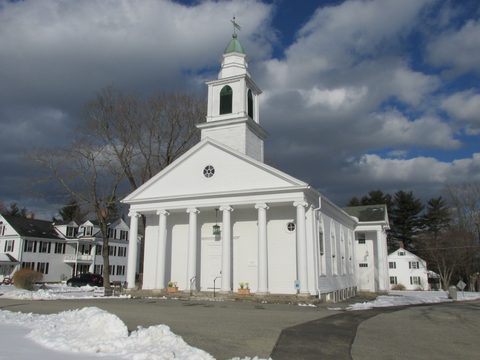

Campo Marzio, Rome: the Spanish Steps, piazza del Popolo, the Augustan monuments and the Pincio
Campo Marzio, Rome
Pictures from Campo Marzio
See all 1 photos →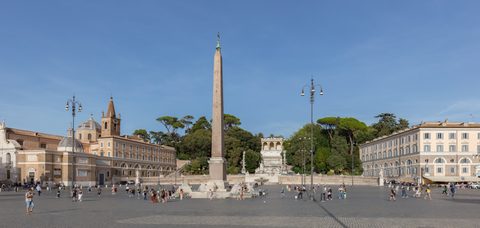
Campo Marzio is R. IV, the fourth of Rome's rioni by toponymic code, and it fills the ground between the Tiber and the Pincian hill. The Spanish Steps climb out of piazza di Spagna to the church of Trinità dei Monti. Piazza del Popolo opens at the head of the Tridente, the three streets that fan south from it: via del Babuino, via del Corso and via di Ripetta. Two Augustan monuments stand in the rione, the Mausoleum of Augustus and the Ara Pacis, the altar now housed in a museum of its own. Above them the Pincio carries a public promenade laid out through the nineteenth century, with Villa Medici and the French Academy on its flank. Roma Capitale's boundary for the rione is a ring of named shopping streets, so several things a visitor files here belong to a neighbour.
-
Built 1723 to 1726 to Francesco De Sanctis' design, finished under Benedict XIII, restored from October 2015 and walkable again from 23 September 2016.
-
sight
The point where via del Babuino, via di Ripetta and via del Corso meet, given its ellipse by Valadier from 1811 and finished in 1828.
-
sight
The altar voted by the Senate in 13 BC and inaugurated in 9 BC, buried by Tiber silt and reassembled in the summer of 1938 under Giuseppe Moretti.
-
Roma Capitale gives the museum as open daily 9.30 to 19.30, with 9.30 to 14.00 on 24 and 31 December and last admission an hour before closing.
-
Closed since 6 June 2022 while work on piazza Augusto Imperatore goes forward, so plan to see the 87 m drum from the square rather than inside.
-
The promenade decided on in 1810 and carried through by Valadier to 1834, climbing from piazza del Popolo by three prospettive to the Belvedere loggia.
-
sight
Roma Capitale lists the sightlines: piazza del Popolo below, St Peter's dome on the horizon, Monte Mario right, the Quirinale left, Garibaldi on the Janiculum.
-
sight
Seat of the Académie founded in 1666 by Colbert; gardens of over 7 hectares in sixteen square beds. Open 9.30 to 19.00, last admission 18.30, closed Tuesday.
-
The Chigi chapel designed by Raphael from 1513 and the Cerasi chapel with two Caravaggio canvases of about 1601. No source states its visiting hours.
-
Della Porta's fountain of 1572, made for piazza del Popolo, rebuilt on the Janiculum, stored, and finally set in piazza Nicosia in 1950.
-
sight
The apartment where Goethe lived from 1786 to 1788, a museum since 1997; Tuesday to Sunday 10.00 to 18.00, last admission half an hour before closing.
-
food
A tea room on piazza di Spagna founded in 1893 by Anna Maria Babington and Isabel Cargill, open Monday to Sunday 10.00 to 21.15.
-
food
Fettuccine with butter and parmesan, made first in 1908 by Alfredo Di Lelio; Tuesday to Sunday 12.30 to 15.30 and 19.30 to 23.30, closed Monday lunchtime.
-
stay
A hotel on via del Corso which Roma Capitale writes began as an inn in the last decade of papal Rome.
The rione boundary
Roma Capitale states the rione's perimeter as a ring of named streets: piazzale Flaminio, via Luisa di Savoia, lungotevere Arnaldo da Brescia, lungotevere in Augusta, piazza del Porto di Ripetta, lungotevere Marzio, via del Cancello, via dei Portoghesi, via della Stelletta, piazza Campo Marzio, via degli Uffici del Vicario, via di Campo Marzio, piazza San Lorenzo in Lucina, via Frattina, piazza Mignanelli, via dei Due Macelli, via Capo le Case, via Francesco Crispi, via di Porta Pinciana and viale del Muro Torto. it.wikipedia's article on the rione gives the same ring as a list of neighbours: Quartiere Flaminio, Ludovisi, Colonna, Sant'Eustachio, Ponte and the Tiber. Via del Corso, via Frattina, via Sistina, via di Campo Marzio and piazza del Parlamento are named in that ring as boundaries, and a street named as a boundary is evidence of a line, not of what stands on either side of it.
Piazza San Lorenzo in Lucina carries two churches in two rioni. The basilica that gives the square its name stands in rione Colonna; the Rome Baptist Church at number 35 stands in Campo Marzio. Piazza di Spagna divides the same way in reverse: the square is Campo Marzio's, but Palazzo di Propaganda Fide, which fronts it, stands in rione Colonna and is a Lateran Treaty extraterritorial property. Palazzo Montecitorio, on piazza del Parlamento, is Colonna's too. On via del Corso the addresses are Campo Marzio's while the carriageway is shared with three other rioni: Casa di Goethe at 18, Gesù e Maria at 45, San Giacomo in Augusta at 499, the Grand Hotel Plaza at 126 and the Accademia di Belle Arti's succursale at 476 all stand inside the rione.
The Pincio, the Casina Valadier, the water clock, the busts and the Belvedere all stand in Campo Marzio, and several sources describe them as being in Villa Borghese. Villa Borghese is the name of a park, not of an administrative unit. The streets that lie wholly inside Campo Marzio include via Margutta, via della Croce, via Vittoria, via delle Carrozze, via Belsiana, via dei Greci, via del Vantaggio and via di San Sebastianello.
Getting there
it.wikipedia's article on the rione names Metro line A, with the Spagna and Flaminio stations, as the service reaching it. No source states more about either station, and neither walking times nor distances are given. Steer by addresses instead.
The northern end of the rione is piazza del Popolo, entered from piazzale Flaminio through the Porta del Popolo; the basilica of Santa Maria del Popolo is at Piazza del Popolo 12 and Santa Maria in Montesanto at 18. At the other end of via del Babuino is piazza di Spagna, where the Keats-Shelley Memorial House is at number 26, the Casa Museo Giorgio de Chirico at 31 and Babingtons at 23. Villa Medici is at Viale della Trinità dei Monti 1. The Augustan monuments are together on piazza Augusto Imperatore, with San Rocco all'Augusteo and Il Vero Alfredo at number 30 on the same square, and San Girolamo dei Croati on via di Ripetta.
Four more addresses cover the rest. Casa di Goethe is at Via del Corso 18; the Museo Atelier Canova-Tadolini at Via del Babuino 150/a, at the corner of via dei Greci; the Accademia di Belle Arti at Via di Ripetta 222, with its succursale at Via del Corso 476; and the Antico Caffè Greco at Via dei Condotti 86. Ponte Cavour crosses the Tiber from the rione; the bridge lies in two rioni, Campo Marzio and Prati, and Prati's guide covers the far bank.
Tickets and opening hours
Roma Capitale gives the Museo dell'Ara Pacis as open daily 9.30 to 19.30, with 9.30 to 14.00 on 24 and 31 December and last admission one hour before closing. It gives Villa Medici as open 9.30 to 19.00, last admission 18.30, closed Tuesday. Casa di Goethe opens Tuesday to Sunday 10.00 to 18.00, closed Monday, with last admission half an hour before closing. The Casa Museo Giorgio de Chirico admits visitors on Monday, Tuesday, Thursday, Friday, Saturday and the last Sunday of the month, closed Wednesday, with visits guided and a maximum of fifteen people per slot; tickets are 8 euro full and 5 euro reduced for under-18s and over-65s, free under 12, and are paid at the house on the day of the visit.
For eating and drinking the published times are Babingtons, Monday to Sunday 10.00 to 21.15, on piazza di Spagna; Il Vero Alfredo, Tuesday to Sunday 12.30 to 15.30 and 19.30 to 23.30, closed Monday lunchtime; and the Museo Atelier Canova-Tadolini, whose own site gives the bar and caffetteria daily 08.00 to 24.00 and the restaurant daily 12.00 to 23.00. The Accademia di Belle Arti's own contacts page gives its historic seat as open 07.30 to 19.15, Monday to Saturday. All Saints' on via del Babuino publishes its services rather than visiting hours: Sundays Low Mass at 8.30 and Sung Mass with choir at 10.30, Thursdays midweek Mass at 12.45, with worship in English.
Two of the rione's headline places cannot be walked into. The Mausoleum of Augustus has been closed since 6 June 2022 while work on piazza Augusto Imperatore goes forward. it.wikipedia records that the Antico Caffè Greco was temporarily closed during 2025 by the Ospedale Israelitico di Roma and that a reopening was reported in May 2026, and the business's own site currently carries a campaign about the future of the premises. And for two places that are open, no source states their opening hours, so none are given here: the Keats-Shelley Memorial House and the basilica of Santa Maria del Popolo.
Frequently asked questions
- Are the Spanish Steps in Campo Marzio, and who built them?
- Yes. The Scalinata di Trinità dei Monti, piazza di Spagna at its foot and the church of Trinità dei Monti at its head are all in Campo Marzio. Roma Capitale's Sovrintendenza dates the stair 1723 to 1726 and gives the design to the Roman architect Francesco De Sanctis, 1693 to 1740. The idea of a stair here is documented as early as 1559; a bequest by the Frenchman Stefano Gueffier in 1660 produced the first designs, Clement XI held a competition in 1717, and the work was finished under Benedict XIII in 1726. It was restored in 1995, restored again from October 2015, reopened on 22 September 2016 and walkable again from 23 September 2016.
- Can you go inside the Mausoleum of Augustus?
- Not at present. Roma Capitale states that the mausoleum has been closed since 6 June 2022 while work on piazza Augusto Imperatore goes forward; a second phase of work began in 2025 and completion is stated as the end of 2026. You can still walk the square around it, and the Ara Pacis, the other surviving member of the same Augustan group, is open in its museum daily from 9.30 to 19.30.
- Is the Pincio part of Villa Borghese?
- Villa Borghese is a park name, not the name of an administrative unit, and several sources use it loosely for the whole hilltop. The Pincio promenade, the Belvedere terrace at piazzale Napoleone I, the Casina Valadier, the water clock, the 229 busts and the Antinous obelisk all stand in rione Campo Marzio. The Galleria Borghese, by contrast, is outside the rione, in Q. III Pinciano.
- Which of the buildings here belong to other states?
- None of them is Vatican City and none is in another country. Via dei Condotti 68 is the principal seat of the Sovereign Military Order of Malta; the Order has owned the building since 1630, and since 1834 it has been the residence of the Grand Master and the seat of the Order's government. Palazzo di Spagna houses the Embassy of Spain to the Holy See, and piazza di Spagna takes its name from it. Palazzo di Propaganda Fide, which fronts the same square, is a Lateran Treaty extraterritorial property standing in rione Colonna.
- What can you actually see from the Pincio terrace?
- Roma Capitale enumerates the sightlines from piazzale Napoleone I: piazza del Popolo below, the dome of St Peter's on the horizon, Monte Mario to the right, the Quirinale to the left and the equestrian monument to Garibaldi on the Janiculum in the distance. The terrace sits on a three-arched loggia, the third of the three prospettive that carry the monumental access up from the square, and a nymphaeum was built into it in 1936 to a design by Raffaele De Vico as a mostra of the Acqua Vergine.
- Which church stands on piazza San Lorenzo in Lucina?
- Two do, and they are in different rioni. The basilica of San Lorenzo in Lucina stands in rione Colonna. The Rome Baptist Church, an English-language Protestant congregation at number 35 on the same square, stands in rione Campo Marzio, which is both what the geometry gives and what it.wikipedia states.
Connected pages
Nearby
-
Colonna, Rome: Piazza Colonna, Montecitorio and the seat of government
· Colonna, Rome
The neighbour along via Frattina and via di Campo Marzio, holding San Lorenzo in Lucina, Palazzo Montecitorio and Palazzo di Propaganda Fide.
-
Ludovisi, Rome: Via Veneto, the Capuchin Crypt and the Villa That Was Sold Off
· Ludovisi, Rome
The neighbour east of via di Porta Pinciana and via Francesco Crispi.
-
Ponte, Rome: the bridge the rione is named for, Palazzo Altemps and via dei Coronari
· Ponte, Rome
The neighbour south-west across via del Cancello, along the Tiber bend.
-
Prati, Rome: the Palazzaccio, a Caryatid Fountain and the Only Rione Outside the Walls
· Prati, Rome
Across the river. Ponte Cavour lies in both rioni, and Prati's guide covers the far bank.
-
Pinciano, Rome: Villa Borghese, the Galleria Borghese and the academies of Valle Giulia
· Pinciano, Rome
The rione on the far side of the Aurelian Walls, holding the Pincio, the Casina Valadier, Villa Medici and Piazza del Popolo.
-
Flaminio, Rome: MAXXI, the Teatro Olimpico and the left bank of the Tiber
· Flaminio, Rome
The rione inside the Aurelian Walls to the south, holding Piazza del Popolo and Porta del Popolo, and sharing lungotevere Arnaldo da Brescia.
Same region
-
Parioli, Rome: Villa Ada, the Auditorium and the 1960 Olympic quarter
· Parioli, Rome
The rione at the city end of via Flaminia, holding Porta del Popolo, the gate the Romans called Porta Flaminia, and Piazza del Popolo.
-
Vatican City: St Peter's, the Vatican Museums and the Sistine Chapel
· Vatican City
The rione across the Tiber from Prati, holding the Mausoleum of Augustus, piazza del Popolo and the Spanish Steps.
See also
-
3 Days in Rome: Colosseum Arena Floor, the Vatican, and the Back Streets of Monti
· Rome, Italy
The three-day Rome itinerary in this series. The Spanish Steps, piazza del Popolo and the Ara Pacis all stand inside this rione.
What travelers think
Log in to react.
No reviews yet.