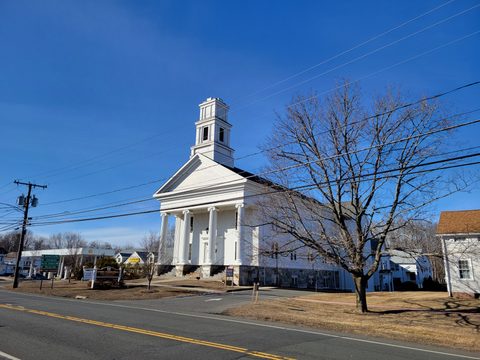

San Saba, Rome: the Baths of Caracalla, Porta San Paolo and the Piccolo Aventino
San Saba, Rome
Pictures from San Saba
See all 1 photos →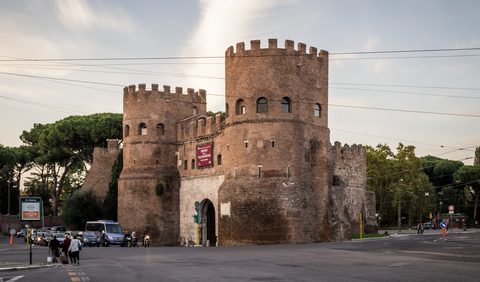
San Saba is R. XXI, the twenty-first of Rome's rioni by toponymic code, and it is one of the two rioni, with Testaccio, that were carved out of Ripa in 1921, following Rome's first master plan of 1909. Romans call it il piccolo Aventino. Most of it is a quiet brick garden-suburb built between 1907 and 1914 by the Istituto Case Popolari, its streets named after architects and its stairways dropping to the Aurelian Walls. The rest is the Baths of Caracalla, four churches, a fifteenth-century villa on the old fork of the Appia and the Latina, the gate the via Ostiense began from, and two Novecento landmarks on the western and northern edges. Several of its boundaries are streets it shares with Celio, Ripa and Testaccio.
-
sight
Inaugurated in 216 AD and out of use from 537 AD, when Vitiges cut the aqueducts; about two kilometres of service galleries run under the precinct.
-
The Soprintendenza sells nominative tickets only through the Musei Italiani portal, the Musei Italiani app, or the desks and totems on site, and offers no skip-the-line.
-
sight
The church the rione is named for, held since 1573 by the Collegio Germanico-Ungarico under the Jesuits, who serve it today; open from 08.00 on weekday mornings.
-
A hall church with Roman floor mosaics laid in the 1930s and apse frescoes of 1600 by Anastasio Fontebuoni; no source states its opening hours.
-
Rebuilt by Sixtus IV and redecorated in 1597 for Cardinal Baronio; the Soprintendenza gives Saturday 10.00 to 12.00 and the Diocese Tuesday and Thursday 9.00 to 12.00.
-
The Parco Archeologico dell'Appia Antica states the church is currently visible from the street, with restoration works under way that will allow public access.
-
A fifteenth-century villa open Saturdays and Sundays to booked groups of fifteen, on 060608; 4.00 euro full, 3.00 euro reduced, guided visit arranged separately.
-
sight
The gate the via Ostiense began from, known to the Romans as Porta Ostiensis and restructured by Honorius between 401 and 403 to a single entrance fornix.
-
sight
Inside the Castelletto of Porta San Paolo: reconstructions of the ports of Ostia and of monuments found along the via Ostiensis. No source states its hours.
-
Adalberto Libera's competition-winning post office of 1933 to 1935 on Via Marmorata, in white marble on a wide flight of steps, still a working post office.
-
Ten lots of Istituto Case Popolari housing built 1907 to 1914 to Quadrio Pirani's designs, on streets named for architects, with stairways down to the walls.
-
Raffaele de Vico's park of 21 April 1939, laid out as Parco Cestio, holding his Fontana dell'Anfora with its bronze amphora and eight raised spouts.
-
Formerly Piazza Raudusculana, after the Servian Walls gate here; the equestrian bronze was unveiled on 27 October 1940 by Benito Mussolini.
-
food
Roman cooking and pizza the restaurant's own site calls bassa e scrocchiarella, on Viale della Piramide Cestia; private functions taken by enquiry.
Getting there
No source states a metro station or a bus route for San Saba, so none is given here, and no source gives a walking time or a distance either. Steer by addresses.
The Soprintendenza Speciale di Roma gives the Baths of Caracalla as Viale delle Terme di Caracalla 52, 00153 Roma, with the site telephone 348 7964477. The Diocese of Rome gives Santi Nereo e Achilleo as Viale delle Terme di Caracalla 28. FAO's own contact page gives its headquarters as Viale delle Terme di Caracalla, 00153 Rome, telephone (+39) 06 57051; the building stands at the start of Viale Aventino, on the corner with Viale delle Terme di Caracalla. The parish gives Basilica di San Saba as Piazza Gian Lorenzo Bernini 20, telephone +39 06 64580140. Santa Balbina is Via di Santa Balbina 8, and its modern main approach is from Viale Guido Baccelli, up the Scalea Padre Simpliciano della Natività. The Stadio "Nando Martellini" is Viale Guido Baccelli 1.
Two addresses sit on boundary streets and are still addresses. San Cesareo de Appia is Via di Porta San Sebastiano 2, and the Casina del Cardinal Bessarione is on the same street, at the ancient fork of the via Appia and the via Latina, with no street number on the Sovrintendenza Capitolina's page. On the far side of the rione, the Palazzo delle Poste Roma Ostiense is Via Marmorata 4, and Porta San Paolo with the Museo della Via Ostiense inside it is on Via Raffaele Persichetti, the museum at number 3. The bookshop Il Mare is Via Leon Battista Alberti 1, and the three places to eat are all on the same two streets: Viale della Piramide Cestia 67 and 25, and Via di San Saba 30.
Opening times, tickets and what is shut
The Baths of Caracalla are the one full ticketed visit in the rione. The Soprintendenza Speciale di Roma gives them as closed Monday; 1 to 28 March 9.00 to 17.30, last admission 16.30; 29 March to 31 August 9.00 to 19.15, last admission 18.00; 1 to 30 September 9.00 to 19.00, last admission 18.00; 1 to 25 October 9.00 to 18.30, last admission 17.30; and 26 October to 28 February 9.00 to 16.30, last admission 15.30. Tickets are nominative and are sold only through the Musei Italiani portal, the Musei Italiani app, or the ticket desks and automatic totems on site. The Soprintendenza states that additional services such as guided visits or skip-the-line are not offered. The Domus di Vigna Guidi inside the precinct is included in the ordinary ticket, and the Soprintendenza states it is closed to the public on particularly crowded days, such as the first Sunday of the month, to protect the frescoes.
The churches vary. The parish of San Saba gives the basilica as Monday to Saturday 08.00 to 12.00 and 16.00 to 19.30, and Sunday and solemnities 09.00 to 13.00 and 16.00 to 19.30, with the parish office Monday to Friday 10.00 to 12.00. For Santi Nereo e Achilleo two institutions publish two answers: the Soprintendenza Speciale di Roma gives the opening as every Saturday 10.00 to 12.00, the Diocese of Rome's own record gives Tuesday and Thursday 9.00 to 12.00, and the two differ. For Santa Balbina, no source states its opening hours, so none are given here. San Cesareo de Appia cannot be entered at all: the Parco Archeologico dell'Appia Antica states that the site is currently visible from the street, and that restoration works under way will allow public access.
The Casina del Cardinal Bessarione runs on booking. The Sovrintendenza Capitolina admits groups only, on Saturday and Sunday, a maximum of fifteen per visit, with booking compulsory on 060608 between 09.00 and 19.00, and states that individual visits are also possible by booking on 060608 on a published calendar. It is closed Monday to Friday. Admission is 4.00 euro full and 3.00 euro reduced, free for residents of Rome and the metropolitan area on production of proof of residence and for MIC card holders; the guided visit is not included in the entry price and must be arranged separately. For the Museo della Via Ostiense, the Stadio "Nando Martellini", the bookshop and the three restaurants, no source states opening hours, so none are given here.
Frequently asked questions
- What is actually in San Saba?
- One very large archaeological site, the Baths of Caracalla, at Viale delle Terme di Caracalla 52. Four churches: the Basilica di San Saba that the rione is named for, Santa Balbina all'Aventino, Santi Nereo e Achilleo and San Cesareo de Appia. One Renaissance suburban villa, the Casina del Cardinal Bessarione. Porta San Paolo, with the Museo della Via Ostiense inside its Castelletto. Two buildings of the Fascist decades, the Palazzo delle Poste Roma Ostiense on Via Marmorata and the Palazzo FAO. Piazza Albania with its Scanderbeg monument, the Parco della Resistenza dell'Otto Settembre with the Fontana dell'Anfora, and the brick garden-quarter the Istituto Case Popolari built on the Piccolo Aventino.
- Is the Pyramid of Cestius in San Saba?
- No. it.wikipedia files the Piramide di Caio Cestio under Rione XX Testaccio. The gate beside it, Porta San Paolo, is in San Saba: the Sovrintendenza Capitolina records that two gates originally flanked the Pyramid, built to ease traffic between the city and the port of Ostia, and that the western one was closed as the via Portuense took over and demolished in 1888. The Sovrintendenza also records that around 1920 the surviving gate was isolated from the Aurelian Walls to ease traffic on its eastern side, and that a bombing in the Second World War destroyed the western stretch of wall that linked it to the Pyramid.
- Where does the name San Saba come from, and what are the rione's arms?
- The rione takes its name from the basilica. it.wikipedia's article on the rione records that hermits settled on the ruins of what was probably the statio of the fourth cohort of the vigiles, and that in the eighth century monks from the community founded at Jerusalem by St Sabas took the site. The same article gives the rione's popular name as il piccolo Aventino, and its arms, citing Pietrangeli's Insegne e stemmi dei rioni di Roma of 1953, as azure, a silver crescent in chief and Diana's silver bow in base, alluding to Diana Aventina.
- Can you go inside San Cesareo de Appia?
- Not at present. The Parco Archeologico dell'Appia Antica states that the site is currently visible from the street, and that restoration works under way will allow public access. The Parco also states that the church has been state property since 1959, and that it passed from the Direzione musei statali della città di Roma to the Parco because of where it stands, on Via di Porta San Sebastiano along the first mile of the Appia. What you can see from the street is a severe façade with sparse columns and pilasters and wide blind panels.
- How do you visit the Casina del Cardinal Bessarione?
- By booking. The Sovrintendenza Capitolina admits groups only, on Saturday and Sunday, a maximum of fifteen per visit, with booking compulsory on 060608 between 09.00 and 19.00, and states that individual visits are also possible by booking on 060608 on a published calendar. It is closed Monday to Friday. Admission is 4.00 euro full and 3.00 euro reduced, free for residents of Rome and the metropolitan area on production of proof of residence and for MIC card holders, and the guided visit is not included in the entry price. The Sovrintendenza gives the street without a number: Via di Porta San Sebastiano, at the ancient fork of the via Appia and the via Latina.
- Is there anything to do in San Saba in the evening?
- Three places to eat: Taverna Cestia at Viale della Piramide Cestia 67, Baccio e i gradini at Viale della Piramide Cestia 25, and Saba Caffè & Cucina at Via di San Saba 30. None of the three publishes its opening hours, so none are given here. Beyond them the rione is residential: the Istituto Case Popolari quarter, the Parco della Resistenza dell'Otto Settembre and Piazza Albania are open ground you can walk through, and the bookshop Il Mare on Via Leon Battista Alberti sells nautical and geographic charts and prints them to custom sizes.
Connected pages
Nearby
-
Ripa, Rome: the Forum Boarium, the Circus Maximus, the Aventine and the Tiber island
· Ripa, Rome
The rione San Saba was carved out of in 1921, holding the Circus Maximus, Santa Sabina and Santa Maria in Cosmedin with the Bocca della Verità.
-
Celio, Rome: the Colosseum, the Caelian hill and the road to the Porta Latina
· Celio, Rome
The neighbour across Via di Porta San Sebastiano and Piazza di Porta Capena, holding the Colosseum and the Parco degli Scipioni.
-
Ardeatino, Rome: the Appian catacombs, the Fosse Ardeatine and the Tre Fontane abbey
· Ardeatino, Rome
The rione immediately north, inside the Aurelian Walls, which holds Porta San Paolo and the Museo della Via Ostiense.
-
Testaccio, Rome: the ancient river port, the mountain of amphorae and the slaughterhouse quarter
· Testaccio, Rome
The neighbour at the other end of via Marmorata, holding Porta San Paolo, the Museo della Via Ostiense and the Baths of Caracalla.
-
Ostiense, Rome: San Paolo fuori le Mura, Centrale Montemartini and Garbatella
· Ostiense, Rome
The rione inside the walls between Porta San Paolo and Porta Ardeatina, holding the gate, the Museo della Via Ostiense and the Palazzo delle Poste.
Shared history
-
Testaccio, Rome: the ancient river port, the mountain of amphorae and the slaughterhouse quarter
· Testaccio, Rome
The other rione carved out of Ripa in 1921, across Via Marmorata, and the one that holds the Pyramid of Cestius.
Same region
-
Campitelli, Rome: the Capitoline, the Roman Forum and the Palatine
· Campitelli, Rome
Another rione in this series, north across the Circus Maximus: the Capitoline hill, the Roman Forum and Santa Maria in Aracoeli.
-
Trastevere (R. XIII), Rome: Fountains, the Janiculum and 1849
· Trastevere, Rome
Another rione in this series, on the far bank of the Tiber.
-
Celio, Rome: the Colosseum, the Caelian hill and the road to the Porta Latina
· Celio, Rome
The neighbour south-west across via di Valle delle Camene and piazzale Numa Pompilio, holding the Baths of Caracalla.
See also
-
3 Days in Rome: Colosseum Arena Floor, the Vatican, and the Back Streets of Monti
· Rome, Italy
The three-day Rome itinerary in this series. The Baths of Caracalla stand inside this rione.
What travelers think
Log in to react.
No reviews yet.