
Merton, London: Wimbledon Common and the windmill, the All England Club, Merton Priory and Morden Hall Park
Merton, England
Pictures from Merton
See all 1 photos →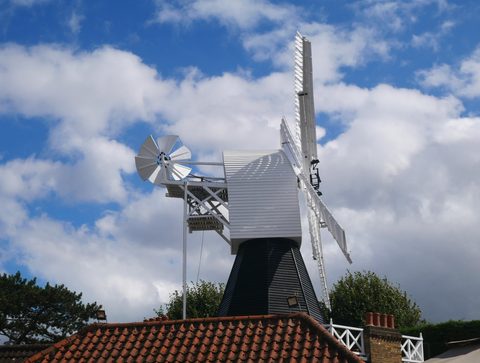
Merton is an outer London borough south-west of the Thames, and nobody says they are going to Merton: they say Wimbledon, Mitcham, Morden, Merton Park or Colliers Wood. Wimbledon Village stands above the town on 460 hectares of common, with a windmill of 1817, a Grade II garden of rhododendrons at Cannizaro, NHLE 1000797, and a Thai temple in four acres of grounds. The town centre holds the All England Club's eighteen tournament grass courts, a theatre of 1910 seating about 1,670, and a football ground opened on 3 November 2020. Along the River Wandle an Augustinian priory founded in 1114 gave way to William Morris's print works and then to Liberty and Co. Mitcham and Morden close the borough with a cricket green played on since 1685 and 125 National Trust acres. The National Heritage List for England records 242 listed entries in the borough: 3 at Grade I, 11 at Grade II and 228 at Grade II.
-
walk
460 hectares (1,140 acres) of common run by eight Conservators under the Act of 1871, with Caesar's Camp an Iron Age hillfort and a scheduled monument, NHLE 1002014.
-
An 1817 hollow post mill rebuilt as a smock mill in 1893, listed Grade II* as NHLE 1358050, free to enter on Sundays 11am to 5pm during British Summer Time.
-
walk
A Grade II* registered park and garden, NHLE 1000797, of rhododendrons, azaleas and camellias behind a hotel on West Side Common.
-
sight
A Thai Buddhist temple in four acres at 14 Calonne Road, its ordination hall consecrated on 3 April 1982 and painted by thirty Thai artists from 1984.
-
sight
The Wimbledon Society's local history museum at 22 Ridgway, in the Village Club, inside the Wimbledon Village conservation area.
-
Eighteen tournament grass courts and a museum reopened on 12 April 2006; guided tours run year-round except during the Championships.
-
walk
Capability Brown's lake in a Grade II* registered park and garden, NHLE 1000852; the public park is 27 hectares with a 400-metre athletics stadium.
-
sight
An auditorium of about 1,670 seats opened on 26 December 1910, listed Grade II as NHLE 1286404, with the gilded Laetitia on its dome.
-
sight
A 300-seat auditorium and a 70-seat studio on The Broadway programming for ages 0 to 13; the larger space reopened in 2025 as the Y C Chan Theatre.
-
AFC Wimbledon's 9,215-capacity ground, opened on 3 November 2020 with a 2–2 draw against Doncaster Rovers, 648 m from Haydons Road station.
-
The foundations of a priory founded in 1114, a scheduled monument, NHLE 1001976, open Sundays 11am to 4pm, April to October.
-
food
A weekend market yard on the Wandle with bars and a working waterwheel; the Colour House is listed Grade II, NHLE 1080891, and the Wheel House Grade II, NHLE 1193882.
-
Entry and parking are free, but riding lessons, pony rides and animal-handling experiences must be booked in advance and are charged separately.
-
Early-thirteenth-century fabric listed Grade II* as NHLE 1080946, with an archway of reused priory stone listed Grade II, NHLE 1192971.
-
walk
125 acres of National Trust land on the Wandle, a Grade II registered park and garden, NHLE 1001336, with two snuff watermills, NHLE 1080907 and NHLE 1193511.
-
Cricket played since 1685 in the Mitcham Cricket Green conservation area, with a pavilion of 1904 across the A239 from the ground.
-
sight
Snuff, calico printing, dyeing and flour on the River Wandle, in the Vestry Hall Annexe; Wednesday 1pm to 4pm and Sunday 2pm to 5pm, admission free.
-
A Grade I church, NHLE 1080899, dated 1636 and earlier, beside Morden Park Mound, a scheduled monument, NHLE 1002011.
-
food
86 The Broadway. The branch page describes 'separated barbeque and non-barbeque dining areas', and the grill sits at the table in the barbeque one.
Wimbledon Village and the Common
The high ground above the town is the hardest part of the borough to reach by rail and the easiest to spend a morning in: 460 hectares of common, a windmill with a free museum, a Grade II* garden behind a hotel, a Thai temple and a Georgian High Street.
Wimbledon Common is entered from Windmill Road, SW19 5NR. Wimbledon, Putney Heath and Putney Lower Common are managed together as 460 hectares (1,140 acres) by eight Conservators, five of them elected every three years and three appointed by government departments, under the Wimbledon and Putney Commons Act 1871 — an Act passed after Earl Spencer's attempt of 1864 to enclose the common for a park was refused. The Site of Special Scientific Interest over the commons covers 346.5 hectares (856 acres), and most of the commons are a Special Area of Conservation under the EC Habitats Directive. Three ponds lie on the higher ground — Kingsmere, Rushmere and Queensmere — with about 16 miles of horse-riding routes. Caesar's Camp, an Iron Age hillfort of roughly the sixth to fourth centuries BC, is a scheduled monument, NHLE 1002014; a scheduled monument carries no grade.
Wimbledon Windmill Museum sits on the common at the same postcode. The mill is listed Grade II* as NHLE 1358050 under the list entry name THE OLD WINDMILL. Charles March, a Roehampton carpenter, built it in 1817 as a hollow post mill, and the millwrights Sanderson and Sons rebuilt it as a smock mill when it was preserved in 1893; it has an octagonal two-storey brick base, four patent sails and a cast-iron brake wheel six feet across. The museum opened in 1976 on the first floor only, the ground floor still being the Wimbledon Common Rangers' accommodation, and a Heritage Lottery grant extended it to both floors in 1999. Robert Baden-Powell stayed in the Mill House in 1902 and wrote parts of Scouting for Boys there; it was published in 1908. The operator opens on Sundays during British Summer Time, 11am to 5pm, with a last visitors day of Sunday 25 October 2026, and admission is free. The Rangers release the brake and turn the sails at 2pm on set weekends roughly every five weeks, for 30 to 45 minutes depending on the wind.
Cannizaro Park, West Side Common, SW19 4UE, is a Grade II* registered park and garden, NHLE 1000797, and the surviving garden of Warren House, an eighteenth-century estate on the south-west edge of the common. Henry Dundas, Home Secretary, lived here from 1785 to 1806 and laid out the framework that survives. The house took the name Cannizaro after Francis Platamone, Count St Antonio, husband of the resident Sophia Johnstone, inherited the Sicilian Dukedom of Cannizzaro in 1832. The Wilson family added the rhododendrons, azaleas and camellias in the 1940s, the property was sold to Wimbledon Borough Council in 1947 and opened to the public, and the house was later sold on and is now a hotel while the gardens stayed in public ownership. No source states the park's opening hours, so none are given here.
The Buddhapadipa Temple stands at 14 Calonne Road, SW19 5HJ, in four acres that were the Barrogill estate. The Thai government bought a property at 99 Christchurch Road, East Sheen for £17,000 on 24 August 1965 and the first monks took up residence there on 15 November 1965; King Bhumibol and Queen Sirikit formally opened the temple on 1 August 1966, on Asalha Puja, and King Bhumibol gave it the name Buddhapadipa, Light of the Buddha. The Calonne Road estate was bought in 1975 and the monks moved in during 1976. The ordination hall was consecrated on 3 April 1982 to designs by Praves Limparangsri at a cost of about 33 million Thai baht, and thirty Thai artists painted the interior over eight years from 1984 under Panya Vijinthanasarn and Chalermchai Kositpipat, the central chamber finished in 1987 and the side rooms in 1992. No source states the temple's opening hours, so none are given here.
The Museum of Wimbledon, at 22 Ridgway, SW19 4QN, is the local history museum of Wimbledon, run by the Wimbledon Society and occupying part of the Village Club on the corner of Ridgway and Lingfield Road. It stands in the Wimbledon Village conservation area, one of about 29 named conservation areas intersecting the borough. The Village Club and Hall next door carries its own Grade II entry, NHLE 1080934. No source states the museum's opening hours, so none are given here.
Wimbledon town centre, the Championships and Wimbledon Park
Downhill from the village, the borough turns into a town centre with two theatres, a football ground, a Capability Brown lake and the one address in Merton the world has heard of.
The All England Lawn Tennis Club and the Wimbledon Lawn Tennis Museum are on Church Road, SW19 5AE. The club was founded on 23 July 1868 as the All England Croquet Club and moved to the Church Road ground in 1922. There are 18 tournament grass courts and 22 practice grass courts at Aorangi Park. Centre Court seats 15,000 after the rebuild of 2007–08; its retractable roof of 5,200 square metres of translucent waterproof fabric was completed in May 2009 and closes in under ten minutes, and the No. 1 Court roof was unveiled on 19 May 2019 over about 11,500 seats. The museum was inaugurated at the Championships centenary in 1977 and reopened in its present building on 12 April 2006, when the Duke of Kent declared it open; its exhibits run back to 1555 and the Kenneth Ritchie Library is attached. Guided tours and audio guides run year-round except during the Championships, when only tournament ticket holders get in. Nothing at the club appears anywhere on the National Heritage List for England — a useful measure of a borough where the register and the visitor map barely overlap. No source states the museum's opening hours, so none are given here.
Wimbledon Park, entered from Home Park Road, SW19 7HS, is a Grade II* registered park and garden, NHLE 1000852, entered on the register in 1987. Capability Brown landscaped it in the eighteenth century and made the lake by damming a brook that runs from the springline near Wimbledon Common down to the River Wandle. The public park is 27 hectares (67 acres) and straddles the Merton–Wandsworth boundary, which runs through the athletics track. It holds tennis courts, a bowls pavilion, a beach volleyball court, a watersports centre and a 400-metre athletics stadium, and the Elisabeth Pool water play area opened in 2007. Merton sold the adjoining golf course on to the All England Club late in the twentieth century while keeping the public park and the lake; separately, in December 2018 the club agreed a £65 million package with the members of the Wimbledon Park Golf Club to cut short their lease, and that money went to the golf club's members rather than to the council.
New Wimbledon Theatre, 93 The Broadway, SW19 1QG, is listed Grade II as NHLE 1286404 under the list entry name WIMBLEDON THEATRE. It opened on 26 December 1910 with a pantomime, to designs by Cecil Aubrey Massey and Roy Young, possibly working from a 1908 design by Frank H. Jones. The main auditorium holds about 1,670 across three levels and the studio holds 80. A gilded statue of Laetitia, Roman goddess of gaiety, holding a laurel crown, stands on the dome; it was taken down in the Second World War in case it guided bombers and replaced in 1991. The Ambassador Theatre Group has run the building since autumn 2003 and it reopened in February 2004.
Polka Theatre, 240 The Broadway, SW19 1SB, began in 1967 as a touring puppet company under Richard Gill. The venue, converted from the Holy Trinity Halls, opened on 20 November 1979 and programmes for ages 0 to 13. It has two spaces, a main auditorium of 300 seats and a studio of 70, 370 in all, alongside a creative learning studio, a garden, a playground, an indoor play area, exhibition space and a cafe. The building closed on 18 February 2019 for redevelopment; the reopening planned for summer 2020 was delayed by the pandemic and the larger space reopened in 2025, renamed the Y C Chan Theatre.
The Cherry Red Records Stadium, Plough Lane, SW17 0NR, opened on 3 November 2020 and brought AFC Wimbledon back to Plough Lane, after the original Wimbledon FC left for Milton Keynes and the supporter-formed club played at Kingsmeadow from 2002. Capacity is 9,215, with planning permission to expand to 20,000, and the build cost £34 million. Merton Council approved the plans unanimously on 10 December 2015 and site clearance began on 16 March 2018. The first match was a 2–2 draw with Doncaster Rovers, the first goal scored by Joe Pigott in the 18th minute. AFC Wimbledon Women have played here since 2021, London Broncos rugby league since 2022, and London Warriors and selected Chelsea Women matches since 2026.
Merton Abbey, Colliers Wood and Merton Park
A mile of the River Wandle carries the industrial spine of the borough: a buried priory, a print works that employed William Morris, a working waterwheel in a market yard, a city farm and an early-thirteenth-century parish church.
Merton Priory Chapter House, Chapter Way, SW19 2RX, is a scheduled monument, NHLE 1001976, under the list entry name The Augustinian Priory of St Mary at Merton, 271m ENE of Abbey Wall Works; a scheduled monument carries no grade. Gilbert the Norman, Sheriff of Surrey, founded the priory in 1114 under Henry I and the canons moved onto the Merton site by 1117. Thomas Becket studied here around 1130 and afterwards wore the habit of a Merton canon. Henry III held Parliament at the priory in 1236, and the Statute of Merton passed there allowed lords to enclose common land while leaving tenants sufficient pasture. The priory was valued at £960 16s 6d in the Valor Ecclesiasticus of 1535 and demolished in 1538, its stone going to build Nonsuch Palace. The chapter house foundations survive beneath the A24 Merantun Way between Merton Abbey Mills and the hypermarket, and window tracery from the site is in the Museum of London. The operator publishes opening dates and times as Sundays, 11am to 4pm, April to October.
Merton Abbey Mills, Watermill Way, SW19 2RY, is the yard beside it. The Colour House, a mid-eighteenth-century industrial building now a children's theatre, is listed Grade II as NHLE 1080891 under the list entry name COLOUR HOUSE AT MISTERS LIBERTY'S PRINT WORKS, and the Wheel House is listed Grade II as NHLE 1193882 under the name WHEEL HOUSE AT MISTERS LIBERTY'S PRINTWORKS; its waterwheel still turns seasonally. Textile works stood nearby from 1667 and Huguenot silk workers established mills here in the early 1700s. Morris and Co. worked at the Merton Abbey Works from 1881 to 1940, Liberty and Co. took the Littler site in 1904 and ran the mills until 1972, and part of the site built gun turrets for the Bristol Blenheim in the Second World War. The yard now runs a weekend market with independent shops, bars, the Colour House Theatre and the summer Abbeyfest.
Deen City Farm, 39 Windsor Avenue, Merton Abbey, SW19 2RR, is an urban farm and riding school beside the Wandle. Entry to the farm is free, the car park is free and the operator asks for donations. It names sheep, goats, rabbits, chickens, donkeys and horses; horse-riding lessons, pony rides and animal-handling experiences must all be booked in advance and are separate from general entry. No source states the farm's opening hours, so none are given here.
The Church of St Mary the Virgin, Church Path, Merton Park, SW19 3HJ, is listed Grade II* as NHLE 1080946, designated on 7 May 1954, and its fabric is early thirteenth century. The freestanding archway about 7 yards north-west of the west doorway is separately listed Grade II, NHLE 1192971, and is reused Merton Priory stonework; the war memorial in the churchyard is separately Grade II, NHLE 1390833. The church stands in the John Innes (Merton Park) conservation area, the garden suburb laid out by John Innes from the 1870s. No source states the church's opening hours, so none are given here.
Mitcham and Morden
The southern half of the borough is a cricket green ringed by list entries, 125 National Trust acres of watermills and river channels, a museum of the Wandle's industries and a Grade I church.
Morden Hall Park, Morden Hall Road, SM4 5JD, is a Grade II registered park and garden, NHLE 1001336, held by the National Trust, and covers 125 acres (51 hectares). Gilliat Edward Hatfeild bequeathed the core of the estate to the Trust on his death on 9 February 1941. Morden Hall itself dates from the 1770s and is listed Grade II, NHLE 1080905; it was a school around 1840, a military hospital in the First World War and later a women's and children's hospital. Two well-preserved snuff watermills stand on the Wandle — the western block listed Grade II, NHLE 1080907, and the eastern block Grade II, NHLE 1193511 — and the river splits into channels through the grounds, crossed by numerous footbridges. Further entries inside the park include Morden Cottage, NHLE 1193502; the pedestal and statue of Venus and Cupid, NHLE 1193528; the pedestal and statue of Neptune, NHLE 1080908; the walled garden walls, NHLE 1080906; and the gates and gatepiers east of the hall, NHLE 1193492. No source states the park's opening hours, so none are given here.
Mitcham Cricket Green, CR4 4LA, gives its name to the Mitcham Cricket Green conservation area. Cricket has been played on the green since 1685, about 340 years, and it is the home of Mitcham Cricket Club; Surrey CCC Second XI have played here. The pavilion dates from 1904 and is unusual in standing across a road, the A239, from the ground. Nineteenth-century Australian touring sides practised here and stayed at The Cricketers, the pub that then overlooked the green and served as the pavilion, the scorer sitting on its balcony; an incendiary bomb destroyed it in the Second World War, the post-war replacement has since been demolished as well, and flats stand on the site, so there is nothing there to look for. A Surrey against Australia women's match in 1937 is reported to have drawn a crowd of more than 10,000. The green is ringed by list entries: Eagle House, Grade I, NHLE 1358013, and its forecourt walls, piers, railings and gates, Grade I, NHLE 1193413, at the Fair Green end, in use as a school since 2005 and not open to visitors; the clock tower at the junction with Upper Green East, Grade II, NHLE 1358012; the Tate Almshouses, Grade II, NHLE 1193086; the White Hart Inn, Grade II, NHLE 1358032; the Burn Bullock public house, Grade II, NHLE 1193391; the Mitcham Parish Rooms, Grade II, NHLE 1080903; and the obelisk at the junction with Cricket Green, Grade II, NHLE 1193483.
The Wandle Industrial Museum is in the Vestry Hall Annexe, London Road, Mitcham, CR4 3UD, on the Lower Green. Its stated mission is to preserve, store, and interpret the heritage and history of the industries and people of the River Wandle: snuff, calico printing, dyeing and flour. It interprets the sites at Merton Abbey, Morden Hall and Ravensbury Mill, which is listed Grade II as NHLE 1080857. The operator publishes hours of Wednesday 1pm to 4pm and Sunday 2pm to 5pm, closed on bank holiday weekends, and warns that Sunday opening may be subject to change, so check before visiting. Admission is free and donations are welcomed; the charity number is 288655. The operator advises 45 to 60 minutes for a visit, there is no museum car park and no public toilets, and wheelchair access is available but difficult for larger motorised chairs. The exhibition Women of the Wandle, on the women who inherited and ran the Wandle mills, opened to the public on Sunday 15 June.
The Church of St Lawrence, London Road, Morden, SM4 5QT, is listed Grade I as NHLE 1080899, designated on 7 May 1954, with a fabric dated 1636 and earlier. It is one of the three Grade I entries in the borough; the other two are Eagle House at Mitcham and its forecourt walls. Eight churchyard monuments beside it carry their own Grade II entries, including the Mauvillain tomb, NHLE 1358034, and the headstone to John Howard, NHLE 1080901, and the drinking fountain and horse trough on London Road outside is separately Grade II, NHLE 1249114. Immediately north, Morden Park House of about 1770, built for the merchant and distiller John Ewart, is listed Grade II* with its walls and pair of circular garden buildings, NHLE 1080902, and is now a register office. Morden Park Mound, a large circular earthwork of uncertain Iron Age, Roman or Saxon date, later remodelled as a belvedere with a spiral path, is a scheduled monument, NHLE 1002011. The Old School House opposite is Grade II, NHLE 1358019. No source states the church's opening hours, so none are given here.
Getting there
Merton has no London Overground, no Elizabeth line and no Docklands Light Railway. It is served by two Underground lines, three National Rail operators and London Trams. The Northern line's Morden branch calls at Morden, the southern terminus of the whole line, then South Wimbledon and Colliers Wood. The District line's Wimbledon branch calls at Wimbledon Park and ends at Wimbledon; the line's western termini are Richmond and Ealing Broadway, not Wimbledon. South Western Railway calls at Wimbledon and Raynes Park; Thameslink at Wimbledon, Haydons Road, Wimbledon Chase, South Merton, Morden South, Mitcham Eastfields and Mitcham Junction; Southern at Mitcham Junction and Mitcham Eastfields. London Trams run the Wimbledon branch through Dundonald Road, Merton Park, Morden Road, Phipps Bridge, Belgrave Walk, Mitcham and Mitcham Junction. Wimbledon is the borough's single interchange, carrying the District line, South Western Railway, Thameslink, London Trams and bus routes 93, 156, 200, 493 and N87.
For Wimbledon Village and the Common, take a bus. There is no station within 1.4 km of the windmill or of Cannizaro Park: Wimbledon is 954 m from the village and Dundonald Road tram stop 1,142 m. Route 93 stops at Parkside Hospital, 450 m from the windmill, and at Calonne Road, 330 m from the Buddhapadipa Temple. Route 200 stops at Wimbledon Village / Ridgway, 89 m from the Museum of Wimbledon, and routes 93 and 493 at High Street / Wimbledon Village, 192 m from it. Cannizaro Park has no stop of any kind within 500 m; the nearest are Wimbledon War Memorial on route 93 at 508 m and Edge Hill on route 200 at 598 m.
For the town centre, the Championships and Wimbledon Park, Wimbledon station is 470 m from New Wimbledon Theatre, and a bus stop called Wimbledon Theatre is 32 m from the door on routes 57, 93, 131 and 219. Wimbledon Park station on the District line is 993 m from the All England Club and Southfields 1,335 m; route 493 stops at Wimbledon Tennis Club and Museum, 95 m from the Church Road gate, and routes 39 and 639 stop on Church Road, 477 m away. South Wimbledon on the Northern line is 433 m from Polka Theatre. For the Cherry Red Records Stadium the nearest station is Haydons Road on Thameslink, 648 m, then Wimbledon Park at 1,032 m and Tooting Broadway on the Northern line at 1,279 m, and route 493 stops 67 m from the ground.
For Merton Abbey, Colliers Wood and Merton Park, Colliers Wood is 668 m and South Wimbledon 676 m from Merton Abbey Mills, both on the Northern line, with Morden Road tram stop at 823 m and Phipps Bridge at 1,008 m. Merton Park tram stop is 403 m from the Church of St Mary the Virgin, and South Merton on Thameslink about 810 m. Deen City Farm is 336 m from Morden Road tram stop, with routes 93, 470 and N155 at Morden Road, 316 m away. Buses 470 stop at Merton Abbey, 183 m from the mills, and routes 57, 131, 219 and N155 at Merton Abbey, 348 m.
For Mitcham and Morden, Morden Underground station is 336 m from Morden Hall Park and routes 45, 157, 470 and N133 stop at Aberconway Road, 94 m from a park gate. Mitcham tram stop is 389 m from the Cricket Green, and Mitcham Junction, with London Trams, Southern and Thameslink, is 954 m; routes 127 and S1 stop at Mitcham / Cricket Green, 69 m away, and routes 45, 201, 280, N44 and N133 at the other Cricket Green stops, 168 m. Route 200 does not serve Cricket Green — it stops at Mitcham / Lower Green, 276 m away, which is also the stop 76 m from the Wandle Industrial Museum, served by routes 45, 127, 200, 201, 280, S1, N44 and N133. For the Church of St Lawrence, St Helier on Thameslink is 432 m and Morden South 556 m, while Morden Underground station is 1,296 m; routes 80, 93 and 154 stop at Merton College, 64 m away. Every distance here is a straight-line approximation, not a walking measurement.
Frequently asked questions
- Which Underground, rail and tram lines serve Merton?
- Merton has no London Overground, no Elizabeth line and no Docklands Light Railway. Two Underground lines serve it: the Northern line's Morden branch at Morden, the southern terminus of the whole line, South Wimbledon and Colliers Wood, and the District line at Wimbledon Park and Wimbledon. South Western Railway calls at Wimbledon and Raynes Park; Thameslink at Wimbledon, Haydons Road, Wimbledon Chase, South Merton, Morden South, Mitcham Eastfields and Mitcham Junction; Southern at Mitcham Junction and Mitcham Eastfields. London Trams run the Wimbledon branch through Dundonald Road, Merton Park, Morden Road, Phipps Bridge, Belgrave Walk, Mitcham and Mitcham Junction. Wimbledon is the borough's single interchange, carrying the District line, South Western Railway, Thameslink, London Trams and bus routes 93, 156, 200, 493 and N87.
- When is Wimbledon Windmill Museum open, and what does it cost?
- The operator opens on Sundays during British Summer Time, 11am to 5pm, with a last visitors day of Sunday 25 October 2026, and admission is free; the museum is a charity, number 1162544. The mill is on Windmill Road, Wimbledon Common, SW19 5NR, and is listed Grade II* as NHLE 1358050. The Rangers release the brake and turn the sails at 2pm on set weekends roughly every five weeks, for 30 to 45 minutes depending on the wind. There is no station within 1.4 km: route 93 stops at Parkside Hospital, 450 m away.
- Can I visit the All England Club and the Wimbledon Lawn Tennis Museum?
- Guided tours and audio guides run year-round at Church Road, SW19 5AE, except during the Championships, when only tournament ticket holders get in. No source states the museum's opening hours, so none are given here. The club was founded on 23 July 1868, moved to Church Road in 1922, and has 18 tournament grass courts plus 22 practice courts at Aorangi Park; Centre Court seats 15,000 and its 5,200-square-metre retractable roof was completed in May 2009. Wimbledon Park station on the District line is 993 m away and route 493 stops 95 m from the Church Road gate.
- When can I get into Merton Priory Chapter House?
- The operator publishes opening dates and times as Sundays, 11am to 4pm, April to October, at Chapter Way, SW19 2RX. The chapter house foundations survive beneath the A24 Merantun Way and are a scheduled monument, NHLE 1001976, which carries no grade. Gilbert the Norman founded the priory in 1114, Thomas Becket studied here around 1130, Henry III held Parliament here in 1236, and the buildings were demolished in 1538 with the stone going to build Nonsuch Palace. Colliers Wood and South Wimbledon on the Northern line are the nearest tube stations.
- How much of Merton is on the National Heritage List for England?
- The National Heritage List for England records 242 listed entries inside the borough: 3 at Grade I, 11 at Grade II* and 228 at Grade II. The Grade I entries are the Church of St Lawrence, Morden, NHLE 1080899, and Eagle House, Mitcham, NHLE 1358013, with its forecourt walls, piers, railings and gates, NHLE 1193413. Three scheduled monuments carry no grade: Merton Priory, NHLE 1001976; Morden Park Mound, NHLE 1002011; and Caesar's Camp on Wimbledon Common, NHLE 1002014. Four registered parks and gardens intersect the borough: Cannizaro Park and Wimbledon Park at Grade II*, NHLE 1000797 and NHLE 1000852, and Morden Hall Park and South Park Gardens at Grade II, NHLE 1001336 and NHLE 1001398. About 32 conservation-area polygons intersect the borough, 29 of them with usable names.
- What is there to do in Mitcham and Morden?
- Morden Hall Park is 125 acres of National Trust land on the Wandle, a Grade II registered park and garden, NHLE 1001336, with two snuff watermills listed Grade II, NHLE 1080907 and NHLE 1193511, and Morden Hall itself Grade II, NHLE 1080905. Mitcham Cricket Green, in the Mitcham Cricket Green conservation area, has had cricket played on it since 1685 and is ringed by entries including the clock tower, NHLE 1358012, and the Tate Almshouses, NHLE 1193086. The Wandle Industrial Museum in the Vestry Hall Annexe, CR4 3UD, opens Wednesday 1pm to 4pm and Sunday 2pm to 5pm, admission free. The Church of St Lawrence, Morden, is Grade I, NHLE 1080899.
Connected pages
Nearby
-
Kingston upon Thames, London: the Coronation Stone, Clattern Bridge, the Tudor conduits and Chessington
· Kingston upon Thames, England
Wimbledon and Raynes Park are Kingston's nearest rail; the Statute of Merton, passed at Merton Priory, is the common-land law fought over on Wimbledon Common.
-
Wandsworth, London: Battersea Power Station, Putney Embankment, the Alton Estate and the Granada Tooting
· Wandsworth, England
Wimbledon Common and Putney Heath are one common under one body of Conservators, split by the borough line; the Wandle meets the Thames at Wandsworth.
Shared history
-
Sutton, London: Carshalton Ponds, Honeywood Museum, Whitehall in Cheam, Carew Manor and Little Holland House
· Sutton, England
The Wandle rises in Sutton at Carshalton Ponds and Beddington and reaches Merton as an industrial river at the Abbey Mills and Morden Hall's snuff mills.
Same region
-
Croydon, London: Croydon Minster, the Old Palace, Shirley Windmill and Airport House
· Croydon, England
The Wandle's other head rises at Waddon in Croydon: two boroughs' springs, one river, and Merton's priory, mills and snuff works stand downstream of both.
What travelers think
Log in to react.
No reviews yet.